A guy brought his tractor into my shop last week. He'd been changing hydraulic fluid without gloves and got a spray of hot oil across his hand. Second-degree burn, three days of lost work, and a lesson he won't forget. That's when we need to talk about **PPE for tractor maintenance** — not just the obvious stuff, but the gear that actually keeps you in the field instead of the ER.
I've been turning wrenches for over 25 years, and on a ranch you're not just a mechanic — you're a diesel tech, a hydraulics guy, a tire man, and sometimes a welder. Each job brings its own hazards. The right personal protective equipment can mean the difference between a productive day and a trip to the clinic. Here's what I've learned from three generations of shop work and ranch life.
Why PPE Matters on the Ranch and in the Shop
On a tractor, you're dealing with high-pressure fluids, heavy rotating parts, diesel exhaust, and sharp metal edges. In the shop, add in solvents, battery acid, and compressed air. It's easy to skip gear when you're in a hurry — but that's exactly when accidents happen. I've seen a guy lose his hearing in one ear because he didn't wear plugs while operating a PTO-driven chipper for ten years. Don't be that guy.
The National Institute for Occupational Safety and Health (NIOSH) reports that hearing loss is one of the most common work-related illnesses. Yet most ranchers I know never wear ear protection unless they're using a chainsaw. Same with respirators — everyone uses them for paint, but hardly anyone for dust from hay or grain. Proper **PPE for tractor maintenance** isn't just about the dramatic cuts; it's about the slow, cumulative damage.

Head-to-Toe PPE Checklist for Tractor Work
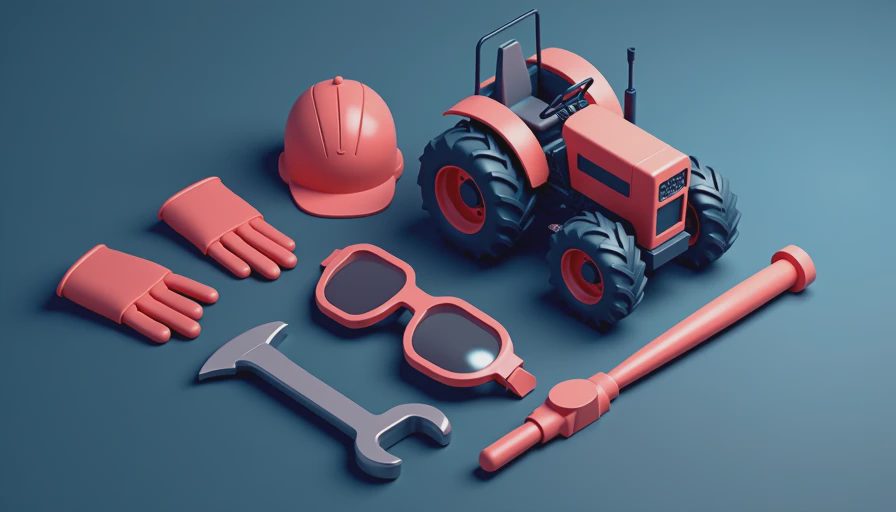
Here's the gear I keep in my shop and in my truck for field repairs:
- **Safety glasses** — Z87.1 rated, anti-fog. I prefer ones with a foam gasket to keep out dust. I've had metal chips fly into my face more times than I can count.
- **Hearing protection** — Earplugs with an NRR of at least 25, or earmuffs for extended use. I use disposable foam plugs for quick jobs and over-ear muffs when I'm running a grinder.
- **Gloves** — Three types: leather palm for general work, nitrile for fluids and solvents, and welding gloves for exhaust work or hot components. Never wear gloves around rotating shafts — that's how you lose a hand.
- **Respirator** — N95 for dust and moldy hay, half-face with organic vapor cartridges for paint, solvents, and diesel fumes. I keep a pack of N95s in my toolbox and the cartridge respirator in the cab.
- **Steel-toe boots** — With oil-resistant soles. A tractor tire or a dropped transmission will crush your foot. Don't cheap out here.
- **Coveralls** — I like the Dickies heavy-duty ones. They keep grease off your clothes and protect against minor spills and sparks. Plus they have enough pockets for a wrench and a flashlight.
This isn't an exhaustive list, but it covers 90% of the work I do on a weekly basis. If you're missing any of these, start with the ones you skip most often.
My Grandfather's Rule: The Right Gloves for the Job
My grandfather taught me this trick — still works 40 years later. He kept three pairs of gloves hanging near the shop door: leather, nitrile, and cotton. Each pair was for a specific purpose, and he never mixed them. "Leather for metal, nitrile for oil, cotton for clean work," he'd say.
For **PPE for tractor maintenance**, gloves are probably the most overlooked item. Guys grab whatever is nearby — an old welding glove that's cracked, or a pair of cotton gloves soaked in diesel. That's not protection; that's a hazard. A soaked glove can transmit chemicals through your skin or catch fire. I use reusable nitrile gloves (7 mil thick) for most fluid changes, and heavy leather for tire work or lifting metal parts.
**Shop Trick:** Put a glove clip on your belt loop. When you take them off for a minute, clip them together and hang them — you won't lose one, and they air out instead of getting musty in your pocket.
If you're not sure which glove to use for a specific chemical, check the manufacturer's safety data sheet (SDS). Most chemical suppliers have a chart for glove compatibility. Or just stick with nitrile — it works for oils, greases, and most solvents.
Respirators and Hearing Protection: The Stuff Most Guys Skip
I'll be honest: I was one of those guys who thought earplugs were for sissies. Then I turned 40 and noticed I was asking my wife to repeat herself. A hearing test showed a 20-decibel loss in my left ear. That's permanent. Now I don't start any engine without ear protection.
Same with breathing. When you're blowing out a radiator with compressed air, or grinding a weld, you're sending fine particles into your lungs. Diesel exhaust contains carcinogens. Hay dust can trigger allergic reactions or respiratory issues. An N95 mask costs about a dollar. A half-face respirator with cartridges is about $30. Compare that to a doctor's visit for a lung infection.
My advice: Keep a box of N95 masks near the door of your shop and in your tractor cab. When you're doing heavy grinding or painting, use the half-face with the right cartridges. I store my respirator in a ziplock bag to keep it clean — if it's dusty, it won't seal.
Shop Trick: Where to Store Your PPE So You Actually Use It
The best gear in the world is useless if it's buried in a drawer. I learned this from my dad: put PPE in the path of the job. I have a small shelf right next to my toolbox with eye protection, earplugs, gloves, and a mask. When I walk into the bay, I grab what I need before I even touch a wrench. In the tractor cab, I keep a small canvas bag with a spare pair of safety glasses and earplugs under the seat.
Another trick: buy a five-gallon bucket with a lid and make a "PPE station" you can carry to the field. Throw in a couple of pairs of gloves, an N95 mask, a pair of goggles, and a few foam earplugs. When you break a hydraulic line in the middle of a pasture, you'll have gear right there instead of walking back to the truck.
**PPE for tractor maintenance** doesn't have to be expensive or complicated. It just has to be available. I've spent less than $100 on the gear I use most, and it's saved me thousands in medical bills and lost time.
Final Thoughts: Make PPE a Habit, Not an Afterthought
You can rebuild a tractor engine. You can rebuild a hydraulic system. But you can't rebuild your hearing, your lungs, or your fingers. Every time I see a guy wiping grease off his hands with a dirty rag that's been soaked in solvents, I remind him — that's a chemical burn waiting to happen. Or a skin rash that'll keep him up at night.
A guy brought his tractor into my shop last week with a busted lift cylinder. I charged him $400 for parts and labor. He spent more than that on the burn treatment alone. The math doesn't lie.
So next time you're about to jump on a tractor or open a tool box, stop for two seconds. Glasses, earplugs, gloves, respirator if needed. Make it a routine, like buckling your seatbelt. Your body will thank you 20 years from now.