How to Do a Bearings Inspection on Your Car, Truck, or Tractor
A guy brought in his truck last week and swore the noise was the differential. Turned out the front hub was getting loose. A proper bearings inspection would have caught it a month earlier. I have been doing these checks since I was sweeping floors in my grandfather's San Antonio shop, and it is still the same skill. Whether you drive a daily commuter or run a tractor on your property, knowing how to inspect a bearing saves money and keeps you from being stranded.
Why You Need a Bearings Inspection
Bearings are simple parts, but they fail in specific ways. A bearings inspection checks for wear, play, and contamination. Look for roughness when you spin the wheel, clicking when you turn, or vibration at speed. On trailers and older axles, you can feel looseness by grabbing the tire at the top and bottom. If you get movement, the bearing or the race is worn. A small issue can become a two-thousand-dollar repair if you ignore it, especially on a modern hub assembly. On a tractor, a bad PTO bearing can ruin the whole shaft.
Warning Signs to Watch For
Your car gives plenty of warning before a bearing lets go. A grinding noise that gets louder as you turn, an ABS light that will not reset, or a wobble in the steering wheel all point to a bearing problem. Check trailer hub temperature after a long road trip by putting your hand near the center cap. If it is too hot to touch, the grease has broken down. I tell customers to schedule a bearings inspection whenever they hear a low hum that changes with speed. On my ranch tractor, a scraping sound near the front axle during hay season meant repacking the bearings, not replacing the axle.
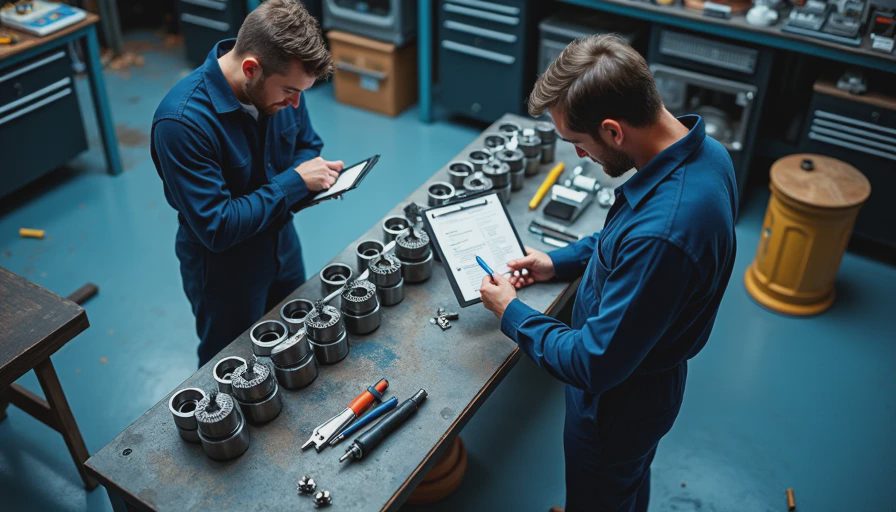
How to Inspect a Wheel Bearing at Home
You can do a basic wheel bearing check yourself with a jack, a set of stands, and a long pry bar. Start by lifting one corner of the vehicle or trailer and supporting it with jack stands. Never crawl under a vehicle supported only by a jack. With the wheel off the ground, grab the tire at the top and bottom and rock it. Listen for clunks and watch for play. Spin the wheel by hand and listen for a grinding noise. If you have a dial indicator, set it against the hub and check for runout. On serviceable bearings, pull the cotter pin, remove the nut, and take out the hub to look at the rollers. Worn rollers look pitted or scored, and the grease will be dark or gritty. This is the core of any bearings inspection: knowing what good metal looks like. If the race has a shiny band with visible grooves, it's time for new parts.
Shop Trick: Use a Marker to Spot Bearing Play
My grandfather taught me this trick — still works 40 years later. If you suspect play in a hub, take a silver marker and draw a line from the outer nut across the hub. Drive the vehicle around the block, then check the line. If it is broken out of alignment, the nut has backed off or the bearing is shifting. A guy can end up paying for a new wheel hub when all he needed was a proper bearing adjustment. This one little step makes a bearings inspection more accurate than just guessing by feel. On tapered roller bearings, tighten the nut to spec, back it off, then snug it to the cotter pin hole. Too tight and the bearing burns up. Too loose and it wears unevenly.

When to Let a Pro Handle It
If you are not sure, take it to a pro. No shame in that. A shop has dial indicators, heat guns, and electronic torque wrenches that most people don't own. A pro can also inspect the axle and spindle for damage, not just the bearing itself. A professional bearings inspection runs about seventy-five to one hundred fifty dollars, depending on the shop and whether they include repacking. That is cheap compared to a two-thousand-dollar hub replacement. On modern vehicles with sealed bearing hubs, the whole assembly has to be replaced when it fails. If you are doing a big brake job, have the shop check the bearings at the same time. Pairing repairs saves you labor money.
Don't Forget Tractors and UTVs
Your cattle operation and your daily driver need the same attention. A tractor's front axle pivots and takes a beating in the field. Grease fittings on steering knuckles should see a grease gun every fifty hours, and a bearings inspection belongs on your seasonal maintenance list. On my compact tractor, I check the front hubs every spring before planting and every fall after hay. UTVs see mud and water that washes out grease, so they are even harder on bearings. If you have hit a creek with your side-by-side, lift it up and spin all four tires. Mud, rust, and a hollow sound mean it is time for new bearings. Most farmers I know skip this until the wheel falls off, then pay for a tow. A fifteen-minute inspection once a season keeps a five-hundred-dollar axle in one piece.
How Often Should You Check?
Inspect passenger car wheel bearings every thirty thousand miles, sooner if you tow or drive gravel roads. Trailers that sit outside need an annual check because moisture gets into the hubs. Check your owner's manual for specifics. A grease gun and cotter pins cost less than twenty bucks, and a few minutes of checking can save you a breakdown.