A guy brought in his truck last week after a simple brake job turned into a bent fender and a trip to urgent care. The problem was not the parts. It was a rushed setup, a bad jack stand position, and one skipped safety step. That is why every working shop needs a solid **garage safety checklist for mechanics**. In my family shop, and out on the ranch with tractors and UTVs, safety is not a poster on the wall. It is how you make it home with all ten fingers, your tools intact, and your bays still making money.
Start Every Day With Housekeeping and Hazard Checks
Good safety starts before the first hood goes up. Walk the floor and look for the boring stuff, because the boring stuff causes plenty of injuries. Oil spots, loose extension cords, air hoses across walkways, and tools left under a lift are all trouble waiting to happen. Keep exits clear, sweep often, and clean spills as soon as they happen. A clean bay is faster to work in, too, which matters when the schedule is packed.
Your daily walk-through should also include lighting, ventilation, and electrical checks. Burned-out lights make you miss leaks, cracks, and loose hardware. Poor airflow can turn brake cleaner, fuel vapors, or exhaust into a real problem. Check that power strips are not overloaded and that damaged cords get tossed, not taped. My grandfather taught me this trick — still works 40 years later: if a cord or hose looks questionable when you first see it, it will not look better at 4 p.m. Replace it now.
Shop Trick: Keep absorbent, a broom, and a drain pan at the end of every bay. If cleanup takes ten seconds, people actually do it.
Lift, Jack, and Vehicle Support Rules You Do Not Skip
Most shops already know the big rules, but accidents still happen when people get casual. Use the right lift points every time. Set the arms, shake the vehicle before raising it high, and make sure the weight is balanced. If you are using a floor jack, support the vehicle with correctly rated jack stands on solid ground. Never trust the jack alone. Not for a quick look, not for a fast bolt, not for anything.
Wheel chocks matter more than people admit, especially with trucks, trailers, tractors, and anything parked on less-than-perfect concrete. Transmission in park is not a safety system. A parking brake is not a backup plan. Chock it.
This part of a **garage safety checklist for mechanics** should also cover heavy components. Engines, transmissions, transfer cases, and tractor attachments need proper support before bolts come out. If you are not sure a component is balanced, stop and reset. If you're not sure, take it to a pro. No shame in that. A home DIY setup is one thing; a loaded transmission on a bargain jack is another.
PPE, Fire Prevention, and Chemical Handling That Actually Works
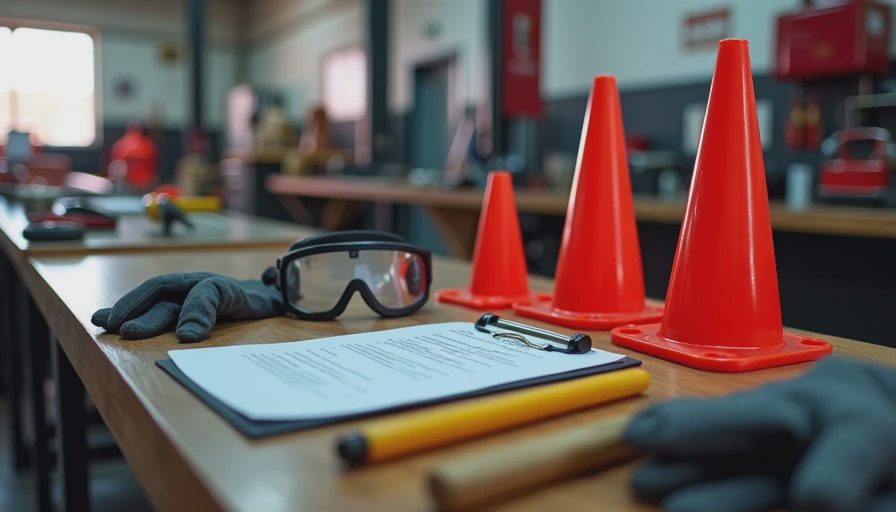
Mechanics get used to noise, heat, sharp edges, and chemicals, which is exactly why PPE has to be deliberate. Safety glasses should be standard, not optional. Face shields are smart for grinding or cutting. Gloves help, but use the right type for the job; bulky gloves around rotating equipment can create a different hazard. Hearing protection belongs near impacts, air hammers, grinders, and mowers. Respiratory protection matters during painting, dust-heavy brake work, or strong solvent use.
Fire prevention needs to be built into the workflow. Store flammables correctly, keep oily rags in approved containers, and know where your extinguishers are. ABC extinguishers cover common shop fires, but they only help if they are visible and charged. Fuel work, battery charging, welding, and grinding should never happen in the same messy corner with cardboard boxes stacked to the ceiling.

A practical **garage safety checklist for mechanics** also includes reading labels and following product directions. Brake cleaner, parts washer solvent, coolant, gear oil, and battery acid all bring different risks. Label secondary containers. Do not mix chemicals in mystery bottles. Keep Safety Data Sheets accessible, even in a small independent shop. That is not overkill. That is basic professionalism.
Tool Safety, Air Systems, and Electrical Common Sense
Most injuries in a garage are not dramatic movie-scene disasters. They are cut hands, smashed knuckles, eye injuries, burns, and strains from using the wrong tool the wrong way. Inspect impact sockets, pry bars, pullers, cords, and air fittings regularly. A cracked socket under load can come apart fast. Air hoses with bad couplers whip around like snakes when they let go.
Use guards on grinders and keep wire wheels in good shape. Unplug electric tools before changing discs or blades. With battery-powered tools, remove the battery first. On the electrical side of vehicle repair, disconnect the negative battery cable when the job calls for it, especially around starters, alternators, and major harness work. Hybrids and EVs are their own category, and high-voltage systems are not beginner territory. That is pro-level work with specific training and insulated equipment.
Shop Trick: Color-code extension cords and air hoses by condition. New or shop-ready gets one color. Suspect or ready-for-replacement gets another. It saves arguments and cuts down on "I thought it was fine."
Training, Communication, and Emergency Planning
The best **garage safety checklist for mechanics** falls apart if nobody follows it the same way. New techs, helpers, and even experienced hands need the same expectations. Post simple bay rules. Review lift points, lockout basics, fire response, eye wash use, and where to shut off power or air. Do short safety talks, not long lectures. Five minutes before the morning rush is better than a binder nobody opens.
Emergency planning should be plain and visible. First-aid kits need to be stocked. Eye wash stations need to be accessible. Everyone should know who calls 911, who meets EMS outside, and who clears the bay. Keep emergency contacts updated. If your shop handles fleet work, diesel pickups, or ranch equipment, think through added risks like large tires, hydraulic pressure, and fuel storage.
A safe shop is also easier to sell to customers and easier to staff. People notice when a place is organized, calm, and professional. If you are building or tightening your own **garage safety checklist for mechanics**, start with daily housekeeping, vehicle support rules, PPE, chemical storage, and emergency response. Do those five things well and you will prevent a lot of trouble. And if a task feels sketchy, stop. Around here, we say it plain: no repair is worth getting crushed, burned, or blinded over.