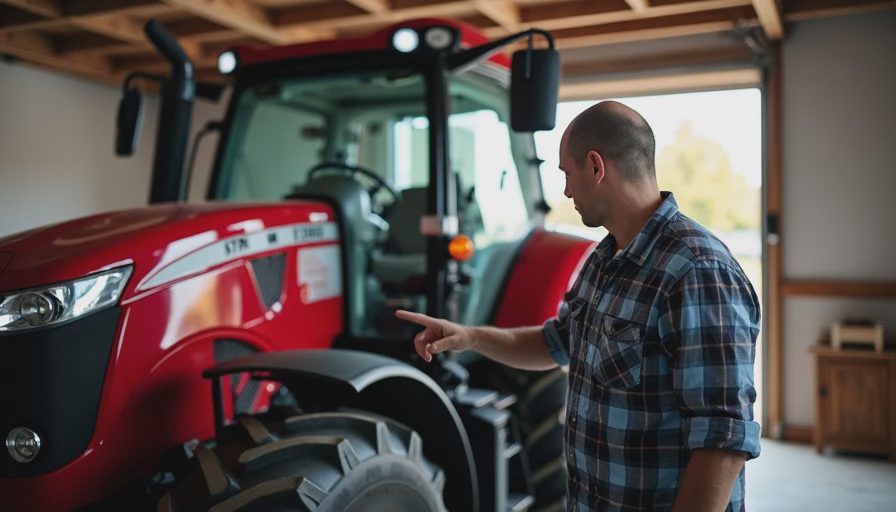
A guy brought his tractor in last week and pointed at the lever on the fender. "What does PTO stand for on tractor?" he asked. Power Take-Off, I told him. It's the system that sends engine power to anything you hook to the back of the machine — a bush hog, a tiller, a hay rake, a post-hole digger. If you run a ranch or just keep a compact tractor for mowing, you need to understand this system before you use it.
My grandfather taught me this trick when I was sweeping floors back in the shop: always know what you're engaging before you pull the lever. The PTO is one of the most useful and most dangerous systems on a tractor. Treat it with respect.
What Does PTO Stand For on Tractor? The Short Answer
PTO stands for power take-off. The name tells you exactly what it does: it takes power off the engine and delivers it to an attachment. On most tractors, there's a splined shaft at the rear that spins whenever you engage the PTO. That spinning shaft drives the attachment.
On older tractors, the PTO was mechanical and engaged with a hand lever. On newer ones, it might be electric or hydraulic over a button. But the principle is the same. The engine runs the shaft, the shaft runs the attachment, and the attachment does the work you'd otherwise do by hand.
How the PTO System Works
The PTO connects to the engine through a driveshaft and a clutch or gear set. When you engage the PTO, a coupling locks the shaft to the engine. The shaft spins at a set speed, usually 540 or 1,000 RPM on modern tractors.
That's why attachments have their own gearboxes and pulleys. A rotary cutter, for example, uses the PTO shaft speed to spin its blades fast enough to cut heavy brush. A tiller uses the same power to turn the tines. If you've ever hooked up a PTO shaft to an attachment, you know the universal joints can be fiddly. Proper alignment matters.
Common PTO speeds are 540 RPM for most compact and utility tractors and 1,000 RPM for larger farm models. Some tractors let you choose between the two with a gear change. Always match the attachment to the tractor's PTO speed. Running a 540-RPM attachment on a 1,000-RPM shaft will destroy it in minutes.
Common PTO Attachments and Uses
A PTO turns a tractor into a multi-tool. The most common attachments include:
- Rotary cutters (brush hogs) for mowing pastures and brush
- Tillers for preparing garden or field soil
- Hay mowers and balers for hay production
- Post-hole diggers for fence posts
- Snow blowers for clearing driveways
- Generators for emergency power in remote spots
Each attachment runs off the same PTO shaft but has its own driveline. The shaft length matters, too. A PTO shaft that's too long can bottom out and damage the tractor's transmission case. Measure twice and make sure the driveline is correct before you engage it.
How to Match PTO Attachments to Your Tractor
Before you buy any attachment, check your owner's manual for the PTO speed and horsepower rating. A compact tractor with 25 horsepower can run a 4-foot rotary cutter fine, but a 6-foot cutter on the same machine will strain the engine and burn out the clutch. A guy down the road pushed his tractor too hard with an oversized tiller and ended up replacing the entire PTO clutch. Match the attachment's power requirement to your tractor's numbers, and you'll save thousands in repair bills.

Also consider the hitch type. Category 1 three-point hitches fit most compact tractors; category 2 hitches are for larger utility tractors. If the attachment doesn't fit the hitch, you'll need adapters or a different setup. And when you hook up the shaft, make sure the pins and collars lock in place. A shaft that comes loose at 540 RPM can cause serious damage.
PTO Safety: What the Manual Won't Tell You
Every ranch has a story about PTO accidents. I've seen too many close calls since I started working on tractors. The PTO shaft spins faster than you think, and loose clothing, hair, or a strap can get caught in seconds. That's why you need to treat the system with the same respect you'd give a running engine.
Never engage the PTO with the tractor running unless you're in the cab or clear of the rear. Keep shields and covers in place. If an attachment jams, shut down the engine before getting off. And if you're hooking up a PTO shaft, make sure the tractor is off and the key is in your pocket.
PTO Maintenance From the Shop
A PTO system is simple, but it still needs care. Grease the universal joints and the spline shaft regularly. Rust and dirt are the main culprits on machines that sit outside. Check the driveline shields for cracks or missing parts. A damaged shield is a safety hazard.
Also check the PTO engagement mechanism. If the lever or button feels rough, the linkage might be corroded. A little penetrating oil and a grease gun solve most problems. If you hear grinding when you engage the PTO, stop using it and have a pro look. That sound usually means worn clutch teeth or a failing bearing.
What Does PTO Stand For on Tractor? Now You Know
So what does PTO stand for on tractor? Power Take-Off. It's your tractor's way of sharing engine power with the tools behind it. Whether you're mowing a pasture, planting a garden, or running a generator, the PTO is what makes it happen.
Treat it right, keep it greased, and respect the spin. And if you're not sure about a repair, take it to a pro. No shame in that. My grandfather taught me this trick — still works 40 years later.