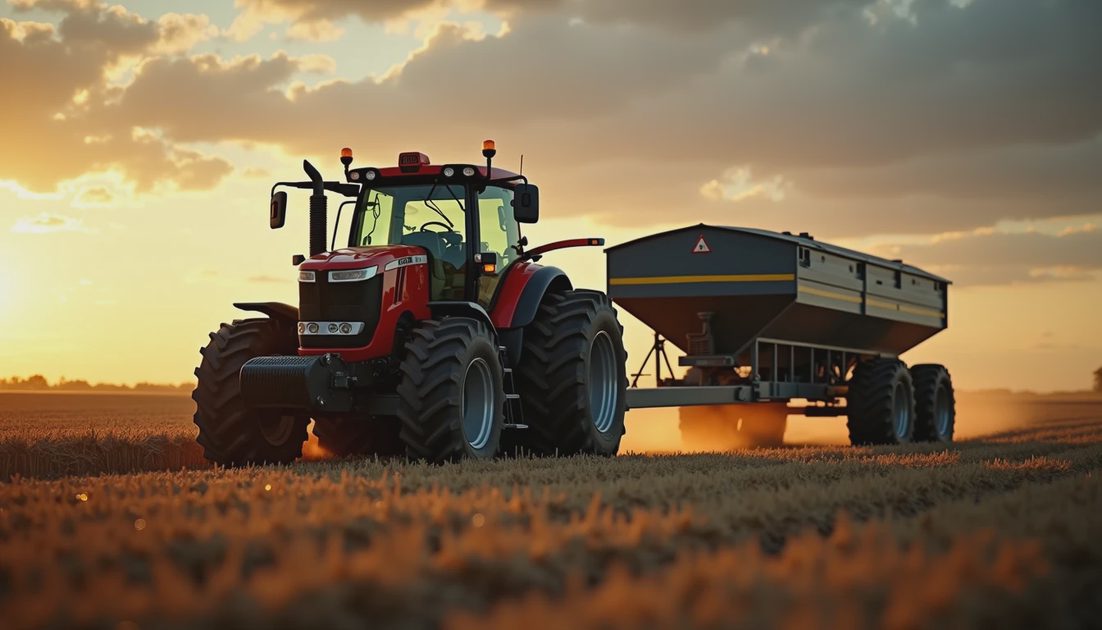
John Deere’s latest ag lineup targets uptime and input efficiency with higher horsepower, larger carts, and precision spraying
The Big Picture
A guy brought in his ranch truck last week with a dead battery and a missed morning feed run. Same lesson applies to fleet ag equipment: when iron doesn’t start, revenue doesn’t either. For fleet managers and maintenance supervisors running mixed agricultural operations, John Deere’s current product messaging centers on two business levers that matter most right now—uptime and input efficiency—through higher-horsepower tractors, larger-capacity seeding support equipment, faster tillage tools, and precision ag technologies.
From a procurement standpoint, the value proposition is less about a single machine and more about configuring a system: power units sized to implement demand, matched with higher-capacity material handling (air carts), and layered with automation/precision features to reduce waste and operator variability. The source emphasizes expanded capability across both new machines and existing fleets, positioning automation and precision upgrades as a way to modernize without forcing a full turnover of assets.
Key Details
John Deere groups its agricultural portfolio across tractors, harvesting/hay/forage equipment, planting and seeding, tillage, sprayers and applicators, and precision ag technology. For decision-makers, several specifications and capability claims stand out in the source:
Tractor power bands (engine horsepower) for fleet standardization
- 4WD/Track Tractors: 390–830 engine HP
- Row Crop Tractors: 140–410 engine HP
- Specialty Tractors: 75–155 engine HP
- Utility Tractors: 45–250 engine HP
- Compact Tractors: 22.4–66 engine HP
These ranges help define duty-cycle fit and allow fleets to set internal purchasing bands (for example, defining a “row-crop prime mover” class versus a “utility support” class) without locking into a single model.
High-horsepower 8 Series positioning
- The new high-horsepower 8 Series is listed at 440–540 (as presented in the source) and described as combining power, intelligence, and maneuverability for operators.
Seeding logistics: larger air cart capacity
- The C1100T air cart is positioned as John Deere’s largest air cart yet, with:
- Capacity: 1100 bu (38,763 L)
- Flex Tank: 105 gal (397.5 L)
- Additional feature callouts include a longer conveyor and a stainless-steel hopper.
For large-acre seeding operations, the capacity figure is the actionable datum: fewer refills can translate into more productive field hours per shift—especially when support trucks and tender logistics are constrained.
Tillage throughput: high-speed disk operating speed
- John Deere highlights an expanded high-speed disk lineup designed for residue management and seedbed preparation at operating speeds up to 14 mph (22.5 km/h).
Higher operating speed capability can increase acres covered per hour when field conditions and tractor/implement matching support it, with downstream effects on labor scheduling and weather-risk management.
Precision application: See & Spray Gen 2 crop coverage
- See & Spray Gen 2 is positioned to target weeds in additional crops, including wheat, barley, canola, peanuts, and sugar beets.
Automation: baling and autonomy
- Weave Automation for balers is described as eliminating manual weaving, supporting quality bale shape while not driving over windrows.
- Deere also states autonomy is ready for existing equipment via precision upgrades, and separately that its autonomous technology is based on an 8R tractor that can be run with or without an operator.
No ROI, fuel-consumption, or interval data is provided in the source, so fleet planners should treat these as capability claims that require internal validation with dealer documentation and field trials.
Operational Impact
1) Uptime and scheduling
Higher-capacity systems like the 1100 bu (38,763 L) air cart can reduce stop-and-go downtime from refilling—often a hidden driver of lost productive hours. In fleet terms, that can improve effective utilization without adding headcount or extra power units.
2) Standardizing power units to implements
The clearly defined tractor bands—up to 830 engine HP in 4WD/track—support a more disciplined approach to fleet architecture. Procurement teams can align implements and duty cycles to an internal “horsepower class” matrix to reduce overbuying and improve asset assignment.
Shop Trick (3rd-generation): My grandfather taught me to treat “right-sizing” like hitching a trailer—if the truck’s working too hard just to get rolling, you’re burning up the drivetrain. Same with tractors: spec the power unit to the implement and field speed you actually need, not the best-case brochure day. If you’re not confident matching implements to horsepower and hydraulics, take this to a pro—your dealer or an experienced fleet tech can prevent expensive mis-specs.
3) Throughput versus wear tradeoffs
Tools rated for up to 14 mph (22.5 km/h) can increase daily acres when conditions allow, but maintenance supervisors should anticipate that higher operating speeds may change inspection focus (fasteners, bearings, wear components). Because the source does not provide service intervals or wear rates, the prudent move is to adjust preventive maintenance schedules based on initial field performance, oil analysis (where applicable), and component inspection trends.
4) Input efficiency and operator variability
See & Spray Gen 2’s expanded crop support (including wheat, barley, canola, peanuts, sugar beets) signals broader fit across diversified operations. For fleet managers, the “so what” is that precision application technologies can standardize outcomes across operators and shifts—if the fleet invests in training, calibration discipline, and data workflows.
Safety note: Any autonomous or automated operation must be governed by site-specific safety procedures. If you’re implementing autonomy features, involve your safety manager and follow manufacturer guidance; do not improvise guarding or bypass controls.
What to Watch
Automation adoption across mixed fleets
Deere’s emphasis that autonomy is for old equipment or new suggests a market push toward retrofit pathways. For procurement, that changes budgeting: modernization may shift from large capital purchases to staged upgrades, but the organization still needs change management—training, support coverage, and clear SOPs.
Crop and regional flexibility
See & Spray Gen 2’s crop list signals product evolution toward broader agronomic coverage. Mixed-crop fleets should watch how technology packages map to their acreage mix and chemical programs, and verify compatibility and support before standardizing across locations.
Compliance and safe operation
The source does not cite OSHA, EPA, ISO, SAE, or emissions tiers. Even so, fleet leaders should ensure any new deployment aligns with internal safety standards and documented procedures—especially where automation changes the operator’s role and the jobsite risk profile.
Bottom Line
John Deere’s current ag lineup highlights measurable capability points—tractor power bands up to 830 engine HP, an 8 Series range of 440–540, an 1100 bu (38,763 L) air cart with a 105 gal (397.5 L) Flex Tank, and tillage tools rated up to 14 mph (22.5 km/h)—paired with precision and automation features like See & Spray Gen 2, Weave Automation, and autonomy options for 8R and existing equipment.
For fleet and ops managers, the recommended action is to (1) map your duty cycles to these capacity/speed bands, (2) pilot precision/automation on a representative route or field unit, and (3) update preventive maintenance schedules based on real inspection data. If you’re not set up to validate automation risk controls and machine-implement matching in-house, take it to a pro—dealer support and qualified fleet technicians can protect uptime and total cost of ownership.