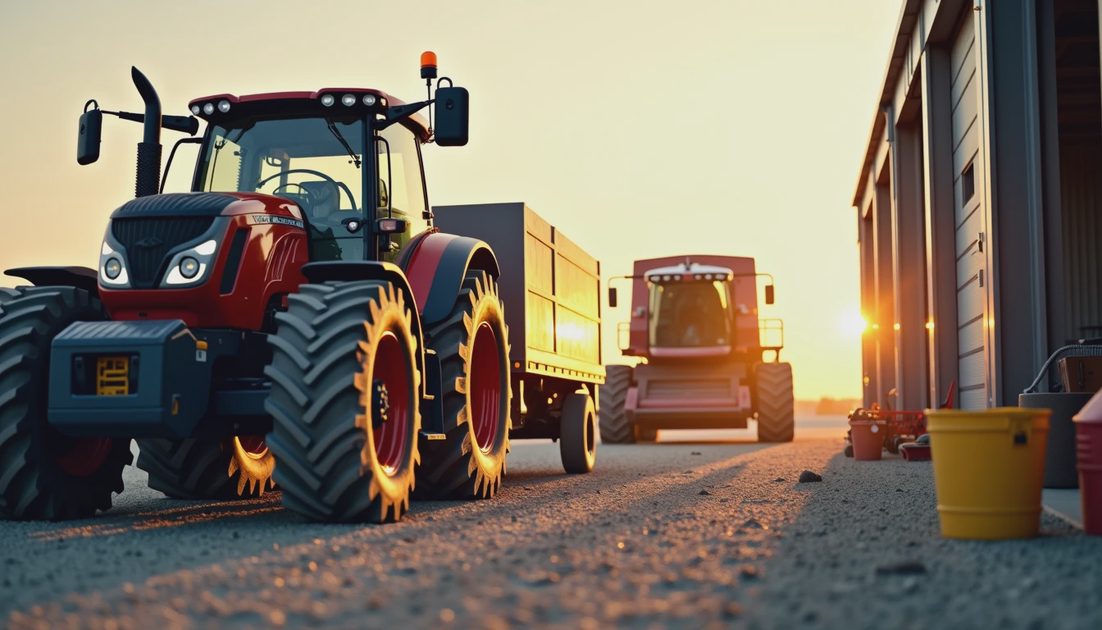
Farm Equipment Selection for Uptime: Matching Tractors, Harvesters, Implements, and Utility Vehicles to the Job
The Big Picture
A guy brought his work truck into my San Antonio shop last week because it “started feeling lazy.” Turned out he’d been hauling and towing like a one-ton dually with the maintenance plan of a grocery-getter. Farm equipment decisions work the same way: the wrong machine (or the right machine used wrong) quietly drives up downtime, repair spend, and missed field windows.
The Holt Ag Solutions guide frames the core buying challenge plainly: modern farmers have a wide range of equipment options, from “high-tech combine harvesters to simple tractors,” and it can be confusing—especially for small- and mid-size operations trying to improve efficiency. For fleet managers and maintenance supervisors, the operational question is less about novelty and more about fit: selecting equipment that can handle the required tasks reliably, with serviceable systems and appropriate attachments, so you protect uptime and total cost of ownership.
Key Details
Vehicles are typically the largest investment
The source emphasizes that, among farm equipment categories, “vehicles are the most important and represent the largest investment.” In practice, that means procurement choices around tractors, harvesters, and utility vehicles tend to dominate capital planning and long-term operating cost.
Tractors: the universal power unit—if specified correctly
Holt calls the tractor “ubiquitous” and explains its primary purpose is “to pull farm equipment,” while noting modern tractors can take “multiple attachments” to cover “just about any farming need.” That flexibility can be a force multiplier for smaller fleets—if you standardize around the right tractor class and attachment set.
The guide breaks tractors into four main types, each tied to a different operating profile:
- Compact tractors: Described as “small, high-powered” machines suited for “basic functions,” “material handling,” and “tight spaces where traditional tractors can’t fit.”
Decision note: When job sites include confined yards, barns, or narrow access lanes, compact units can reduce maneuvering damage and operator time.
- Wheeled tractors: Positioned as “general-purpose” utility tractors that can be outfitted for “tilling, material handling and equipment pulling.” Holt notes wheeled tractors come with options across “horsepower, lifting capacity, control and cab-style,” enabling selection by application.
Decision note: This is typically the baseline platform for mixed tasks, particularly when you need one tractor to run multiple implements.
- Track tractors: Defined as tractors mounted on tracks “instead of tires,” enabling them to “plow fields with more power” and deliver “a smoother ride for the operator.”
Decision note: Tracks can improve tractive performance and operator comfort in fieldwork-focused duty cycles, particularly where pulling power is the limiting factor.
- Specialty crop tractors: Built or adapted for orchards and vineyards, described as “slender” for fitting between “lines of trees and vines,” while still providing power for “landscaping and maintenance.”
Decision note: For permanent crops, machine width and clearance are operational constraints; specialty units reduce crop damage risk and improve access.
Combines and forage harvesters: throughput machines with complex systems
Holt notes that in northern California and Oregon, combines are commonly used for “rice and grass seed,” and that combines and forage harvesters can serve other farm purposes as well. The guide also states that “even small-scale farmers can significantly benefit” from using a combine or forage harvester—an important point for operators weighing custom harvesting versus ownership.
From a maintenance and reliability standpoint, Holt highlights that these are “massive pieces of machinery” using “a complex system of gears, blades, belts and wheels” to convert cereal crops into grain. The source identifies one of the three primary processes as:
- Reaping: Cutting the plant using the “header, reel and cutter bar.” The header gathers crops; the reel feeds them toward the cutter bar, which cuts the crop.
That system description matters for preventive maintenance planning: multiple rotating and wear components (belts, blades, cutter bar elements) create predictable inspection and replacement workloads.
Operational Impact
Procurement: buy capability, then protect it with attachment strategy
Holt’s core premise is that attachments make tractors “universal machines capable of getting anything done.” For fleet decision-makers, that suggests a practical procurement lever: rather than adding dedicated machines for every task, you can often expand capability by building an implement/attachment plan around a standardized tractor platform.
Shop Trick (three generations): Before you buy another power unit, list the jobs by category—tilling, pulling, and material handling—then verify whether your existing tractor(s) could cover the gap with the correct attachment and operator training. My grandfather used to say, “Don’t buy a whole new mule when you just need a better harness.” Same lesson, just with hydraulics and PTOs.
Preventive maintenance: complexity drives inspection discipline
The combine description—gears, blades, belts, and wheels—signals a higher component count and more wear interfaces than a basic tractor doing drawbar work. That affects:
- Mean time between failures (MTBF): More wear parts typically means more frequent condition checks to avoid in-season breakdowns.
- Maintenance scheduling: Field-critical equipment needs planned inspections around crop timing, not just calendar intervals. (The source does not provide service intervals, so schedules should be based on OEM guidance and operating conditions.)
- Spare parts readiness: Wear items tied to cutting and feeding (header/reel/cutter bar components) should be treated as uptime-critical, with replacement parts staged if lead times are a risk.
Safety and operator impact
Holt notes track tractors provide a “smoother ride for the operator.” Operator comfort is not just a morale metric; it can influence safe operation and sustained productivity during long field days. For any fleet, ensure operators are trained on attachment changes, pinch points, and lockout practices. If your team lacks experience with certain attachment systems or harvester header components, take this to a pro—improper setup can cause severe injury and major equipment damage.
What to Watch
Standardization vs. specialization
The source presents two opposing truths:
- Tractors can be configured broadly via attachments.
- Some operations (orchards/vineyards) benefit from specialized platforms (slender specialty crop tractors).
For mixed fleets, the watch-out is “death by variety”: too many machine types can inflate parts inventory, training requirements, and maintenance complexity. On the other hand, forcing a general-purpose machine into a specialty crop environment can increase crop damage, rework, and safety risks.
Equipment role clarity for small and mid-size operations
Holt specifically calls out that “small- and mid-size farms” can struggle determining what machinery they need to “make operations more efficient.” For industry managers advising multi-site operations or co-ops, the actionable takeaway is to define roles:
- One or more tractors as the primary power units
- Implements/attachments to expand capability
- Harvesting equipment decisions based on crop type and timing sensitivity
Bottom Line
Use Holt’s framework to align equipment type to task: tractors as the configurable workhorse (compact, wheeled, track, or specialty crop), and combines/forage harvesters as high-throughput, high-complexity assets that justify disciplined preventive maintenance planning. For the bottom line, prioritize vehicle choices because they represent the largest investment, and treat attachments as a strategic lever to increase utilization and protect total cost of ownership—while keeping safety and operator training non-negotiable.