A guy brought in his truck last week and swore the power steering pump was finished. The steering felt heavy, the loader on his property was moving slowly, and he was ready to buy parts. We connected a hydraulic pressure tester first. The pump was healthy; a restricted hose was the real problem. That simple test saved him several hundred dollars and kept a good component out of the scrap bin.
A hydraulic pressure tester is one of those tools that earns its space in a professional shop, tractor shed, or serious home garage. It measures pressure inside a hydraulic circuit so you can compare actual performance with the equipment manufacturer's specifications. Instead of guessing from noise, slow movement, or a hot hose, you get useful evidence.
What a hydraulic pressure tester actually measures
Hydraulic systems use pressurized fluid to transfer force. A tractor loader, skid steer, power steering system, transmission control circuit, excavator attachment, and some brake systems all depend on pressure being created and controlled correctly. A pressure reading can help identify a weak pump, plugged filter, stuck relief valve, leaking cylinder, or restriction in a line.
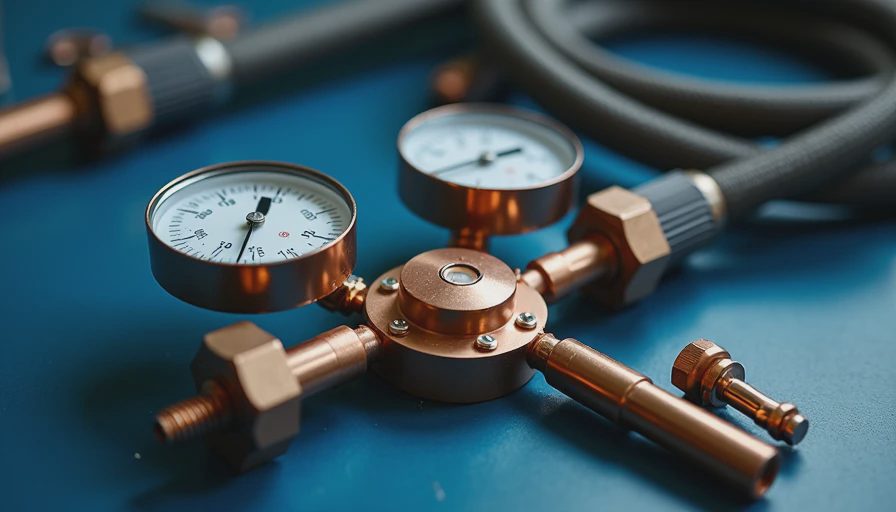
Most test kits include a pressure gauge, adapters, a hose, and sometimes a valve that lets you load the circuit. The gauge may read in pounds per square inch, bar, or both. Pick a gauge range that fits the machine. A 5,000-psi gauge is not automatically better than a 1,000-psi gauge; it can simply be harder to read at the lower pressures common in some compact equipment.
Before testing, find the service manual specification and the correct test port. Pressure at standby, pressure under load, and pressure at a particular engine speed can all be different. On a tractor, for example, the loader circuit may show one result while the remote hydraulic outlet shows another.
Choosing the right kit for shop and ranch work
When I buy a hydraulic pressure tester, I look at the gauge first, then the adapters. A durable 2,000- to 5,000-psi gauge is useful for many tractors, loaders, and utility machines, but automotive systems require their own procedures and fittings. A kit from brands such as OTC, Lisle, Enerpac, or a reputable hydraulic supplier can be a sound starting point when the pressure range and connection type match your equipment.
Do not choose based only on the biggest number printed on the box. Confirm whether the hose is rated for the expected pressure, whether the fittings are compatible with your machine, and whether replacement seals are available. JIC, ORB, NPT, and metric connections are not interchangeable just because they look close. The wrong adapter can leak, damage threads, or separate under pressure.
For a small ranch, an organized kit with common agricultural adapters is often more useful than an oversized industrial set. Keep caps and plugs in a labeled case. Dirt introduced into a hydraulic port can cause trouble long after the test is finished.
How to perform a pressure test safely
Start with the machine parked on level ground. Lower loaders, buckets, mower decks, and other attachments fully to the ground. Shut off the engine, move the controls through their travel to release stored pressure, and read the operator's manual before opening any connection. Wear safety glasses, gloves suited to the work, and long sleeves. Hydraulic oil can penetrate skin through a pinhole leak and requires immediate medical attention.
Inspect the test hose and gauge before installation. Never use a hose with cracked cover material, damaged threads, or a questionable fitting. Install the tester at the specified test point, tighten it correctly, and keep your body away from the hose and fittings. Start the engine at the recommended speed, watch for leaks, and take the reading without leaning over the connection.
If the procedure calls for deadheading or loading the circuit, follow the manual's time limit. A relief-valve test can create heat quickly. Do not hold a system at maximum pressure for extra time just to see what happens. If the gauge jumps violently, the hose moves, or a fitting sweats oil, shut the machine down and take this to a pro.
My grandfather taught me this trick — still works 40 years later: wipe every connection clean before you loosen it, then place a clean cap over the open port immediately. Cleanliness is cheaper than a pump rebuild.

Reading results without guessing
A pressure reading only matters when you compare it with the correct specification. Suppose a compact tractor should produce 2,500 psi at the loader valve but the tester shows 1,600 psi under the stated conditions. That points toward a diagnostic path, not an automatic pump replacement. Check fluid level and condition, the filter, inlet restrictions, relief-valve adjustment, and engine speed. A worn pump is possible, but it is not the only explanation.
If pressure reaches the expected number but the loader still drops or moves slowly, the problem may be internal leakage in a cylinder or control valve. If pressure is low everywhere, investigate the pump, suction side, relief valve, or fluid supply. If pressure is normal at one port and low at another, the fault may be downstream in a valve, hose, or attachment.
Do not adjust a relief valve because a reading looks inconvenient. Record the machine model, fluid temperature, engine rpm, test location, and pressure. Those notes make the next test more useful and help a technician avoid repeating work.
Common mistakes that waste money
The most common mistake is testing without warming the fluid. Cold oil can produce readings and operating behavior that do not represent normal work. Another mistake is installing a gauge with the wrong range, then treating a rough, unreadable needle as a precise result. A damaged gauge can send you chasing a fault that does not exist.
I also see owners replace a hydraulic pump when the real issue is a clogged filter, collapsed suction hose, low fluid level, or contaminated oil. A hydraulic pressure tester can narrow the search, but it cannot replace visual inspection and a service manual. On older tractors, a fitting may be rusted or stuck. Do not force it until you have considered whether the port can be isolated and whether you have the correct replacement seal.
A pressure test does not prove that every part of the system is healthy. Flow, temperature, leakage, and control response matter too. Pressure tells one important part of the story.
When to call a professional
Testing a simple accessible port may be reasonable for an experienced equipment owner who understands the manual and the hazards. Repairs involving high-pressure accumulators, hydraulic brakes, load-sensing systems, excavator circuits, or unfamiliar valves belong with a trained technician. Some systems store energy even after the engine is off.
If oil has injected into skin, seek emergency medical care immediately. Do not treat it like an ordinary cut. For a suspected leak, never use your hand to search for escaping fluid; use cardboard or paper from a safe distance, with the system depressurized whenever possible.
Shop Trick: take photos before disconnecting anything, label both sides of the hose, and write down the original gauge reading. That small habit protects against crossed lines and forgotten settings. If you're not sure, take it to a pro. No shame in that.
A good hydraulic pressure tester will not fix a slow loader or noisy steering pump by itself. What it gives you is a measured starting point, which is often the difference between a targeted repair and an expensive parts cannon. Buy the correct range, keep the fittings clean, follow the safety procedure, and let the readings guide the work.