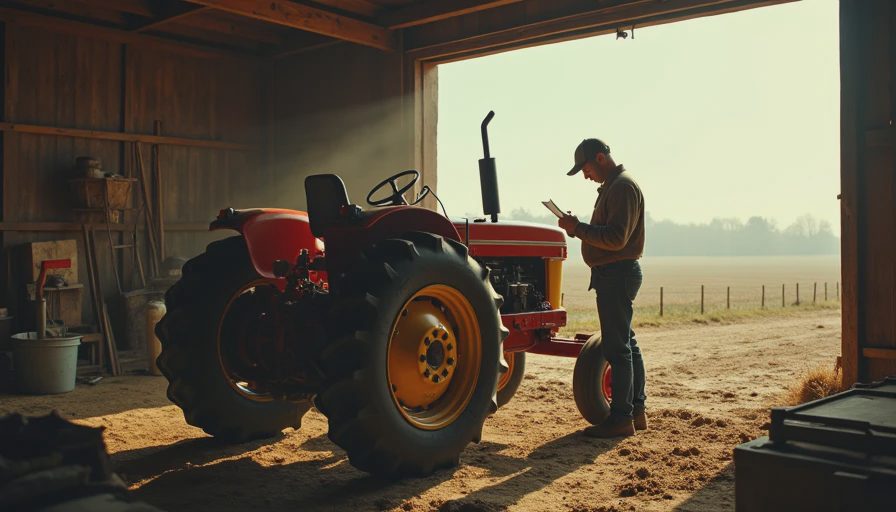
Last summer, one of my neighbors called from his place outside San Antonio because his compact tractor would not start before a fence repair job. He had already replaced the battery and sprayed starting fluid into the intake. The real problem was a corroded ground cable hiding under a layer of red dust. Good tractor won't start troubleshooting starts with the simple checks, not the most expensive parts.
Before you turn a wrench, park on level ground, set the parking brake, lower the loader and three-point hitch, and remove the key. Keep loose clothing away from belts and fans. Never bypass a safety switch just to see whether the engine will run. A tractor can move unexpectedly, and nobody gets a second chance when a PTO or attachment starts turning.
Start With What the Tractor Is Telling You
Turn the key and pay attention to the exact symptom. A completely silent tractor points toward a weak battery, poor connection, ignition switch, blown fuse, or safety interlock. A single heavy click often means the starter solenoid is receiving power but the battery cannot deliver enough current, or the starter motor is binding. Rapid clicking usually means low voltage.
If the engine cranks at normal speed but does not fire, the battery and starter are probably doing their jobs. Move your attention to fuel delivery, air, glow plugs, injection, or engine-control systems. A diesel that cranks slowly can also fail to start even when the fuel system is healthy, especially on a cold morning.
My grandfather taught me this trick — still works 40 years later. Turn on the headlights before cranking. If they go very dim immediately, measure the battery rather than guessing. A healthy, fully charged 12-volt battery should be close to 12.6 volts at rest. Around 12.2 volts indicates a significantly discharged battery, although voltage alone does not prove the battery can handle a load.
Clean both battery terminals and inspect the negative cable where it bolts to the engine block or frame. A shiny positive terminal cannot compensate for a poor ground. Use a proper battery charger or jump pack rated for the tractor. Do not jump a tractor from a running vehicle unless the equipment manufacturer specifically permits it; voltage spikes can damage electronic controls.
Fuel and Air Checks for Diesel Tractors
For a diesel, confirm that there is fresh fuel in the tank and that the fuel shutoff is open. Do not trust the gauge if the tractor has been parked on a slope. Look for water or debris in the sediment bowl and fuel filter. Many tractors have a transparent bowl or drain screw that makes contamination visible. If you find water, drain it into an approved container and replace the filter as directed by the service manual.
Air entering the fuel system can prevent starting after a filter change, a tank run-dry incident, or a loose hose connection. Some tractors use a hand primer; others require a specific bleeding procedure. Follow the manual carefully. Opening high-pressure injector lines while cranking is not a casual test. Diesel injection pressure can penetrate skin and cause a serious medical emergency. Leave that work to a qualified technician.
Cold weather adds another layer. Confirm that the glow-plug or intake-heater indicator behaves normally. Glow plugs need time to warm the combustion chamber, so wait for the preheat light to go out before cranking. Do not use ether or starting fluid on an engine equipped with glow plugs or an intake heater. The result can be violent pre-ignition and expensive engine damage.
A clean air filter usually will not cause a sudden no-start by itself, but a severely restricted filter can reduce airflow. Open the air-box cover and inspect for mud, nests, or a collapsed filter. Ranch equipment often sits through long periods when mice and wasps find the intake a convenient home.
Check Safety Switches and Controls
Modern tractors often have several interlocks: the transmission must be in neutral, the clutch may need to be depressed, the PTO must be disengaged, and the operator must be seated. A loader joystick or range selector that is slightly out of position can also prevent cranking. Move the shifter firmly through neutral, return the PTO control to its marked off position, and try again with the brake set.
This is one of the most common answers in tractor won't start troubleshooting, especially after an attachment was used. Inspect the seat-switch wiring and connectors for mud, pulled wires, or chewed insulation. Do not permanently jumper the switch. If the switch has failed, replace it with the correct part. The interlock is there to protect you, a helper, and anyone standing near the machine.
Shop Trick: When a safety switch seems suspicious, use the wiring diagram and a multimeter to test continuity with the tractor safely parked and the key removed. Do not probe random terminals or send battery power into a control circuit. A five-minute wiring check is cheaper than a damaged control module.
When the Starter Will Not Crank
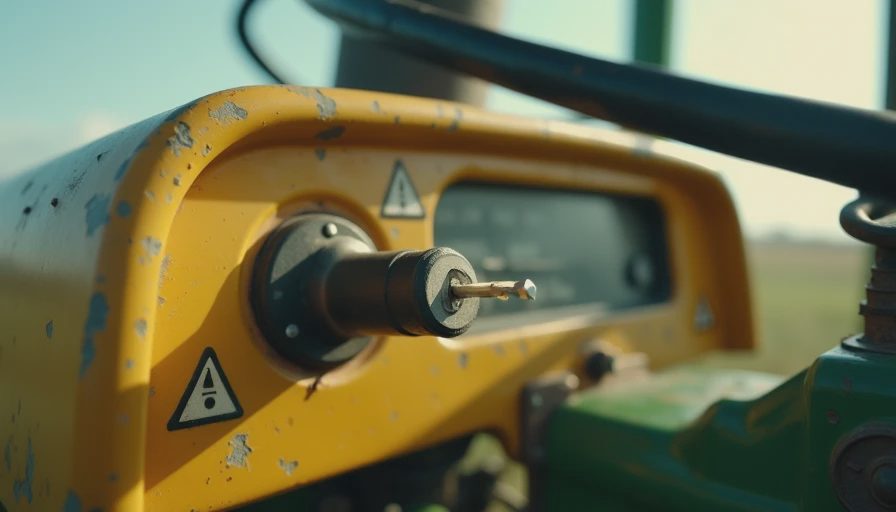
If the battery tests well but the starter does nothing, inspect the main fuse, ignition-switch circuit, starter relay, and cable connections. Look for green corrosion, loose ring terminals, and heat damage around the starter solenoid. A test light can show whether power reaches the solenoid’s control terminal while the key is held in the start position. Keep the tractor in neutral and stay clear of the wheels during this test.
A starter that clicks but does not turn can have worn contacts, a failed solenoid, or an internal motor problem. A starter that turns slowly may have high resistance in the cables even if the battery is new. Voltage-drop testing is more reliable than simply looking at the wires. If you are not comfortable testing a high-current circuit, take this to a pro. No shame in that; a shorted starter cable can arc hot enough to start a fire.
When It Cranks but Will Not Run
A cranking engine needs the correct amount of fuel, clean air, compression, and, on electronically controlled models, the right sensor signals. Check the fuel shutoff solenoid for movement and listen for its click when the key is turned on. Inspect the fuse panel for blown fuses, but replace a fuse only with the same rating. A replacement that blows immediately points to a short that needs diagnosis.
Do not keep cranking for several minutes at a time. Use short attempts, allowing the starter to cool between cycles. Excessive cranking can overheat the starter and drain the battery. If the exhaust shows white smoke while cranking, fuel may be reaching the cylinders but not igniting efficiently. Black smoke suggests an air shortage or over-fueling, while no smoke often points toward fuel shutoff or delivery trouble.
A Sensible Repair Decision
Good tractor won't start troubleshooting ends with a clear next step. Write down whether it clicks, cranks, smokes, or starts and dies. Record the battery voltage, fuel-filter condition, warning lights, recent repairs, and outdoor temperature. That information can save a technician diagnostic time and reduce your bill.
If the tractor starts after cleaning a terminal or correcting the PTO position, still inspect why the problem happened. Vibration, moisture, and long storage can bring the symptom back. Schedule routine fuel-filter, oil, coolant, and battery maintenance before the busy season rather than during a rain-soaked emergency.
Take it to a pro when high-pressure diesel fuel, electronic control modules, internal engine noise, hydraulic movement, or repeated fuse failures enter the picture. A professional with the correct wiring diagrams, scan tools, and load-testing equipment can find the cause without turning your repair into a parts-swapping contest. That is the heart of tractor won't start troubleshooting: start safely, test logically, and protect both your equipment and your wallet.