A guy brought in his truck last week with a toolbox full of shiny sockets and one worn-out pressure gauge. His Caterpillar loader had been sitting beside a ranch road for three days, and the actual problem was a hydraulic circuit that needed proper testing. That is the lesson behind specialised tooling to maintain caterpillar fleets: the right tool often saves more money than another hour of guessing.
I run a family shop in San Antonio, and our work has always crossed the line between automobiles, tractors, UTVs, and heavy equipment. Caterpillar machines are tough, but tough does not mean simple. A fleet of excavators, dozers, loaders, or skid steers needs organized diagnostic equipment, service tools, and safe lifting gear. Without them, a small fault can become a failed pump, damaged wiring harness, or machine parked during a critical job.
Start with a fleet tool audit
Before buying anything, list the Caterpillar models, engine families, attachments, and recurring faults in your fleet. A compact track loader used around a ranch has different needs from a 336 excavator working in a quarry. Write down each machine's hydraulic pressures, electrical connectors, filter sizes, fluid specifications, and service intervals from the operator and service information.
This list keeps a shop from buying impressive equipment that gathers dust. A basic fleet might need a digital multimeter, clamp meter, test light, infrared thermometer, grease equipment, thread gauges, torque wrenches, and hydraulic test kits. A larger operation could justify electronic service tooling, specialty adapters, injector testing equipment, and a dedicated contamination-control station.
Specialised tooling to maintain caterpillar fleets should match the machines you actually own. If every unit uses several coupler styles, adapters deserve priority. If electrical faults stop machines more often than hydraulic failures, spend first on connector service kits and circuit-testing equipment rather than a second set of large impact sockets.
Shop Trick: My grandfather taught me this trick — still works 40 years later. Keep a notebook beside the tool cabinet and record which tool solved each failure, including the model and part number. After one season, your buying decisions will be based on evidence instead of catalog pictures.

Diagnostic tools that earn their space
Electronic diagnostics are central to modern Caterpillar maintenance. A manufacturer-compatible service interface and approved diagnostic software can read fault codes, view live data, perform calibrations, and help verify sensor inputs. The tool does not replace mechanical testing, but it can point a technician toward an engine, aftertreatment, transmission, or hydraulic-control problem.
Use a quality digital multimeter with protected leads and a current clamp for electrical diagnosis. A weak alternator, poor ground, or voltage drop across a corroded connection can create several unrelated-looking fault codes. Back-probing connectors requires the correct probes; forcing a large test lead into a sealed terminal can spread the connection and create another failure.
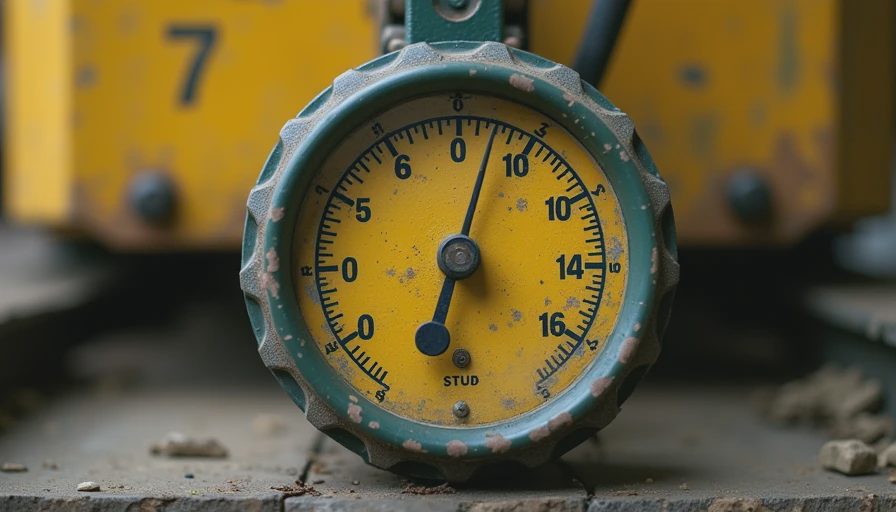
For hydraulics, a gauge set with suitable pressure ranges, hoses, quick couplers, and adapters is essential. Never install an unverified gauge on a high-pressure circuit. Hydraulic oil can penetrate skin, and a pinhole leak may be invisible while still causing a serious injection injury. Shut down the machine, lower implements, release stored pressure according to the service procedure, and wear eye and hand protection. If you cannot confirm the circuit is depressurized, take this to a pro.
Specialised tooling to maintain caterpillar fleets also includes an infrared thermometer and, for larger shops, a thermal camera. Comparing temperatures across a hydraulic valve bank, bearing housing, radiator, or electrical connection can reveal restriction and resistance. Record readings under the same operating conditions, because a cold startup and a loaded machine do not provide a fair comparison.
Service tools for engines and hydraulics
Torque matters on a Caterpillar machine. A calibrated torque wrench helps protect cylinder heads, wheel hardware, track components, hydraulic fittings, and engine fasteners. Use the wrench within its rated range, keep threads clean, and follow the specified tightening sequence. A cheater pipe on a torque wrench is not a calibration method; it is a good way to damage a fastener or the wrench.
Fluid service deserves equal attention. Use dedicated transfer pumps, clean drain pans, labeled containers, filter wrenches, and capped hoses. Diesel fuel and hydraulic oil contamination can shorten component life long before a driver notices poor performance. Color-coded caps and separate funnels cost little, while a failed hydraulic pump can cost thousands in parts and labor.
A portable fluid sampling kit is useful for tracking trends in engine oil, hydraulic oil, coolant, and final-drive lubricant. Sampling at consistent hours and temperatures gives a better picture than testing only after a breakdown. Watch for rising metal, fuel dilution, coolant contamination, or unusual viscosity. The sample does not authorize a repair by itself, but it can help schedule one before a machine quits in the field.
When selecting specialised tooling to maintain caterpillar fleets, consider serviceability as well as purchase price. A $250 professional pressure kit that gets used weekly can be a better investment than a $90 kit with leaking hoses and hard-to-find seals. Buy replacement seals, caps, and test leads when you buy the main tool.
Safety equipment is part of the tooling
A good shop setup includes heavy-duty jack stands, rated lifting points, wheel chocks, lockout tags, spill-control material, face shields, gloves, hearing protection, and an eyewash station. Never rely on a hydraulic jack, boom, bucket, or raised attachment to hold a person. Lower the equipment, block it correctly, and follow the machine's lockout procedure before reaching into a work area.
Compressed air deserves respect too. Do not use it to clean clothing or blow debris toward another worker. Diesel, solvents, and oily rags need approved storage and disposal practices. Keep battery chargers, welding equipment, and ignition sources away from fuel vapors. Rural shops often have limited space, so a marked service lane and a clean exit path matter more than a fancy cabinet.
My grandfather used to say that the best specialty tool is the one that prevents a funeral for a machine and a trip to the emergency room for a mechanic. That is why specialised tooling to maintain caterpillar fleets must include safety controls, not just gauges and software.
Build a maintenance workflow that pays back
Start every job with a complaint, operating hours, machine condition, and recent repair history. Photograph hose routing and connector locations before removing parts. Tag both ends of every disconnected line. Then inspect, test, repair, and verify in that order. Replacing parts before testing is how a $40 sensor becomes a $2,000 afternoon.
After service, check fluid levels, leaks, fastener torque, alarms, and attachment operation. Run the machine through a controlled test, not immediately into a loaded production cycle. Record the readings and parts used in a fleet log. Include the date, hour meter, technician, fault codes, pressures, temperatures, and follow-up date.
For a small ranch, a practical first purchase might total $1,000 to $2,500: multimeter, torque wrench, grease gun, infrared thermometer, basic hydraulic gauges, spill kit, and quality hand tools. A commercial fleet may spend $5,000 to $15,000 or more on electronic diagnostics, advanced hydraulic testing, lifting equipment, and fluid analysis. The right number depends on utilization and downtime costs.
When to call a Caterpillar specialist
Some work belongs in a qualified shop. High-pressure common-rail fuel systems, structural welding, track-frame repairs, refrigerant systems, software calibrations, and major hydraulic pump work can injure people or damage an expensive machine. Specialised tooling to maintain caterpillar fleets helps a trained technician diagnose these systems, but access to a tool is not the same as training to use it.
If a fault returns after wiring checks, if metal appears in a fluid sample, or if a machine loses hydraulic power under load, stop treating symptoms and schedule professional testing. Bring your service records and fault history; that can cut diagnostic time and labor. There is no shame in calling for help. On the ranch, we know when a fence post needs a hammer and when the tractor needs a mechanic.
The best specialised tooling to maintain caterpillar fleets is a balanced system: accurate testing equipment, clean service supplies, safe work supports, and disciplined records. Buy for your actual fleet, maintain the tools themselves, and train everyone who uses them. Do that, and your Caterpillar machines spend more time earning their keep and less time waiting beside the road.