A guy brought in his pickup last week and started telling me about his 2015 John Deere 5075E that's been sitting for two months because he couldn't find the time to service the hydraulics. That's the kind of story I hear a lot around here – and it's why good **agricultural machinery management** is more important than most people realize. Whether you're running a few dozen head of cattle like me or farming a couple hundred acres, the way you handle your equipment can make or break your season. Over the years, I've learned that a little planning goes a long way.
Why Agricultural Machinery Management Matters for Small Ranchers
Let me put it bluntly: a broken tractor costs you money even when it's sitting still. Every day my Massey Ferguson 1740 is down, I'm either paying someone else to do the work or letting the grass grow too long. Good **agricultural machinery management** isn't just about fixing things when they break – it's about scheduling maintenance so you avoid the breakdown in the first place. A typical hydraulic pump replacement runs $800 to $1,200 for parts and labor if you catch it early. If you let it fail completely, you're looking at double that. I've seen it happen.
I keep a simple logbook for each piece of equipment. Not fancy software – just a spiral notebook in the shop loft. Every oil change, filter swap, and tire pressure check goes in there. My grandfather taught me that trick – still works 40 years later. It's the backbone of my **agricultural machinery management** system. And it's saved me more than once when I needed to know exactly when the transmission fluid was last changed on the old John Deere 4020.
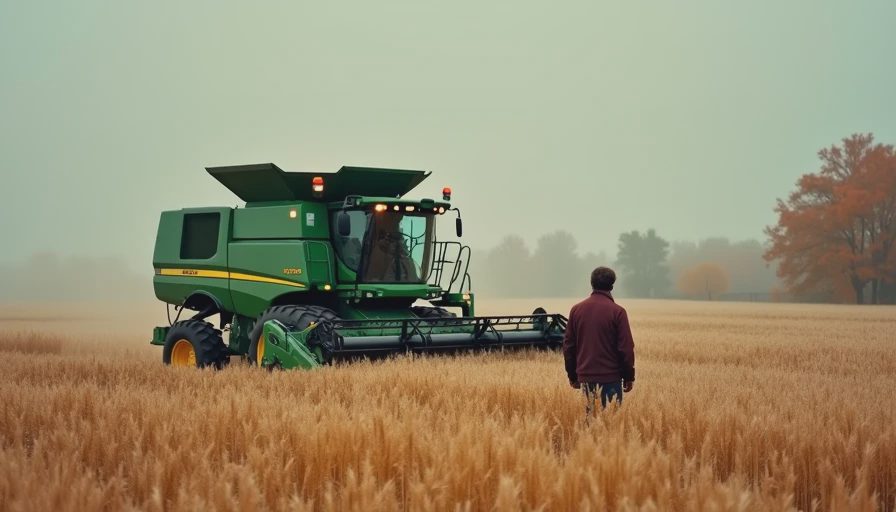
My Grandfather's Approach to Agricultural Machinery Management
My grandfather started this shop in 1988, and he always said, "You don't own equipment; you borrow it until it needs maintenance." He had a way of making **agricultural machinery management** feel like common sense. He'd grease every fitting after every 10 hours of use, religiously. I still do that today – and I've seen guys skip it and end up with worn-out joints that cost them a new axle.
**Shop Trick:** Keep a grease gun in each tractor's toolbox. When you finish a job, grease everything before you park it. My grandfather used a red paint stick to mark any fitting that needed special attention. That simple habit made his equipment last decades longer than the neighbors'.
I also do a five-minute walkaround before and after every use. Check tire pressure, look for fluid leaks, listen for odd noises. That walkaround is part of my daily **agricultural machinery management** routine. It catches problems before they become disasters. Last month, I found a leaking hydraulic line on my New Holland TC30 during a walkaround – a $20 hose swap instead of a $400 pump job.
Scheduling Repairs and Maintenance: A Practical Guide
You don't have to be a master mechanic to manage your machinery. What you need is a schedule. Here's the one I follow for tractors and UTVs:
- **Every 10 hours or daily**: Check fluids, grease fittings, inspect belts and hoses. Takes five minutes.
- **Every 50 hours**: Change engine oil and filter. Use a good brand like Shell Rotella or Mobil Delvac. Cost: about $60.
- **Every 100 hours**: Change hydraulic and transmission oil, replace fuel filter. Cost: $150-$200.
- **Every 200 hours**: Check valve clearances, replace air filter, inspect coolant. Cost: $100-$150 in parts.
- **End of season**: A full service – change all fluids, sharpen blades, check battery, inspect brakes. This is the big one, and it's where professional help often makes sense.
I write these intervals on a whiteboard in the shop. My son checks it every Friday. That kind of discipline separates good **agricultural machinery management** from the chaos that leads to a broken-down hay baler in July.

Common Mistakes in Agricultural Machinery Management
I've seen the same mistakes over and over. Here are the big three:
- **Ignoring small leaks.** A few drops of hydraulic fluid on the floor seems minor, but it usually means a seal is failing. Fix it when it's a $10 seal, not a $200 cylinder rebuild.
- **Running equipment with dirty fuel.** Diesel fuel grows algae and bugs. Use a fuel stabilizer like Power Service or Howes, and drain water from the separator monthly. I've drained a quart of water from my tank in August – that would have destroyed injectors.
- **Skipping operator's manual procedures.** The manual tells you the right oil viscosity and weight for each season. I've seen guys dump 15W-40 in a compact tractor year-round when the manual calls for 10W-30 in winter. That's a recipe for hard starts and premature wear.
Each of these mistakes costs you time and money. A solid **agricultural machinery management** plan catches them before they snowball.
When to Call a Pro for Agricultural Machinery Management
Look, I run a shop, but I also know my limits. If a job involves splitting the tractor or rebuilding a transmission, I'm taking it to the dealer or a specialist. No shame in that. **Agricultural machinery management** isn't about doing everything yourself – it's about getting the right work done at the right time. I've had customers try to fix a stuck PTO themselves and end up needing a whole new transmission case. That's a $3,000 mistake.
If you're not comfortable with advanced repairs, do what I tell all my customers: handle the basic maintenance yourself – oil changes, filters, greasing, walkarounds – and bring the machine in for anything involving hydraulics, electrical, or major drivetrain work. That balance keeps your costs down and your equipment reliable.
Final Thoughts
Good **agricultural machinery management** comes down to consistency. You don't need a degree or a fancy shop. You need a schedule, a little discipline, and the humility to know when to call a pro. My grandfather's notebook is still sitting on the shelf in the loft. I look at it every time I start a new season. It reminds me that taking care of your machinery is really about taking care of your livelihood. Keep up with it, and your tractor will be running long after the payments are done.
If you're in the San Antonio area and need a hand with a repair or just want me to take a quick look at a machine, stop by the shop. We keep the coffee hot and the advice free.