Last summer, a ranch neighbor came by with a cut on his cheek and a story that made me wince. He had used an air hose to blow dust from a tractor seat, and a small piece of gravel came back at him. He was lucky it missed his eye. A compressed air safety workshop is not about scaring people away from a useful tool; it is about teaching everyone to respect stored energy, flying debris, noise, and hose pressure before they open the valve.
I have worked in my family's San Antonio shop since I was 22, and I see the same mistakes around air compressors in repair bays, barns, and home garages. The equipment looks simple, but a 120-psi line can turn a loose fitting into a projectile. My grandfather taught me this trick — still works 40 years later: before touching a tool, trace the air path from the tank to your hand and identify what could release unexpectedly.
What a compressed air safety workshop should cover
A useful compressed air safety workshop starts with the compressor, not the blow gun. Workers and ranch hands should know where the shutoff valve, pressure gauge, drain valve, and emergency disconnect are located. They should also understand the difference between tank pressure and the regulated pressure sent to a tool. Never remove a fitting or service a pneumatic tool while the line is pressurized. Shut off the supply, bleed the hose, and verify the gauge has dropped before making a repair.
Inspect the receiver tank for visible rust, dents, oil contamination, and overdue inspection markings. Do not weld, drill, or modify a pressure vessel. A damaged tank belongs with a qualified service company or replacement supplier. Drain accumulated water according to the manufacturer's instructions, especially in humid climates such as South Texas. Moisture contributes to corrosion and can damage impact wrenches, die grinders, and air-operated pumps.
The workshop should include a hands-on hose inspection. Look for cuts, bubbles, crushed sections, exposed reinforcement, and couplers that do not lock securely. A 50-foot hose can whip hard if it separates, so replace questionable hoses rather than wrapping them with tape. Route lines away from walkways, sharp sheet metal, hot exhaust components, and tractor tires.
Eye, hearing, and skin protection around air tools
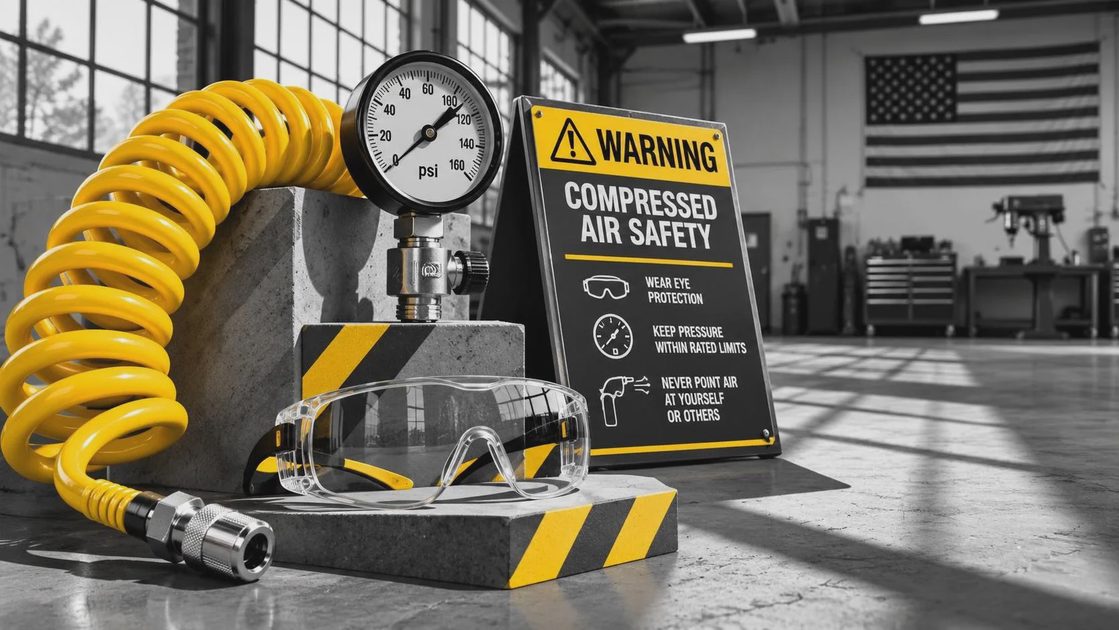
Compressed air can carry metal chips, brake dust, rust, and cleaning chemicals. Safety glasses with side protection are the minimum in my bays, and a face shield is sensible when cleaning parts or using a high-speed pneumatic grinder. Regular prescription glasses are not a substitute for impact-rated eye protection. Keep the glasses on even if you expect to blow off only a little dust; the unexpected piece is the one that causes the injury.
Hearing protection matters too. Air ratchets, needle scalers, and die grinders can produce a sharp, tiring noise, particularly in a steel building or enclosed garage. Use properly fitted earmuffs or earplugs, and do not assume a short job is harmless. A compressed air safety workshop should let people compare the sound of tools with and without hearing protection so the lesson feels real rather than theoretical.
Never use compressed air to clean clothing, hair, hands, or skin. Air forced into a cut can drive contamination deeper into tissue, and an air stream near the ear can cause serious damage. For dusty work clothes, use a vacuum, a soft brush, or a designated laundry process. For parts, use a parts washer, rag, or approved low-pressure cleaning method when practical.
Shop Trick: Keep a vacuum and a stiff nylon brush beside the compressor hose. If the safer tool is closer, people are more likely to use it. My grandfather kept both on a hook beside the old loft stairs, and that small habit prevented plenty of grit from becoming airborne.
Pressure settings, blow guns, and pneumatic tools
Follow the tool manufacturer's pressure and airflow requirements instead of turning the regulator all the way up. More pressure does not automatically mean more work gets done. An impact wrench operated above its rating can damage fasteners, stress the tool, or make control harder. Use the lowest pressure that completes the job, and select the correct socket, bit, chuck, or abrasive accessory.
Blow guns deserve special attention. Use a safety-tip model designed to reduce dead-end pressure, and never point one at another person, an animal, or an open bearing. Do not use compressed air to spin bearings, pulleys, or other rotating parts. A component can overspeed, shed fragments, or throw grease into someone’s face. Keep your free hand out of the line of fire and secure loose clothing before using a die grinder.
For tire service, use a clip-on chuck and stand clear of the sidewall when inflating. If a tire has a damaged bead, exposed cords, severe sidewall cracking, or an unknown repair history, take this to a pro. Tire inflation is not the place to prove a point, and a shop's safety cage and trained technician are worth far more than a cheap shortcut.
Training for a small shop or ranch crew
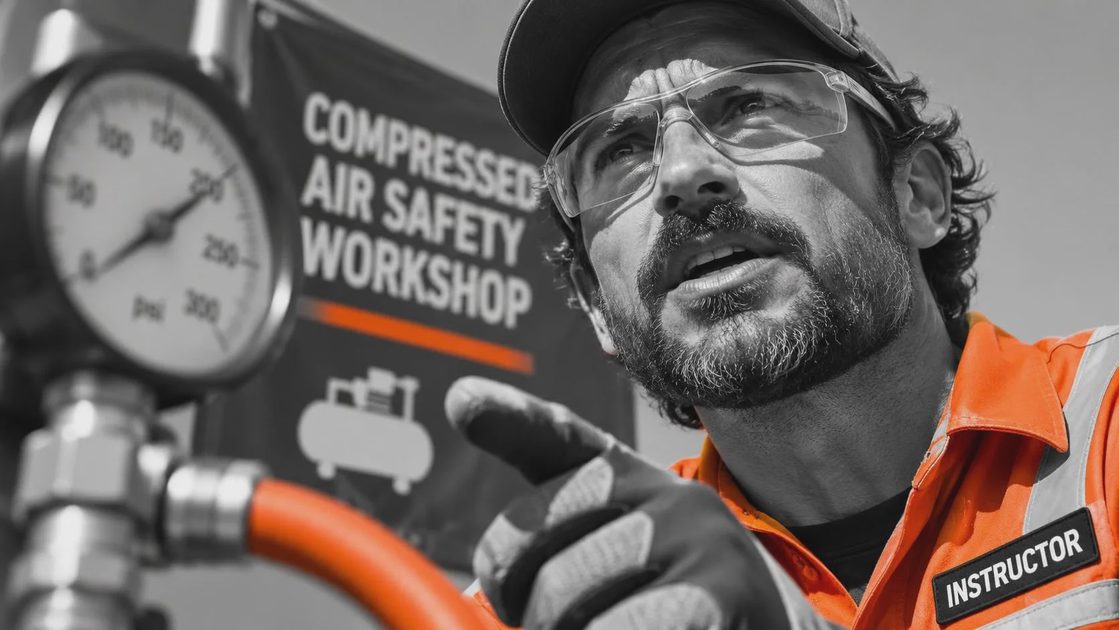
A compressed air safety workshop works best when it is short, specific, and repeated. I would spend 20 minutes reviewing the system, then demonstrate a proper shutdown and hose connection. Have each employee or family member identify the compressor disconnect, regulator, emergency stop if fitted, and first-aid kit. Ask them to show how they would bleed a hose before changing a tool.
Use simple examples from the property. Point out the hose crossing a tractor path, the coupler near a welding table, or the dusty corner where eye protection is often forgotten. A new worker should not operate a compressor alone until they can explain the pressure rating on the hose and tool. Post a one-page checklist near the unit, including “inspect hose,” “wear eye protection,” “set regulator,” and “bleed before service.”
Do not train people to repair pressure switches, relief valves, tanks, or electrical controls unless they are qualified for that work. Take this to a pro when the compressor cycles abnormally, leaks from a tank, trips a breaker, or shows a faulty safety valve. Saving a service call is not worth turning a repair bay into a hazard.
A practical inspection routine before every shift
Before starting work, walk through this routine:
- Check the tank, fittings, drain, gauge, and electrical cord for visible damage.
- Confirm the relief valve and pressure controls are not blocked, altered, or leaking.
- Examine hoses and couplers, then connect them with the supply valve closed.
- Put on impact-rated eye protection and hearing protection when the task requires it.
- Set the regulator to the tool's stated range, not the maximum tank pressure.
- Secure the workpiece and keep bystanders outside the tool's operating area.
- Close the supply and bleed the line before changing accessories or making repairs.
That checklist takes less than two minutes. At our shop cookouts, the younger mechanics sometimes tease me for repeating it, but they also know why we do it. A safe operation protects payroll, equipment, and the person who has to drive home at the end of the day.
When professional instruction is the right choice
A compressed air safety workshop cannot replace qualified service for a failing compressor, damaged tank, or suspected pressure-control problem. It can, however, give a crew the habits that prevent many ordinary injuries. Consider bringing in an industrial safety trainer if you have several employees, multiple compressors, sandblasting equipment, or a history of hose failures. The cost is often modest compared with an emergency-room visit, lost work, or a damaged $800 pneumatic tool.
At home, start with the same discipline: read the manuals, buy rated hoses and fittings, keep children away from the equipment, and never aim air at a person or animal. If you're not sure, take it to a pro. No shame in that. The best shop lesson is the one that lets everybody finish the job with both eyes protected, both hands working, and enough energy left to check the cattle before supper.