A guy brought in his truck last week after a hurried home repair left one side sitting crooked on a lift. Nothing fell, but the truck had shifted enough to bend a lift arm pad and scare everybody in the bay. That is why I take car lift safety tips seriously. A lift is one of the most useful tools in a garage, but it is not a taller floor jack. It can raise several thousand pounds above your head, and small mistakes become serious trouble quickly.
I grew up in the original shop loft, sweeping floors while my grandfather and father worked below. Three generations taught me the same lesson: slow down before raising anything. Whether you service a compact pickup, a diesel work truck, or a UTV, use the lift's rated capacity, follow its manufacturer instructions, and never trust a shortcut.
Start With the Lift, Floor, and Vehicle
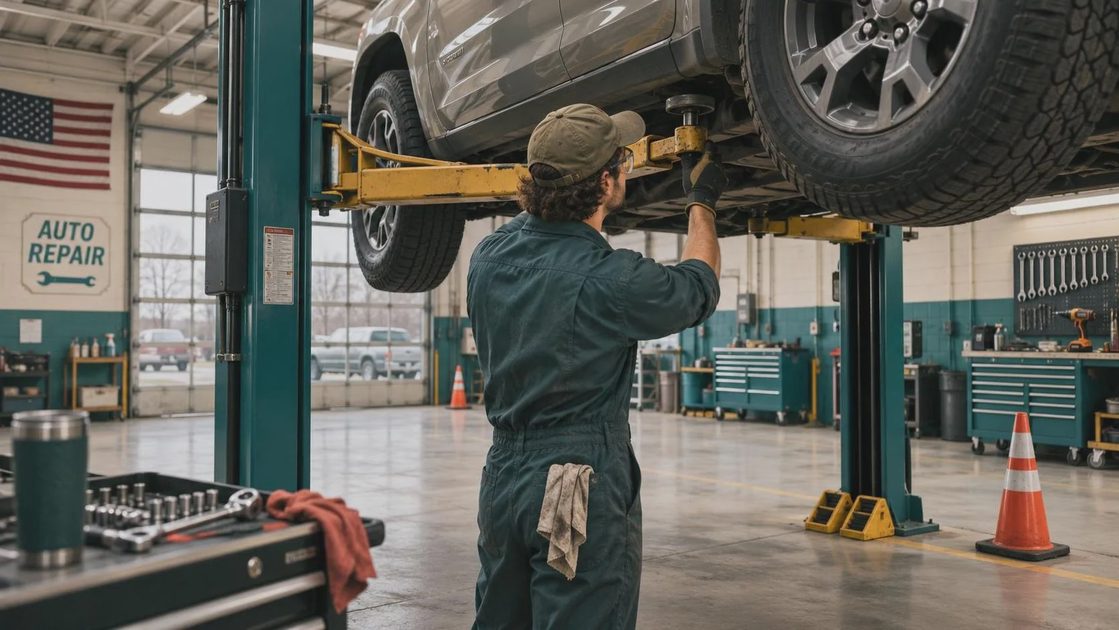
Before positioning a vehicle, inspect the lift itself. Look for leaking hydraulic fluid, frayed cables, damaged hoses, bent arms, cracked welds, missing hardware, and worn rubber pads. On a two-post lift, make sure the arm restraints engage and that the adapters are secure. On a four-post lift, inspect the ramps, wheel stops, runways, and any bridge jacks. A lift that makes a new grinding or clicking sound deserves professional attention before it carries a vehicle.
The concrete floor matters just as much. It must meet the lift manufacturer's thickness and strength requirements, and it should be reasonably level. Do not install a lift on cracked concrete, loose asphalt, or a patched area without having the site evaluated. In a rural shop, a smooth-looking slab can hide years of moisture damage or settling. Have a qualified installer inspect questionable flooring.
Check the vehicle's approximate weight before lifting. A half-ton pickup with tools in the bed can weigh far more than an empty compact car. Compare that total with the lift's rated capacity, not just its advertised vehicle class. Remove loose cargo, close doors, and make sure the tires, suspension, and body panels will not contact the arms or runways.

Position the Lifting Points Correctly
Correct lifting points are at the heart of car lift safety tips. Use the points shown in the owner's manual or the lift adapter guide. On a unibody car, those locations may be reinforced pinch welds or designated frame points. On a body-on-frame truck, they may be frame sections, but the exact location still matters. Never place an arm under a thin floor pan, exhaust pipe, differential housing, control arm, fuel tank, or suspension component unless the manufacturer specifically allows it.
Set all four arms or contact points evenly, then step back and visually confirm that every pad is centered. The pads should contact solid metal, with enough clearance from plastic trim and brake lines. If an adapter is needed for a Ford truck, Jeep, Corvette, or other unusual vehicle, use the correct accessory rather than stacking random blocks. Homemade wood pieces can split, slide, or compress unexpectedly.
Raise the vehicle only a few inches at first. Stop, walk around it, and check that the pads remain centered and the vehicle is level. Gently rock the vehicle from a safe position, never by placing yourself underneath it. If it shifts, lower it and reposition the arms. This pause takes less than a minute and catches many dangerous setups.
Use the Locks, Not Just Hydraulic Pressure
Hydraulic pressure holds a lift up during raising, but mechanical locks are what should support it while you work. Once the vehicle reaches the desired height, lower it onto the manufacturer's locks. Listen for the lock engagement and verify that both sides are resting properly. Never rely on a hydraulic cylinder alone, especially while removing a transmission, axle, engine component, or heavy attachment.
One of the most important car lift safety tips is to keep the load balanced. Removing a heavy engine, battery pack, transfer case, or loader component can change the center of gravity. A vehicle that was stable before disassembly can become nose-heavy or tail-heavy afterward. Use approved transmission jacks, support stands, or a second lifting method when the repair changes the weight distribution. Do not improvise with a floor jack under an unstable point.
My grandfather taught me this trick — still works 40 years later: after locking a vehicle, walk away for a few seconds and look at it as if you did not raise it yourself. A crooked stance, compressed pad, or uneven arm angle is easier to notice from a distance. Shop Trick: mark the safe arm positions for common vehicles in your bay, but still confirm the actual lifting points every time.
Keep People and Equipment Out of the Danger Zone
Clear the bay before raising or lowering. Nobody should stand in the vehicle's path, sit inside it, or reach beneath it while the lift is moving. Keep tools, creepers, oil drains, battery chargers, and parts carts away from the arms and tires. Warn anyone nearby before operating the controls. A busy shop needs one person directing the lift, not several people giving conflicting signals.
Wear safety glasses when working underneath, and use hearing protection if the shop is loud. Tie back loose clothing and remove dangling jewelry. Never work beneath a vehicle supported only by a jack. If you need extra protection, use properly rated safety stands as a backup, positioned at approved support points. Stands are not a substitute for a locked lift, but they can provide additional protection when used correctly.
Lower the vehicle slowly and watch every corner. Confirm that no jack, stand, drain pan, tool, or person is underneath. On a four-post lift, check that doors, mirrors, and tailgates clear nearby structures. Lowering too quickly can damage the car and create a second hazard when equipment catches on the vehicle.
When a Home Garage Should Stop
Some lifting work belongs in a professional shop. Take it to a pro if the lift is newly installed, the slab is questionable, the cables are uneven, the locks fail to engage, or you cannot identify the correct lifting points. Electrical faults, hydraulic leaks, structural cracks, and unusual movement are not beginner repairs. Do not defeat a safety lock, bypass a limit switch, weld a cracked arm, or use an adapter that was not designed for the lift.
The same caution applies to agricultural equipment. A tractor, mower, or UTV may have a high center of gravity and attachments that shift weight unexpectedly. A compact tractor lifted for tire service is not handled like a sedan. Lower attachments to the ground when possible, shut off the engine, remove the key, and block wheels according to the manufacturer's procedure. If the machine requires specialized stands or a service manual, call a qualified equipment technician.
A Simple Pre-Work Routine
Before every job, confirm five things in plain language: the lift is inspected, the vehicle weight is within capacity, the contact points are correct, the mechanical locks are engaged, and the bay is clear. Say those checks out loud when training a new helper. A routine that feels repetitive is exactly what protects people when the shop is busy and a customer is waiting.
Write down defects and tag an unsafe lift out of service. A $50 inspection or a service call is cheap compared with body damage, downtime, or a crushed hand. Car lift safety tips are not about being timid; they are about controlling the load before the load controls you. If you're not sure, take it to a pro. No shame in that. The truck, tractor, and family waiting at home are worth the extra time.