A guy brought in his truck last week after a small wiring fire under the hood. He had a garden hose nearby, but no extinguisher, and the few seconds spent finding a safe response turned a minor problem into damaged wiring and melted plastic. On a farm or in an auto bay, knowing the fire extinguisher types farm workshop owners need is not a paperwork exercise. It is practical protection for equipment, buildings, livestock, and people.
The right extinguisher does not replace shutting off power, moving people away, or calling 911. It gives you a chance to stop a small, early-stage fire before it reaches fuel cans, hay, tires, or a diesel tank. Here is how I think about the setup at my San Antonio shop and the ranch property outside town.
How fire classes match farm and shop hazards
Fire extinguishers are rated by the material burning. Class A covers ordinary combustibles such as wood, cardboard, cloth, rubber, and hay. Class B covers flammable liquids, including gasoline, diesel, kerosene, solvents, paints, and some oils. Class C applies to energized electrical equipment, such as a live breaker panel, battery charger, welder, compressor, or vehicle wiring.
Many extinguishers combine ratings. An ABC extinguisher is the sensible general-purpose choice for most barns, garages, and equipment sheds because it handles ordinary combustibles, flammable liquids, and energized electrical fires. The dry chemical inside can leave a corrosive or difficult-to-clean residue, so it is excellent for stopping a fire but not ideal around delicate electronics.
Class D is for combustible metals such as magnesium, sodium, or titanium. That is a specialized hazard found in certain machining and manufacturing operations, not a normal tractor bay. Class K is designed for cooking oils and grease in commercial kitchens. It does not replace an ABC unit in a farm workshop, but it belongs near a serious shop kitchen or fryer.
Choosing fire extinguisher types farm workshop layouts actually need
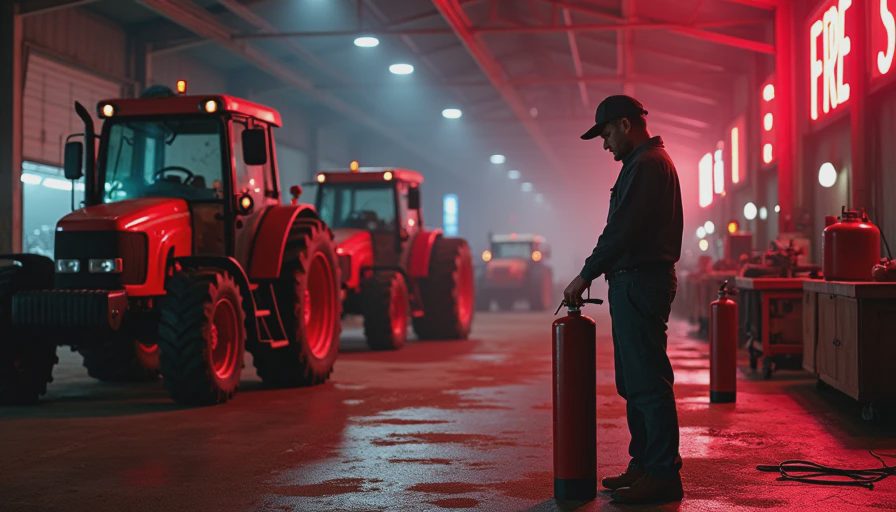
For a typical detached workshop, start with a rechargeable ABC extinguisher rated at least 2-A:10-B:C, and place it near an exit rather than directly beside the most likely fire source. A 5-pound unit is easier to handle than a 10-pound model, while a larger shop may justify two or more units. You should be able to reach one without walking through smoke or passing the welding table.
A second ABC unit near the tractor entrance can protect equipment parked inside and provide coverage if a fire starts near the workbench. In my shop, the extinguishers are mounted where a person can see them immediately from the bay. They are not buried behind tires, stacked parts, or a cabinet full of old filters.
For a computer-controlled vehicle, battery service area, or expensive diagnostic bench, consider a clean-agent extinguisher. These units leave little or no residue and are useful around sensitive electronics, but they cost more and are not a reason to skip ABC coverage. An extinguisher marketed for lithium-ion batteries can be helpful for certain battery fires, yet battery failures can reignite. Move away, call emergency services, and follow the product label rather than trying to fight a growing pack fire.
Fuel, welding, and tractor-specific placement
Fuel storage changes the plan. Keep gasoline and other flammable liquids in approved containers, away from ignition sources and exits. An ABC extinguisher near the fuel-storage route is one of the most important fire extinguisher types farm workshop arrangements require. Do not mount it inside a locked fuel room where a fire could trap you.
Welding and cutting create sparks that travel farther than many people expect. Clear hay, cardboard, oily rags, and sawdust from the work area. Keep an extinguisher within a short, unobstructed walk, and inspect the surrounding space after hot work is finished. Smoldering material can hide under a tractor, behind wall insulation, or in a pile of grinding dust.
A diesel tractor is not automatically safe because diesel is harder to ignite than gasoline. Hot exhaust components, electrical shorts, hydraulic oil, and oily debris still create real hazards. Let a hot machine cool before parking it beside hay or a wooden shed. Clean oil from engine compartments and repair leaking fuel lines instead of treating the extinguisher as a maintenance plan.
Shop Trick: My grandfather taught me this trick — still works 40 years later. After servicing a machine, walk around it once with a flashlight and look for wet fuel, oil on the exhaust, loose battery cables, and rags left on a manifold. Five minutes of prevention beats reaching for a cylinder while a customer’s truck is burning.
How to use an extinguisher without becoming the next emergency
Only attempt to extinguish a small fire when you have a clear escape route, the fire is limited, and emergency services have been called or someone else is calling. If smoke is heavy, flames are spreading, a propane cylinder is heating, or the fire is larger than a small wastebasket, leave immediately. Do not fight a fire in a closed barn or crawl under a vehicle to reach flames.
Use the PASS method: pull the pin, aim the nozzle at the base of the fire, squeeze the handle, and sweep from side to side. Stay several feet away at first and move closer only if the flames shrink. Wind matters outdoors, so keep the wind at your back when possible. Never use water on a gasoline, oil, or energized electrical fire; it can spread burning liquid or create a shock hazard.
If the extinguisher empties and the fire is still active, retreat. A partially used unit should be recharged or replaced, even if the gauge appears normal. Fire extinguisher types farm workshop owners buy are only useful when the operator can reach and control them, so practice reading the instructions before an emergency.
Inspection, service, and replacement
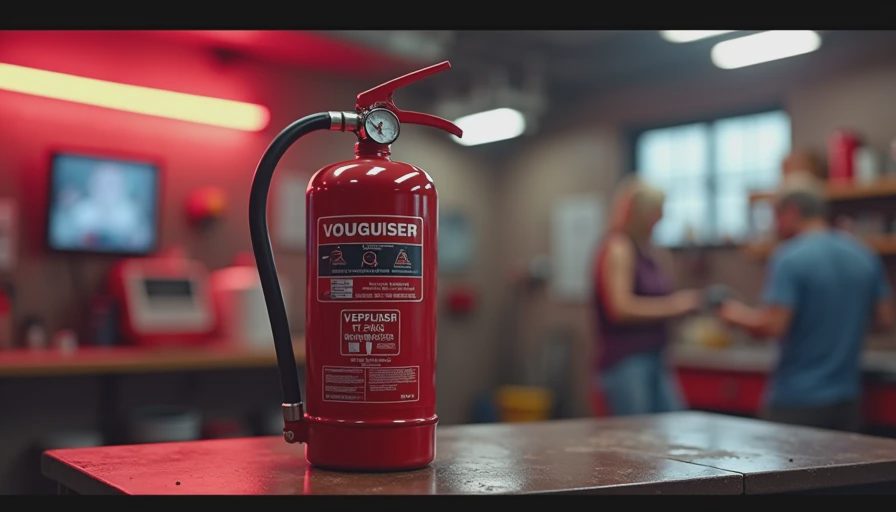
Check each extinguisher monthly. Confirm that the gauge is in the green range, the pin and tamper seal are intact, the hose or nozzle is clear, and the cylinder has no rust, dents, leaks, or oily buildup. Make sure the mounting bracket is secure and the inspection tag is current. Shake some dry-chemical models gently according to the manufacturer’s instructions if the label permits; powder can pack down over time.
Do not leave an extinguisher in a vehicle cab or in direct Texas sun unless it is specifically rated and installed for that environment. Heat can damage the cylinder and pressure components. Replace a unit with corrosion, a damaged hose, a missing label, or an unreadable gauge. Rechargeable models should be serviced by a qualified fire-equipment company after use and at the intervals required by the manufacturer or local rules.
A practical setup for a small rural property
For a one-bay workshop, I would begin with one accessible ABC extinguisher by the exit, another near the equipment door, and a smaller unit in the service vehicle if repairs happen away from the shop. Add clean-agent protection near sensitive electronics and a properly rated extinguisher near any special cooking or metalworking hazard. The best fire extinguisher types farm workshop owners select are the ones matched to the fuel, mounted visibly, and maintained year after year.
Tell everyone who uses the building where the extinguishers are and when to walk away. Include teenagers, seasonal help, and anyone who may be feeding cattle or moving equipment when you are away. Review the plan at a shop meeting or during a ranch cookout, then keep exits clear and emergency numbers posted. If you are unsure about placement, extinguisher sizing, or a chemical hazard, call a qualified fire-protection professional. If you're not sure, take it to a pro. No shame in that.