A guy brought in his truck last week after a farm-shop welding job went sideways. The weld itself held, but sparks caught a rag under the workbench and filled the bay with smoke. Nobody was hurt, thankfully, but it was a sharp reminder that welding safety farm shop habits matter as much as amperage, wire speed, or choosing the right rod. In my San Antonio shop and on my ranch, I treat every weld as hot work with the potential to start a fire, damage eyesight, or create dangerous fumes.
Start With the Farm Shop Layout
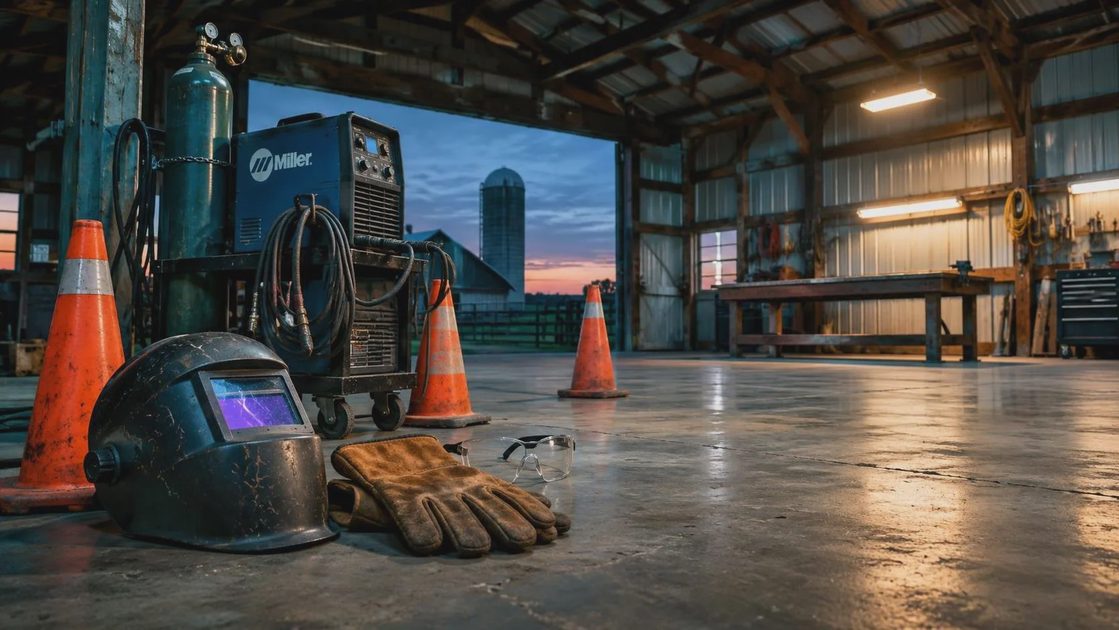
Good welding safety farm shop practice begins before the machine is switched on. Choose a dedicated welding area with a noncombustible floor, preferably concrete, and keep it away from hay, feed sacks, fuel cans, lumber, cardboard, and parked vehicles. A clean corner of the shop is better than the middle of a crowded equipment bay, but even a clean corner needs inspection before work begins.
Move combustible materials well beyond the spark path. Grinding sparks can travel farther than a person expects, especially when a door or fan creates a strong draft. Hang welding curtains around the work area to protect nearby people from arc flash, but do not use ordinary plastic sheeting. Use curtains and screens made for welding applications, and leave enough ventilation for fumes to escape.
Keep a suitable fire extinguisher close, visible, and reachable without walking through the work zone. An ABC extinguisher is a common choice for a mixed farm shop, but it does not replace removing fire hazards. After welding, stay in the area and inspect the floor, wall, and the opposite side of the material for at least 30 minutes. Hot slag can hide in cracks or fall into insulation and smolder long after the arc is out.
Shop Trick: My grandfather taught me this trick — still works 40 years later. Before striking an arc, walk the spark path with your hand and eyes. If you would not want a spark landing there, move it, cover it with a welding blanket, or postpone the job.
Protect Your Eyes, Skin, and Lungs
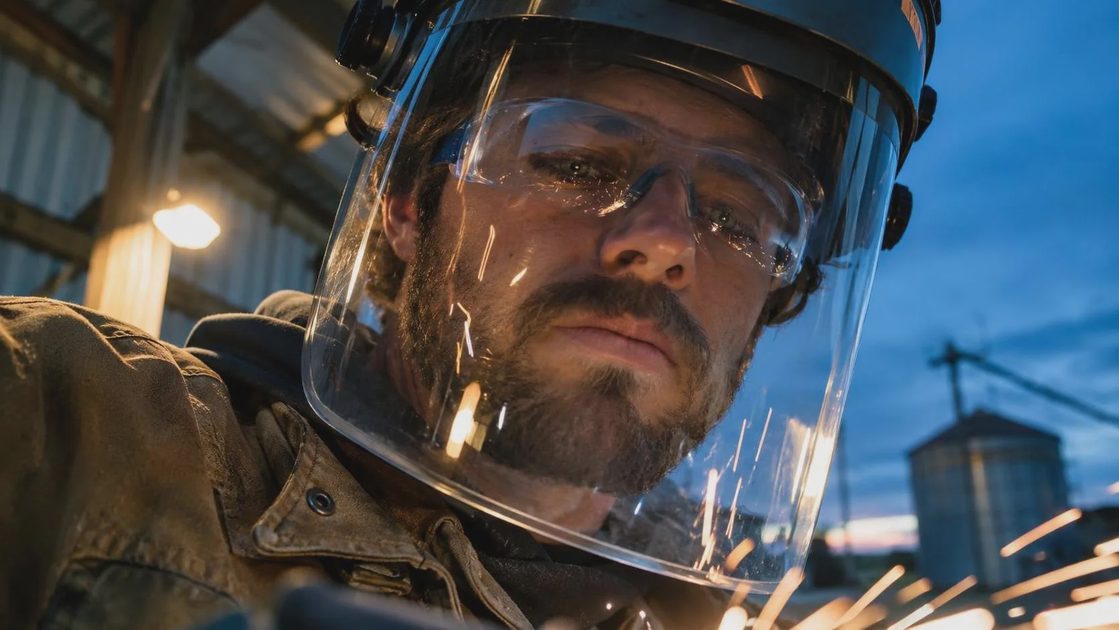
A welding helmet with the correct shade is the first line of defense against arc radiation. Auto-darkening helmets from Lincoln Electric, Miller, and Jackson Safety are convenient, but inspect the lens, batteries, and reaction before starting. A cracked cover lens can obscure the work and expose the filter to damage. Never look at an active arc through a clear shop window or ordinary safety glasses.
Wear safety glasses under the helmet because grinding, chipping slag, and wire fragments do not wait for the hood to drop. Use a flame-resistant welding jacket or sleeves, leather gloves suited to the process, long pants without cuffs, and leather work boots. Synthetic shirts and athletic clothing can melt against skin. Button collars and pockets so sparks cannot settle inside them.
Ventilation deserves the same attention as eye protection. Welding galvanized steel, painted parts, stainless steel, or material with unknown coatings can release hazardous fumes. Clean the metal before welding, use local exhaust when possible, and keep your face out of the plume. A basic dust mask is not a substitute for proper respiratory protection. If you cannot identify the coating or control the fumes, stop and take the job to a pro.
Welding safety farm shop planning also means protecting anyone who wanders into the bay. Children, customers, and livestock should not be near active welding. A curtain blocks light, not every hazard, so keep the work area controlled from start to finish.
Handle Cylinders, Leads, and Power Correctly
Gas cylinders deserve respect even when they appear calm and stable. Store oxygen, argon, and fuel-gas cylinders upright and secured with a chain or strap. Keep valve caps installed when cylinders are not connected, separate oxygen from oil and grease, and keep cylinders away from heat, vehicle impact, and direct flame. Do not drag or roll a cylinder across the floor. Use a proper cart and close the valve before moving it.
Inspect hoses, regulators, torch connections, electrode holders, and ground clamps before each job. Replace cracked hoses, damaged insulation, loose fittings, and cables with exposed conductors. Never use an oily glove on an oxygen fitting, and never improvise a repair with tape. If a cylinder leaks, move people away, shut the valve only if it can be done safely, and call the supplier or emergency services as appropriate.
For electrical welding safety farm shop work, use the correct circuit and a properly grounded machine. Keep cables out of standing water, doorways, and vehicle paths. Do not weld in rain or while standing in wet clothing. A clean, tight work clamp reduces heat at unexpected points and helps produce a more stable arc. Disconnect power before opening a machine cabinet; internal capacitors can retain dangerous energy, so take that repair to a qualified technician.
Shop Trick: I mark cables that belong to each machine with colored tags and hang them on dedicated hooks. That small habit prevents a lead from being pinched under a tractor tire or left across the walkway.
Prepare Farm Equipment Before Welding
Welding directly on a tractor, UTV, trailer, or truck requires more than cleaning the visible repair. Disconnect the battery according to the equipment manufacturer’s guidance, isolate sensitive electronic modules when required, and place the ground clamp close to the weld. Do not let current travel through wheel bearings, hydraulic components, engine controls, or wiring harnesses.
Drain, remove, or shield fuel and hydraulic hazards before applying heat. A fuel tank that looks empty can still contain vapor. Never weld on a tank, drum, or container that held gasoline, diesel, solvents, or chemicals unless it has been professionally cleaned and declared safe. Hydraulic oil under pressure can inject into skin or ignite on hot metal. Relieve pressure and replace damaged lines rather than trying to weld them in place.
Remove paint, rust, grease, and undercoating from the weld zone, but control the dust and fumes created by cleaning. Check both sides of a panel before grinding or cutting. On a trailer or implement, look for hidden wiring, hoses, bearings, and enclosed cavities where sparks can collect. Welding safety farm shop work is often lost during preparation, not during the actual bead.
If the repair involves a structural loader arm, rollover protection structure, hitch receiver, pressure vessel, or critical steering component, take this to a pro. A visually attractive weld can still have poor penetration or change the strength of heat-treated steel. There is no shame in paying for inspection when a failure could injure somebody.
A Simple Shutdown and Fire Watch
When the weld is finished, close the cylinder valve, release line pressure where appropriate, switch off the machine, and unplug it if the manufacturer permits and the equipment will not be used again soon. Place hot tools where nobody can step on them. Let metal cool in a marked location rather than setting it on a wooden bench or near a tire.
Walk the area slowly. Look behind curtains, beneath the workbench, inside frame rails, under equipment, and on the other side of walls. Feel for heat only with caution; an infrared thermometer is a safer option for checking suspicious surfaces. Keep the fire extinguisher available during the fire watch, and do not leave the property immediately after hot work.
My grandfather taught me this trick — still works 40 years later: after closing the shop, make one final pass with the lights low. A glowing ember or thin smoke column is easier to spot than it was under bright task lighting. At our family shop, that habit has prevented more trouble than any fancy gadget.
Build a Repeatable Welding Routine
Reliable welding safety farm shop habits come from a checklist, not memory. Before work, clear combustibles, inspect PPE, check ventilation, secure cylinders, inspect leads, and confirm the extinguisher is ready. During work, keep the helmet down, control sparks, maintain a stable stance, and stop if fumes or equipment behavior changes. After work, shut down the gas and power, inspect for heat, and complete the fire watch.
Keep a small log near the welder with cylinder changes, damaged equipment, and repairs that need attention. Replace a scratched helmet lens, worn glove, or frayed lead before it becomes an emergency. Store rods and wire dry according to the manufacturer’s instructions so the machine and operator are not fighting contaminated material.
This approach saves money because it prevents ruined wiring, burned buildings, damaged equipment, and missed work. It also teaches apprentices and family members that speed is never the main goal. If you are not sure whether a material, coating, cylinder, or structural repair is safe, stop and take it to a pro. Good welding safety farm shop practice is not about fear; it is about coming back tomorrow with the shop, the tractor, and your eyesight intact.