A guy brought in his truck last week after a floor jack slipped while he was changing a tire. He was lucky: a bent fender and a frightened family, but no broken bones. That is why health and safety garage workshop habits matter whether you run a professional bay, maintain a ranch UTV, or work on a pickup in your driveway. A clean floor, the right support equipment, and a few unexciting routines prevent the kind of accident that changes a family forever.
I learned those routines in my grandfather's converted warehouse on San Antonio's south side. The old shop had a loft full of parts, a concrete floor worn smooth by decades of boots, and one rule nobody questioned: stop and make the job safe before reaching for a wrench.
Start with a Safe, Organized Bay
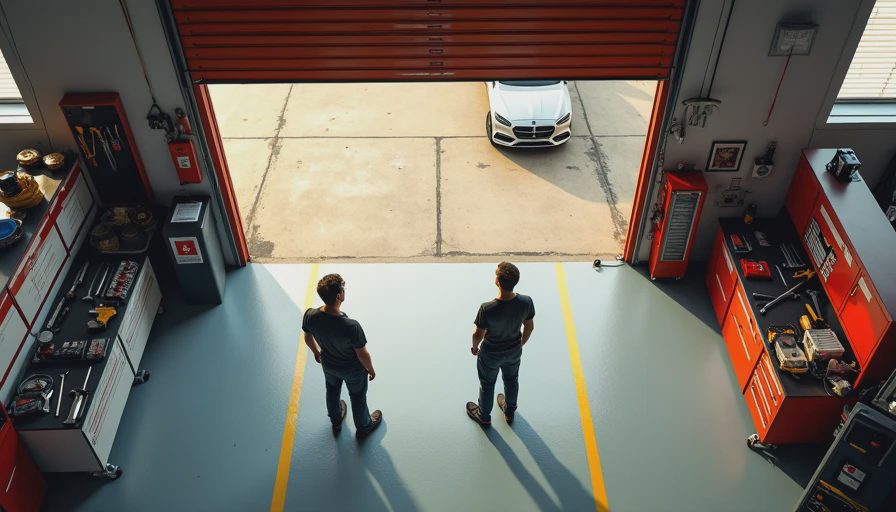
A safe bay begins before the vehicle enters. Walk the floor and remove oil-soaked rags, loose sockets, extension cords, and air hoses. A $20 absorbent pad is cheaper than a fall, and a few minutes with a broom can keep a mechanic from stepping onto a hidden fastener. Mark a clear walking path around lifts, toolboxes, and workbenches.
Keep exits, electrical panels, fire extinguishers, and first-aid supplies visible. Do not stack tires or parts in front of a door. Store heavy items low, especially brake rotors, batteries, mower decks, and tractor attachments. Shelves should be anchored to wall studs, not simply balanced against a wall.
Lighting matters in a health and safety garage workshop. Add bright LED fixtures over the vehicle and a portable, low-voltage inspection light underneath. Shadows can hide a cracked hose, leaking fuel line, or loose jack stand. Never use an open flame to inspect a fuel leak, and do not work beneath a vehicle supported only by a jack.
Lifting Vehicles and Equipment Without Taking Chances
Jack and lift mistakes are among the most serious hazards in a garage. Park on solid, level ground, place the transmission in park or in gear, set the parking brake, and chock wheels that remain on the floor. Find the manufacturer's approved lifting points rather than guessing from a convenient crossmember or suspension arm.
Once raised, support the vehicle with properly rated jack stands on solid contact points. Give the body a firm push from the side before getting underneath. If it shifts, lower it and start again. Never place any part of your body beneath a tractor bucket, dump bed, mower deck, or loader held only by hydraulic pressure. Use mechanical support pins or rated stands designed for that equipment.
For a two-post lift, confirm the arms are seated correctly and the load is balanced. Lift a few inches, pause, and inspect the contact points before going higher. A professional shop should follow the lift manufacturer's inspection schedule and keep the rated capacity posted. If your home setup cannot safely support the equipment, take this to a pro. No shame in that.
Protect Your Eyes, Hands, Lungs, and Hearing
Safety glasses are not just for grinding. Rust, brake dust, coolant, and a spring clip can reach your eyes during ordinary service. Use a face shield over safety glasses when grinding, wire-wheeling, or using a pressure washer. Wear mechanic's gloves for sharp edges, but keep loose gloves, sleeves, jewelry, and long hair away from rotating tools.
Hearing protection belongs near impact guns, air compressors, grinders, and running diesel equipment. Foam earplugs are inexpensive; earmuffs are convenient when you need to remove them often. For solvents, paint, brake cleaner, and battery work, read the product label and provide ventilation. A box fan can move fumes out of a bay, but it does not make gasoline vapor safe near a spark.
Use nitrile gloves for oils and chemicals, then wash your hands before eating. Do not clean skin with gasoline, diesel, or carburetor cleaner. Keep an eyewash bottle available, and rinse chemical splashes immediately according to the product instructions.
Fire Prevention and Electrical Discipline
Most garage fires begin with fuel, vapors, heat, or an electrical fault. Store gasoline, diesel, paints, and solvents in approved containers away from ignition sources. Keep fuel cans out of direct sun and never leave a fuel-soaked rag in a closed bucket. Use a metal, self-closing container for oily shop towels and empty it regularly.
A health and safety garage workshop needs the right extinguisher, mounted where it can be reached on the way out. An ABC extinguisher is a common choice for mixed shop hazards, but a fire that is spreading is an evacuation problem, not a challenge to prove your bravery. Call emergency services, leave, and close the door if you can do so safely.
Inspect extension cords for cuts, crushed insulation, and warm plugs. Do not daisy-chain power strips or run cords through standing water. Disconnect the battery before electrical repairs when the service procedure calls for it, and remember that modern vehicles can retain energized systems even after the key is removed. Hybrid and electric vehicle high-voltage work should go to a trained professional.

Build Better Habits Around Fluids and Tools
Use drain pans for oil, coolant, transmission fluid, and hydraulic oil. Label waste containers and take used fluids to an approved recycling or collection location. Never pour them onto gravel, soil, or a storm drain. On a ranch, one spill can travel farther than expected after a hard rain and contaminate an area where cattle drink.
Return tools to a drawer or shadow board after each job. A missing 10-millimeter socket is irritating; a loose tool left near a belt or fan can become a projectile. Keep torque wrenches clean and store them as directed by the manufacturer. Replace rounded sockets, cracked pry bars, and damaged lifting equipment instead of trusting them for one more repair.
My grandfather taught me this trick — still works 40 years later: before starting an engine, say out loud what you checked. Hood prop secure, tools clear, belts away, people back. That short verbal check catches mistakes when the shop is noisy and everyone is in a hurry.
A Practical Closing Check Before You Work
Before every repair, identify the hazards and decide how you will control them. Ask whether the vehicle can roll, fall, start unexpectedly, leak fuel, release stored pressure, or expose you to electricity. Gather the correct stands, gloves, eye protection, lighting, drain pan, and fire extinguisher before loosening the first fastener.
Tell anyone nearby what you are doing, especially children and customers. Keep pets out of the bay. For tractor and UTV work, lower attachments, shut off the engine, remove the key, and wait for moving parts to stop. Relieve hydraulic pressure only with the proper procedure; pressurized fluid can penetrate skin and requires urgent medical attention.
A strong health and safety garage workshop is not defined by expensive cabinets or a spotless floor. It is defined by repeatable decisions: support the load, control the energy, manage the chemicals, protect your body, and stop when conditions are wrong. Shop Trick: if a repair feels rushed, awkward, or beyond your tools and training, take this to a pro. The best mechanic is the one who gets home safely for dinner.