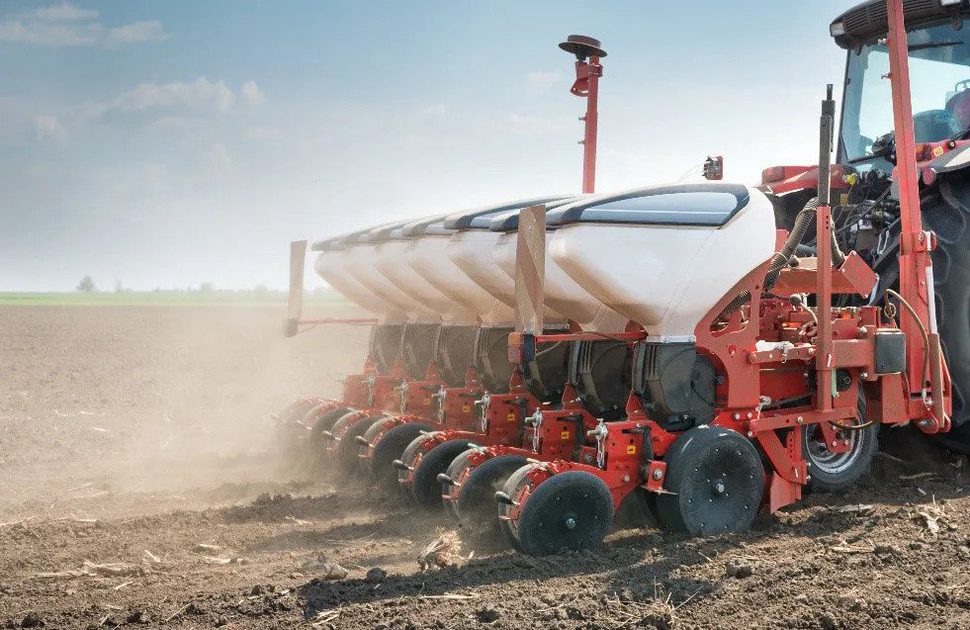
Farm equipment — tractors, harrows, combine harvesters, balers, fertilizer spreaders, grape harvesting machines, and corn-pickers — operates under relentless conditions, facing extreme temperatures, high humidity, heavy workloads, and punishing environments on a daily basis.
Keeping your farm equipment properly lubricated delivers wide-ranging benefits to you and your operation. It enables peak performance, drives up profits, cuts maintenance expenses, enhances productivity, and helps you overcome the challenges posed by demanding conditions, unfavorable temperatures, and harsh environments.
This guide explores the most significant concepts surrounding agricultural lubrication — its core advantages, the categories of lubricants used in the farming sector, and the principles of sound lubrication management.
In today's agricultural landscape, effective lubrication offers several critical advantages that help drive productivity higher while holding costs down. Through proper lubrication practices, you stand to gain:
Every premium lubricant serves one fundamental purpose: to boost equipment reliability, elevate performance, and enhance overall productivity. Because farming machinery routinely faces unfavorable conditions, extreme temperatures, intensive use, and harsh weather, selecting the right lubricant is vital to keeping equipment operational.
Agricultural lubricants are engineered specifically to push farming equipment performance to its limits, deliver outstanding wear protection, maintain solid energy efficiency, and perform reliably under even the most punishing operating conditions. Beyond that, a well-formulated lubricant guards against contamination, shields machinery from oxidation, corrosion, and rust, and supports extended oil drain intervals — all of which reduce total oil consumption.
These combined properties translate into greater equipment uptime, stronger operational reliability, and sustained long-term performance regardless of weather or terrain. Your agricultural machinery will consistently operate at its full potential, allowing your entire operation to run with maximum efficiency.
Lubrication also delivers meaningful benefits in the form of enhanced protection and a longer service life for your farm equipment. Since machinery routinely endures harsh weather and tough working environments, it requires a lubricant deliberately engineered to meet those demands and maintain continuous protection.
Every heavy-duty oil, grease, and transmission fluid recommended for agricultural use shares one defining quality — it delivers superior protection, exceptional lubrication, minimized downtime, and strong resistance to water, oxidation, corrosion, and contamination, along with elevated resistance to heavy loads and high pressure.
Defending your equipment against mechanical failure and premature wear directly extends its operational life, ensuring your machinery works as hard as you do for as long as possible.
Consistent protection of your machinery prevents unnecessary equipment breakdowns and keeps potential failures to a minimum. Year-round lubrication reduces maintenance costs by slowing equipment degradation and improving the availability, reliability, and uptime of your farming fleet.
That said, not every lubricant delivers equal results. For optimal outcomes, choose a high-quality lubricant built to perform. While the upfront cost may appear higher, its performance, durability, protection, and effectiveness will generate real savings over time.
Furthermore, a high-performing lubricant can meaningfully reduce the total cost of ownership (TCO). Such a product cuts spending not only by lowering maintenance costs but also by reducing all expenses tied to lost production resulting from equipment failure.
When your agricultural equipment stays efficient across all seasons, performs reliably under the toughest conditions, remains protected against degradation and damage, experiences minimal downtime, and sustains maximum operational reliability, the result is peak performance and seamless operation.
Peak performance yields higher output, which in turn generates greater profits and opens up future growth opportunities for your agricultural business — and progress and profitability are what every farmer is working toward.
To fully capture these advantages, however, you must focus on two essentials: selecting the correct type of lubricant and learning to manage it effectively.
Identifying the right lubricant for your specific needs is fundamental to maximizing equipment performance, lowering operational costs, and increasing productivity. Several categories of agricultural oils are commonly used across farming machinery:
Engine lubrication sits at the top of any equipment protection strategy, directly minimizing the risk of engine damage and failure — making the selection of a quality lubricant your highest priority. Any high-performing farm oil intended for use across agricultural applications must deliver:
Heavy-duty engine oils are engineered to handle demanding conditions and are therefore well-suited to all types of agricultural applications. Choosing the best oil for diesel tractors, seeders, corn-pickers, and other farm machinery can make a profound difference in the quality of your farming operations.
The Valvoline lineup of heavy-duty engine oils features some of the finest baler, harvester, and tractor motor oils available. Valvoline HD Engine Oil, Valvoline All-Fleet Engine Oil, and the Valvoline Premium Blue line are each designed to deliver outstanding performance, premium protection, superior longevity, and reduced downtime.
Agricultural machinery operates under consistently high and heavy loads, and only a reliable transmission fluid can keep equipment functioning properly over extended periods. Key characteristics of dependable gear and transmission oil for tractors, harvesters, seeders, and other machinery include:
When selecting a gear and transmission lubricant, farmers tend to favor universal tractor transmission oils (UTTO), such as Valvoline UTTO, because these products effectively lubricate the hydraulic systems, transmission, and wet brakes of tractors, combine harvesters, diggers, and other farm equipment.
Valvoline also developed Valvoline Super Tractor Oil Universal (STOU), which goes beyond standard tractor gear oil functionality — lubricating the transmission, hydraulic systems, and wet brake systems — while also serving as a tractor engine oil. This diesel tractor oil is engineered to handle a broad range of challenges, making it one of the most popular choices on the market.
Greases for agricultural applications are purpose-built to endure heavy loads, shock loads, water exposure, and severe weather conditions. Whether you need a quality grease for a harvester, baler, corn-picker, sprayer, or tractor, an effective agricultural lubricant must provide:
Farm machinery requires high-quality greases capable of boosting overall equipment and component performance, increasing uptime, extending service intervals, lowering costs, and enhancing productivity.
Valvoline greases — including Valvoline Multipurpose Calcium 2, Valvoline Multipurpose Complex Red 2, Valvoline Earth Lithium 2, and Valvoline Earth Alucom 1.5 — are blended from premium-grade ingredients that deliver superior protection, exceptional performance, and outstanding durability.
Once you have the appropriate lubricant for your farm equipment, proper storage, application, and monitoring become essential to unlocking its full potential. Effective lubrication management covers the following key areas:
The first priority is learning to store products correctly in order to prevent degradation and contamination. Every product should come with detailed storage instructions, making it straightforward to obtain the information needed regarding the conditions under which the product should be stored, transported, and handled.
Following the recommended protocols for product storage and transportation also reduces health, safety, and environmental risks that can arise from inadequate handling standards and procedures. Proper handling preserves the product's performance and maintains all of its critical properties.
To make sure you are following best practices, consult with lubrication specialists and ensure that employees receive the training they need.
Every lubricant is formulated to address a specific machine component. For the product to reach the intended surface and function as designed, mastering the correct application procedure is essential.
Begin by applying the lubricant to the correct location in accordance with the product instructions. Manufacturers typically specify the conditions and temperatures most conducive to effective application, so factor those in as well. From there, reapply the lubricant according to product recommendations — the right change frequency reduces wear and keeps operations running smoothly. Equally important is the quantity applied; following the manufacturer's dosage instructions ensures the lubricant performs to its full capability.
Review the operating instructions provided by the manufacturer carefully, as they contain everything needed for successful lubricant application. If questions arise, reach out to the manufacturer directly for guidance and support.
Tracking how your lubricant performs over time — and whether its effectiveness diminishes ahead of schedule — is critical to preventing operational delays and failures.
Conduct regular lubricant sampling and analyze the results to detect any signs of degradation. These insights allow you to determine whether the product is still functioning correctly or requires replacement. A deteriorating lubricant is highly likely to trigger serious mechanical problems, leading to accelerated equipment wear and tear, reduced productivity and profitability, and elevated maintenance costs.
If ongoing lubricant monitoring falls outside your available time or resources, third-party monitoring services can manage this process on your behalf.
Lubricants are central to the productivity, performance, effectiveness, and longevity of your farming equipment. Equipping yourself and your team with sufficient knowledge of lubrication is essential to running a more profitable agricultural operation.
Building a thorough understanding of proper lubrication practices — spanning lubricant selection, storage, application, analysis, and monitoring — gives farmers and agricultural professionals the competitive edge needed to elevate their operations. The result is fewer unnecessary breakdowns, lower maintenance frequency and costs, a longer equipment lifespan, and improved productivity and profitability.
Stay current with the latest advances in technology and best practices for lubrication management, and ensure your workforce has access to training programs that expand their knowledge and sharpen their skills.
Grasping the importance of proper lubrication in the farming industry is essential to gaining competitive advantage, boosting productivity, reducing total cost of ownership, maximizing profits, and securing the long-term success of your agricultural operation.
To achieve the best possible results and build lasting profitability, select the lubricant that best fits your specific needs and put effective lubrication management procedures in place. Only with both elements working together will you be positioned to capture every benefit that proper lubrication has to offer.