Last spring, a ranch customer rolled a compact tractor into my San Antonio shop after it started grinding when he shifted from forward to reverse. The machine had plenty of engine oil, but nobody had checked the shared transmission and hydraulic reservoir in years. A proper tractor transmission fluid change would have been far cheaper than the repair that followed. Tractors work hard at low speed, pull heavy loads, and spend long hours in dust, so their fluid deserves the same attention as engine oil.
Why tractor transmission fluid matters
Transmission fluid in many tractors does more than lubricate gears. Depending on the design, it also operates hydraulic pumps, wet brakes, power steering, and a power shuttle or hydrostatic drive. That means contaminated or incorrect fluid can create several problems at once. You might notice slow loader movement, noisy hydraulics, clutch chatter, hard shifting, brake grabbing, or a transmission that becomes unusually hot.
A tractor transmission fluid change removes suspended metal, clutch material, water, and dirt that the filter cannot catch forever. Fresh fluid also restores the additive package that protects gears and wet clutches. On a working property, this is not cosmetic maintenance. It helps protect an expensive machine during planting, mowing, feeding, and grading work.
Read the operator's manual before buying anything. A Ford/New Holland tractor, John Deere compact utility tractor, Kubota, Massey Ferguson, and Case IH machine may each require a different universal tractor transmission fluid or a manufacturer-specific formulation. Hydraulic oil and automatic transmission fluid are not automatically suitable substitutes. The wrong product can damage seals, cause brake noise, or make a wet clutch slip.
Shop Trick: My grandfather taught me this trick — still works 40 years later. Write the fluid specification and fill quantity on a piece of masking tape inside the tool chest before you start. When the job is done, record the date, operating hours, brand, and part number. Your future self will appreciate that small habit.

When to schedule a tractor transmission fluid change
Service intervals vary by model and operating conditions, but many tractors call for an initial fluid service after the break-in period and then service at several hundred operating hours. Some schedules use calendar time as well, especially when the tractor runs only a few dozen hours each year. Your manual is the first authority; the hour meter is more useful than guessing based on mileage.
Service sooner if the tractor works in mud, water, heavy dust, extreme heat, or frequent short cycles. A loader tractor that spends every day moving wet manure faces different contamination than one used for occasional pasture mowing. Water in the oil can make it look cloudy or milky. A burnt smell, foam, shiny particles, or a sudden change in color deserves attention rather than another season of use.
Before starting a tractor transmission fluid change, park on level ground, lower the loader and three-point hitch, disengage the PTO, set the parking brake, shut off the engine, and remove the key. Let hot fluid cool enough to handle safely, but remember that warm fluid drains more completely. Keep children, livestock, and loose clothing away from the work area. Never crawl under a tractor supported only by a jack; use rated stands or a solid service surface.
How to perform the service safely
Gather the correct fluid, replacement filters, new drain-plug seals if specified, a drain pan with enough capacity, gloves, eye protection, shop towels, a funnel, and a torque wrench. A compact tractor can hold several gallons, and a larger utility tractor may hold far more. Check the manual for drain locations because some machines have separate transmission, differential, and hydraulic compartments.
Clean the area around every fill plug, dipstick, filter, and drain plug before opening anything. Dirt around a filler neck can fall directly into the system. Take a quick photo of hose routing and filter orientation. Drain the old oil into a clean pan, inspect it in good light, and look for water, flakes, or a silver shimmer. Replace the filter with the correct part, lightly oil its gasket, and tighten it according to the manufacturer's instructions rather than leaning on it with a long wrench.
Install drain plugs with the correct sealing washer and torque. Add the specified fluid slowly, stopping to check the level as directed. Some transmissions require the engine to run while checking; others must be checked with the engine off. Cycle the hydraulic functions only when the manual permits it, then inspect for leaks. After a short test drive in a safe open area, recheck the level and look beneath the tractor again.
My practical advice is to measure what drains out, but do not assume that exact amount is the refill amount. A previous owner may have overfilled or underfilled it, and some fluid remains trapped in housings and lines. The dipstick, sight glass, and service manual win every time.
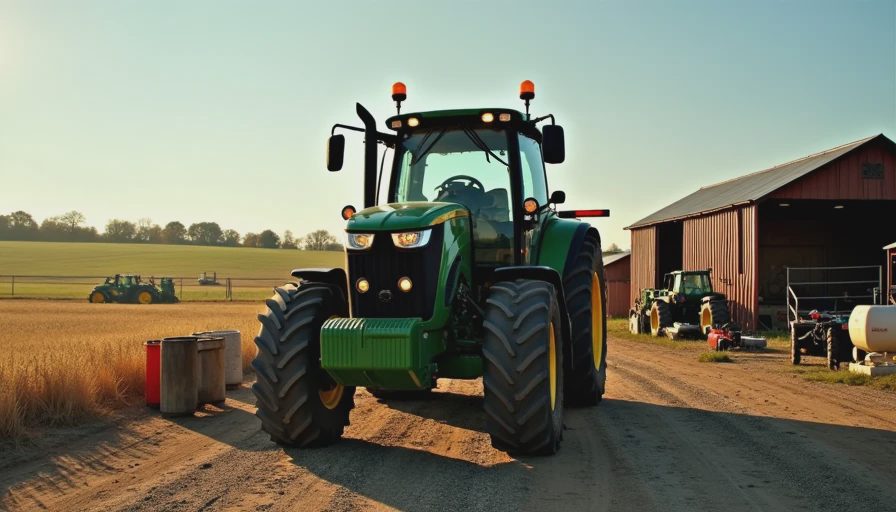
Choosing fluid and estimating the cost
Fluid cost depends on capacity and specification. A small compact tractor may need roughly 4 to 8 gallons, while a larger agricultural tractor can require substantially more. Quality universal tractor fluid often costs around $25 to $45 per gallon, with premium branded or manufacturer-approved products costing more. Filters commonly run $15 to $60, and seals are inexpensive insurance against a slow leak.
A DIY tractor transmission fluid change can therefore land near $150 to $400 for a compact machine, depending on fluid choice. A shop may charge approximately $300 to $900 or more after labor, filters, disposal, and the tractor's capacity are included. That bill is easier to accept than a hydraulic pump or transmission repair costing several thousand dollars. John Deere Hy-Gard, Kubota Super UDT2, New Holland Ambra, and other branded products are widely used in their respective equipment lines, but compatibility matters more than the label's reputation.
Do not pour used fluid onto the ground or leave an open pan where animals can reach it. Store waste oil in a sealed container and take it to a recycling location, parts store, or service facility that accepts it.
When to take the tractor to a pro
Some services are straightforward for a careful owner, but stop when the machine has a hydrostatic transmission with unusual symptoms, a power shuttle that will not engage, contaminated oil, metal debris, or a filter packed with clutch material. A transmission fluid change will not repair a failing pump, damaged clutch pack, worn brake discs, or a blocked suction screen.
Call a professional if you cannot identify the correct fluid, do not have a safe way to lift or access the tractor, or see a steady leak from a housing or axle seal. A shop can pressure-test hydraulic circuits, inspect suction screens, analyze fluid, and identify whether a noise is coming from the transmission, differential, pump, or PTO. If you're not sure, take it to a pro. No shame in that.
A simple maintenance record that pays off
After a tractor transmission fluid change, write down the hour-meter reading, date, fluid specification, quantity added, filter number, and any symptoms you noticed. Keep receipts with the tractor manual. At every use, walk around the machine and check for leaks, damaged hoses, loose guards, and fluid levels. Those two minutes can catch a problem before it strands you in a pasture.
At our family shop, the best maintenance plans are practical ones that owners will actually follow. Put the next service hour on a calendar, keep one spare filter on the shelf, and do not mix random fluids because a container is already open. Treat that tractor like the working partner it is, and it will be ready when the grass is high, the hay is down, or the driveway needs grading.