A guy brought in his truck last week after it quit on a ranch road outside San Antonio. The battery connection had loosened, and the truck still had plenty of life in it. What it needed was mechanical first aid: a safe, temporary response that protects the vehicle and gets the driver out of danger until a proper repair is possible. It is not a substitute for a trained mechanic, but it can keep a small problem from becoming an expensive tow or a roadside injury.
I learned that distinction from my grandfather in the family shop. He would say, “First make the scene safe, then diagnose the machine.” That rule works for a pickup, a compact tractor, or a side-by-side. Mechanical first aid starts with hazard awareness, not with grabbing the biggest wrench in the box.
What mechanical first aid really means
Mechanical first aid is the first response to a vehicle problem. It includes moving away from traffic, identifying obvious symptoms, securing loose parts, changing a tire when conditions are safe, jump-starting a battery correctly, and calling for help when the repair is beyond your tools or training.
The goal is temporary stabilization. For example, tightening a loose battery terminal might let you reach a shop, while replacing a damaged serpentine belt on the shoulder is usually a job for a professional. A tire with a screw in the tread might accept air long enough to reach a tire store, but a sidewall cut should not be driven on.
Never crawl under a vehicle supported only by a jack. Do not work near moving traffic, hot exhaust components, an exposed fuel leak, or electrical wiring that is sparking. If the vehicle is smoking, leaking fuel, or sitting in an unsafe location, leave it and call emergency or roadside assistance.
Build a practical roadside kit
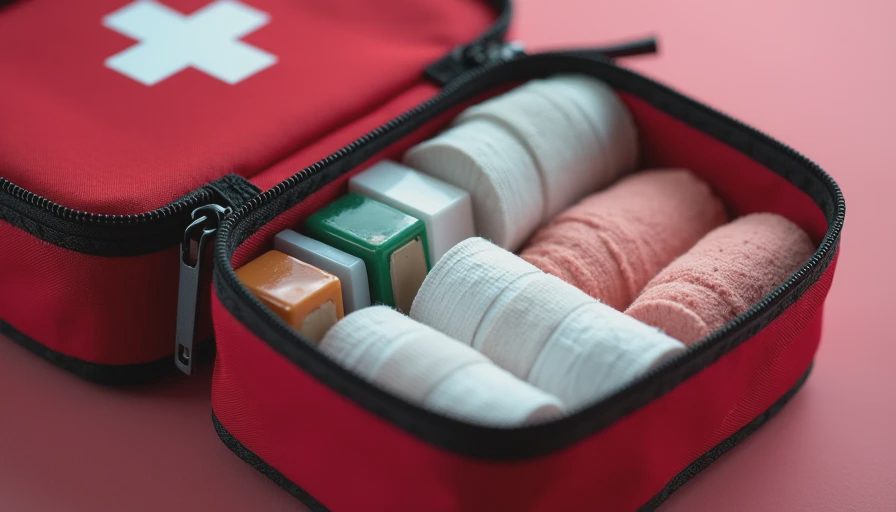
Good mechanical first aid begins before the breakdown. Keep a compact kit in the vehicle instead of relying on whatever happens to be in the garage. My everyday list includes work gloves, safety glasses, a flashlight, reflective triangles, a tire-pressure gauge, a 12-volt inflator, jumper cables, basic pliers, screwdrivers, adjustable wrenches, zip ties, duct tape, and a phone charger.
For trucks and rural vehicles, I also like spare fuses, a valve-core tool, a tire plug kit for temporary tread repairs, and a small tarp. Carry water for yourself, but do not pour cold water over an overheated engine. Let the engine cool naturally and keep your hands away from the radiator cap until the cooling system is safe.
Check the spare tire every few months. Many spare tires are forgotten under a truck bed or inside a cargo compartment until the day they are needed. Confirm that the jack, lug wrench, and locking-lug key are present. A $20 inspection now can prevent an unpleasant surprise after dark.

Shop Trick: My grandfather taught me this trick — still works 40 years later. Put a small piece of tape inside the glove box with the vehicle’s correct tire pressure, oil grade, battery size, and roadside-assistance number. The owner’s manual has the same information, but finding it beside a busy highway is not always easy.
A safe step-by-step roadside response
First, turn on the hazard lights and steer as far from traffic as possible. If the vehicle can roll, choose a flat, visible area rather than stopping on a curve, bridge, or soft shoulder. Set the parking brake, shut off the engine, and have passengers exit on the side away from traffic when that is safe.
Second, look and listen without touching anything. A burning smell, hissing sound, heavy steam, fuel odor, or fresh fluid trail is a reason to stop investigating. Call for assistance and move to a safe location. Mechanical first aid never means taking a risk to save a tow bill.
Third, check simple information: Does the engine crank? Are the dash lights on? Is one tire visibly low? Did the vehicle lose power, overheat, or make a new knocking sound? These observations help a dispatcher or mechanic prepare, and they prevent random parts swapping.
Fourth, use only a temporary measure that matches the symptom. Add air to a low tire if the tire is intact. Secure a loose plastic shield away from a hot exhaust pipe. A jump start can help with a weak battery, but stop if the battery is cracked, leaking, frozen, or swollen.
Common problems and the right response
A dead battery is one of the most common roadside calls. Park the assisting vehicle close enough for the cables to reach without touching. Turn both vehicles off, connect positive to positive, then connect the negative cable to a solid engine ground on the disabled vehicle. Keep the cables away from belts and fans. If the vehicle does not start after a few attempts, stop and call a pro.
An overheated engine needs patience. Turn off the air conditioning, pull over, and shut down. Do not open the radiator cap while hot. Once the engine is fully cool, inspect for a broken belt, an empty coolant reservoir, or a visible leak. Do not continue driving if the temperature rises again; towing is cheaper than a ruined engine.
A flat tire can be changed by a confident DIYer on firm, level ground with traffic safely separated. Loosen the lug nuts before lifting, place the jack at the manufacturer’s approved point, and lower the vehicle fully before tightening the lugs. If the shoulder is narrow, the weather is poor, or the tire is on a heavy truck, call roadside assistance instead.
When insurance and roadside coverage help
Many auto policies offer roadside assistance as an optional coverage, often for a relatively small added premium. Depending on the insurer and policy, service can include towing, a jump start, tire change, fuel delivery, or lockout assistance. Geico, Progressive, State Farm, and other major insurers structure these options differently, so review the actual limit before a breakdown.
Roadside coverage is generally different from collision and comprehensive coverage. Collision typically addresses damage from a crash, while comprehensive can cover certain non-collision losses such as theft, hail, or animal damage. Roadside assistance is a service benefit, and it may have limits on towing distance or the number of calls allowed during a policy period.
Mechanical first aid can help you describe the problem accurately when requesting service. Tell the dispatcher whether the vehicle is blocking traffic, whether anyone is injured, whether there is a fuel leak, and whether the vehicle is four-wheel drive. Ask about the estimated arrival time and where the vehicle will be taken. Save the receipt if you pay for emergency service and want to ask about reimbursement.
Know when to take it to a pro
Some repairs should not happen on the shoulder. Fuel-system leaks, brake failure, steering problems, damaged suspension parts, high-voltage hybrid components, and serious engine noises require professional attention. Tractor and UTV owners should be equally careful around PTO shafts, hydraulic pressure, and raised attachments. A machine can look stopped while stored energy remains dangerous.
If a temporary fix gets you moving, drive directly to a repair facility and avoid unnecessary miles. Tell the technician exactly what happened, what warning lights appeared, and what you touched. Photos of leaks, damaged belts, or warning messages can save diagnostic time.
Shop Trick: Keep a written maintenance log with dates, mileage, tire changes, battery installation, and fluid service. Patterns become easier to spot. If the same fuse blows twice, the answer is not a bigger fuse; it is an electrical fault that needs diagnosis.
Mechanical first aid is useful because it combines common sense with restraint. Carry the right equipment, protect yourself from traffic, make only safe temporary checks, and use roadside coverage when the situation calls for it. If you are not sure, take this to a pro. No shame in that. The smartest repair is the one that gets everyone home safely.