A guy brought in his truck last week asking why his used tractor was costing more than his newer pickup. The answer was sitting in the service records: missed oil changes, worn tires, hydraulic leaks, and several hours of downtime during hay season. That is why farm equipment total cost of ownership matters. The purchase price is only the first line on the bill. Fuel, maintenance, repairs, insurance, storage, financing, depreciation, and lost work time all shape what a tractor, UTV, combine, or mower really costs.
I learned this the hard way on my own place outside San Antonio. A cheap machine can be a good buy, but only when its operating costs match the work you need done. A small ranch with twelve head of cattle does not need the same equipment plan as a commercial hay operation. Start with the job, then price the machine over several years instead of judging it by the sticker alone.
What total ownership cost includes
Farm equipment total cost of ownership begins with the purchase price, but it does not stop there. Add sales tax, delivery, setup, implements, financing charges, and any initial repairs. A tractor listed at $32,000 can become a $40,000 investment after a front loader, rear blade, registration-related costs, delivery, and loan interest are included.
Then estimate the annual operating costs. Diesel fuel is usually the biggest routine expense for a working tractor. A compact diesel tractor might use roughly one to two gallons per hour under moderate work, while heavier tillage or loader work can consume more. Multiply expected hours by a realistic local fuel price. Do the same for engine oil, hydraulic fluid, filters, grease, coolant, belts, batteries, tires, and seasonal service.
Ownership costs continue even when the machine is parked. Insurance, shelter, security, property taxes where applicable, and financing payments belong in the calculation. Depreciation matters because a machine that loses $8,000 in value over five years has a real annual cost, even if no cash leaves your account that month. Finally, include downtime. Missing two days of fencing, baling, or cattle work can force you to rent equipment or pay someone else.
Build a five-year equipment estimate
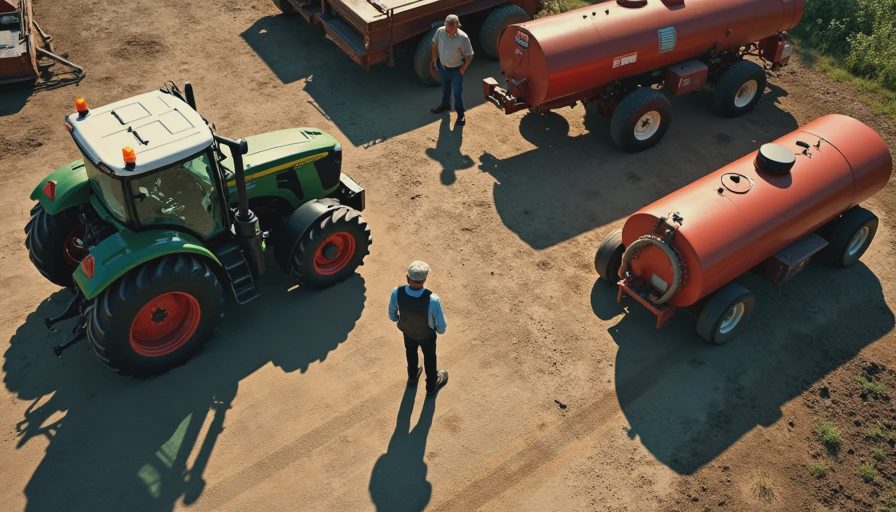
My preferred approach to farm equipment total cost of ownership is a simple five-year worksheet. Put the purchase and setup cost at the top. Below it, estimate annual hours and multiply those hours by fuel consumption. Add scheduled maintenance, average repair reserves, insurance, storage, and loan interest. Subtract the expected resale value at the end of year five. Divide the remaining amount by five years, then by estimated annual operating hours.
For example, imagine a $38,000 utility tractor with a loader. Setup and delivery add $2,000, making the starting investment $40,000. Suppose fuel and routine maintenance average $3,200 per year, repairs average $1,500, insurance and storage total $900, and financing adds $2,400 annually during the loan period. If the tractor works 300 hours each year, the yearly cash operating cost is substantial before depreciation is considered.
A five-year estimate should also include a reserve for tires and unexpected repairs. One set of rear tires can cost $1,000 or more depending on size and tread. A hydraulic pump, electronic control module, or emissions-related repair can run into the thousands. Do not assume every year will be average. The reserve protects you from treating a major repair as an emergency.
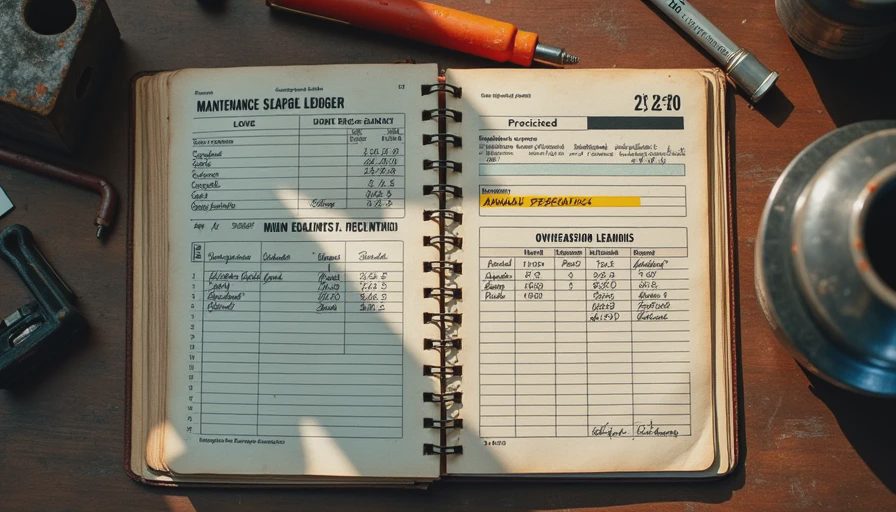
Shop Trick: My grandfather taught me this trick — still works 40 years later. Write down the hour-meter reading whenever you fuel or service a machine. A cheap notebook in the cab often reveals rising fuel use or skipped maintenance before a failure does.
Compare machines by productive hours
Farm equipment total cost of ownership becomes useful when you compare machines that perform the same job. A $22,000 compact tractor may be inexpensive to own, but it could take twice as long to mow acreage or move material compared with a $45,000 utility tractor. The larger machine may use more fuel per hour while costing less per completed task.
Look at productive hours, not just engine hours. If a tractor spends 40 percent of its time changing implements, waiting on a trailer, or struggling with an undersized attachment, those hours still cost money without producing much. Match horsepower, hydraulic flow, lift capacity, tire type, and attachment size to the work. A loader that is too small can turn a simple gravel job into an all-day project.
Rental can be the smarter answer for occasional work. Renting a brush cutter for $250 or a larger skid steer for a weekend may beat owning a specialized machine that sits for eleven months. On the other hand, a frequently used hay rake, mower, or livestock trailer can justify ownership because availability has value during a narrow weather window.
Maintenance changes the final number
Preventive maintenance is one of the few ownership expenses you can control directly. Follow the manufacturer’s service intervals, use the correct fluid specifications, and inspect grease fittings before heavy work. Check air filters more often in dusty fields, especially during summer brush cutting. Keep radiator screens clean because an overheated diesel can turn a $20 cleaning job into a major repair.
Do not ignore small leaks. A seeping hydraulic fitting can become a failed hose, contaminated clutch, or damaged pump. Replace worn belts and cracked fuel lines before they strand you. Keep spare filters, shear bolts, fuses, and approved hydraulic hose repair supplies on hand, but never improvise with unsafe pressure components.
If a repair involves pressurized hydraulics, high-voltage hybrid systems, internal engine work, or lifting a heavy attachment, take this to a pro. Shut the engine off, lower implements, block equipment securely, and relieve hydraulic pressure before inspection. A tractor or UTV can hurt someone faster than a passenger car because of its weight, stored energy, and exposed moving parts.
Include downtime and resale value
A realistic farm equipment total cost of ownership estimate puts a dollar value on lost productivity. If a failed tractor costs three days during planting and you pay $1,200 to rent a replacement, that rental belongs in the machine’s history. So does the time spent hauling it to a dealer, waiting for parts, and rearranging jobs. Dealer support, parts availability, and local technician skill can be worth more than a small difference in purchase price.
Resale value is another major variable. Popular models from John Deere, Kubota, New Holland, Case IH, and other established manufacturers often have recognizable parts support and an active used market, but condition still controls price. Service records, clean fluids, straight sheet metal, good tires, and a working hour meter help. A neglected machine with low hours can be harder to sell than a well-maintained machine with more use.
Before buying, inspect cold-start behavior, exhaust smoke, tire wear, hydraulic lift performance, PTO operation, steering play, and four-wheel-drive engagement. For a higher-priced machine, pay a qualified technician for a pre-purchase inspection. That fee is small compared with discovering a failing transmission after closing the deal.
Make the buying decision with confidence
Use farm equipment total cost of ownership to compare the machine you want with the alternatives you can actually afford. Ask whether buying used, leasing, renting, or hiring a contractor produces the best result over five years. A used tractor at $25,000 may need $6,000 in immediate repairs, while a $42,000 machine with service records could deliver more dependable hours. Neither answer is automatically right.
Get written estimates for insurance, financing, attachments, delivery, and scheduled service before signing. Ask the dealer what parts commonly wear out and what a typical major repair involves. If you finance, compare the total interest rather than focusing only on the monthly payment. A low payment over a longer term can leave you owing more than the equipment is worth.
My shop customers know I would rather see them buy the right machine slowly than the wrong machine quickly. Keep the service book in the cab, log every hour and repair, and review your actual costs at the end of each season. If the numbers show that a machine is earning its keep, maintain it and keep working. If it is mostly parked, sell it while the resale market and condition are still on your side. That is ranch common sense, and it has saved plenty of wallets around my shop.