A guy brought in his truck last week with a transmission problem, a worn-out suspension, and a look that told me he had already spent too much. He asked for the cheapest repair. I asked what the truck did for his business and how long he planned to keep it. That conversation is the heart of an equipment replacement decision: the right answer is not always the lowest invoice today.
Whether you maintain a compact tractor, a UTV, a hay baler, or a work truck, replacement deserves more than a guess based on age. You need to compare repair cost, lost work, safety, parts availability, fuel use, and the machine's value to your operation. My family shop has made plenty of repairs that saved customers money, but we have also told good neighbors when it was time to stop feeding a worn-out machine.
Start with the real cost of keeping the machine
Write down every repair from the last 24 months. Include parts, labor, towing, rental equipment, emergency delivery fees, and the hours you spent waiting. A $2,400 hydraulic repair can become a $4,000 problem when a tractor sits during hay season and you have to hire a neighbor or rent a replacement.
Now separate ordinary maintenance from major failure. Oil changes, belts, filters, tires, and batteries are ownership costs. An engine rebuild, cracked transmission case, failing hydrostatic drive, or rusted frame changes the conversation. If several expensive systems are aging at the same time, another repair can simply postpone the larger bill.
A useful rule is to compare the next 12 months of expected repair and downtime costs with the machine's current market value. If you expect $8,000 in work on equipment worth $10,000, replacement deserves serious attention. That does not mean you automatically buy new. A clean used machine, a remanufactured powertrain, or a less complicated model may be the smarter route.
Shop Trick: My grandfather taught me this trick — still works 40 years later. Put a yellow tag on every major repair estimate and keep the tags in a folder. When the folder gets thick, the machine is telling you something more honestly than your memory will.
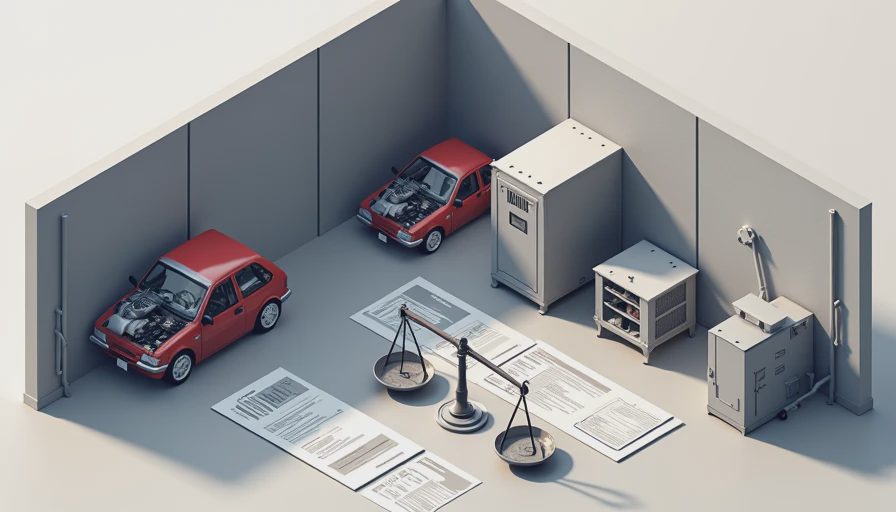
Use downtime and safety in the equipment replacement decision
A ranch machine is not just a pile of metal with a resale price. It is a tool that has to work when the cattle need feed, the driveway needs grading, or rain gives you a narrow hay window. A tractor that loses hydraulic pressure twice in one season can cost more in missed timing than the invoice suggests.
Safety is even more important. Worn steering components, weak brakes, damaged rollover protection, exposed wiring, leaking fuel, or a PTO shield that does not fit correctly should not be treated as minor annoyances. Take safety-critical repairs to a qualified professional. If the frame, loader mounts, rollover protective structure, or braking system is compromised, do not keep working around the problem while waiting for a convenient weekend.
In an equipment replacement decision, downtime should be assigned a dollar value. Ask what one day of lost use costs your operation. For a small property, that might be $150 in rental fees and labor. For a contractor or larger farm, it can be much more. Add that figure to repeated breakdowns, then compare it with a dependable replacement.
Compare new, used, rebuilt, and rental options
New equipment offers warranty coverage, current safety features, and predictable service intervals, but a compact tractor can still cost tens of thousands of dollars once a loader and attachments are included. Financing can preserve cash flow, yet interest increases the total cost. Read the warranty carefully, especially for commercial use and attachments.
Used equipment often provides the best value when you know how to inspect it. A five-year-old Kubota, John Deere, Ford, or Polaris with service records may be more sensible than a bargain machine with unknown hours. Look for cold-start behavior, blow-by, hydraulic drift, uneven tire wear, leaks, loose pins, and evidence of neglected grease points. A pre-purchase inspection by a mechanic is cheap insurance against an expensive surprise.
Rebuilt engines and transmissions can extend the life of a dependable chassis. Ask who performed the rebuild, what parts were replaced, and whether the warranty covers labor as well as parts. Rental equipment makes sense for seasonal work, specialized jobs, or a temporary gap while you shop. It is not a failure to rent; sometimes it prevents a rushed purchase.

Make the equipment replacement decision with numbers
Build a simple comparison on paper. Record the current machine's value, expected repairs, annual maintenance, fuel consumption, insurance, storage, and estimated downtime. Then estimate the replacement's purchase price, taxes, financing, attachments, delivery, service, and resale value. The goal is not perfect accounting. The goal is to expose costs that hide behind the word cheap.
For example, suppose an older UTV is worth $6,000 and needs $3,500 in drivetrain work. It also uses more fuel and has stranded you twice. A clean used replacement costing $14,000 might seem expensive, but selling the old unit and avoiding another repair could make the difference manageable. On the other hand, if the UTV only needs tires and a battery, replacement is probably an emotional decision rather than a financial one.
Consider parts and technician access too. A popular model supported by local dealers and independent shops can be worth more than a cheaper machine that requires special diagnostic software or a three-week parts wait. Ask your mechanic which failures are common on the model, not just what the sales brochure promises.
Plan the purchase before the breakdown
The best equipment replacement decision happens before the machine is dead in the pasture. Start watching the market when repair totals approach half of the equipment's realistic value, or when safety and parts access become recurring concerns. Keep service records, clean the machine before photographs, and repair small cosmetic problems before listing it. Buyers pay more confidently when they can see organized maintenance history.
Set a replacement fund by moving a fixed amount from each profitable month into a separate account. Even $200 monthly creates $2,400 in a year, enough to cover a down payment, emergency rental, or major attachment. Price insurance, registration, and delivery before signing anything. A machine that fits the payment but not the operating budget is not a bargain.
Take a trusted mechanic along for any used purchase. A professional can inspect the cooling system, scan electronic controls, test hydraulic function, and identify repairs beyond a homeowner's safe skill level. If you are not sure, take it to a pro. No shame in that.
A practical final check before you buy
Before replacing equipment, ask whether the machine still matches the job. An oversized tractor burns money on work a smaller model could handle. An undersized mower or UTV may be cheap to buy but expensive in broken belts, overheated clutches, and lost time. Choose horsepower, lift capacity, attachments, and service support based on actual tasks, not pride.
Then make the equipment replacement decision while you still have choices. Compare at least three machines, get a written out-the-door price, and test every control you expect to use. For a work truck, inspect payload, towing equipment, tire condition, and maintenance history. For a tractor, test the three-point hitch, PTO, hydraulics, and cold start. For a UTV, inspect the clutch system, driveline, frame, and protective equipment.
The right replacement should make the next few seasons calmer, safer, and more productive. Sometimes that means buying a newer machine. Sometimes it means repairing the one you already own and putting money aside. At the shop and on my ranch, I judge the choice by one plain question: will this equipment earn its keep without putting the operator, the schedule, or the family budget at risk?