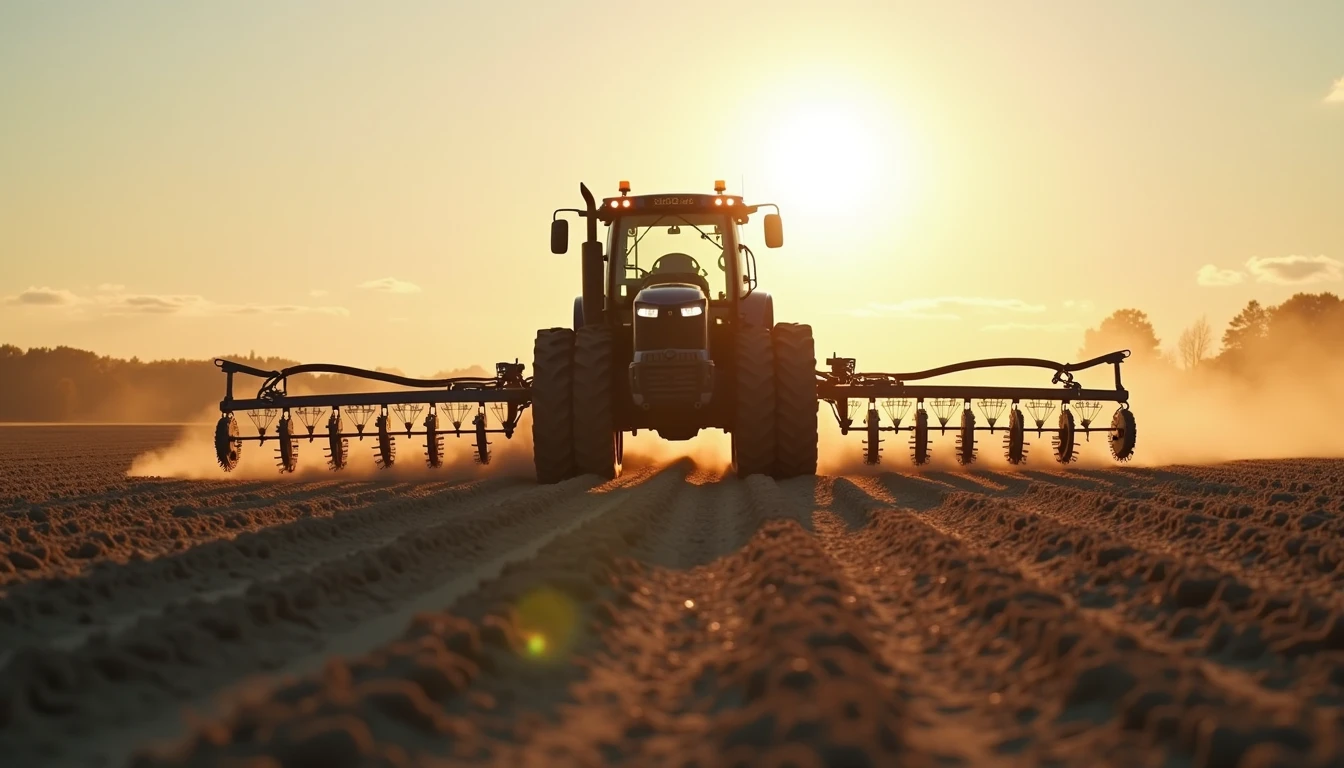
Optimizing Fleet Uptime with the John Deere HH82 Heavy Harrow Tillage Tools
A local operator brought in a pulled-off tractor last week, complaining about uneven residue distribution and downtime from bent tines. I told him what my grandfather used to say: "A good harrow does the work of three passes if it's set right." That principle holds true for modern fleet operations, where equipment selection directly dictates seasonal throughput and total cost of ownership. The John Deere HH82 Heavy Harrow Tillage Tools address these operational bottlenecks through scalable widths, rapid maintenance protocols, and optimized ground coverage.
The Big Picture
Modern agricultural and industrial fleet managers face increasing pressure to maximize seasonal windows while minimizing mechanical downtime. Traditional tillage equipment often requires multiple passes to achieve uniform residue management, driving up fuel consumption and labor costs. The HH82 Heavy Harrow is engineered to resolve these inefficiencies by enabling high-speed operation up to 12 mph (19.3 km/h) while maintaining consistent straw residue breakdown and distribution. For procurement and maintenance supervisors, the shift toward wider, modular tillage platforms directly impacts mean time between failures and overall field efficiency. By matching implement width to tractor power output, operators can reduce pass counts, lower fuel burn per acre, and extend component service life. The HH82's design philosophy aligns with current preventive maintenance schedules that prioritize rapid component replacement and hydraulic adjustability, ensuring that equipment remains in the field rather than the shop.
Key Details
The HH82 platform offers scalable configurations to match specific acreage and power requirements. Working widths range from 15.2 m to 25 m (50 ft to 82 ft), with corresponding minimum engine power requirements varying by model category:
- 15.2 m (50 ft), five bar: 111.9 kW (150 hp)
- 15.2 m (50 ft), seven bar: 223.7 kW (300 hp)
- 21.3 m (70 ft), five bar: 149.1 kW (200 hp)
- 21.3 m (70 ft), seven bar: 298.3 kW (400 hp)
- 25 m (82 ft), five bar: 223.7 kW (300 hp)
- 25 m (82 ft), seven bar: 354.2 kW (475 hp)
Operators must note that actual power requirements fluctuate based on field conditions and tine angle settings. The implement is available in two tine configurations: a five-row setup utilizing 66-cm x 1.6-cm (26-in. x 5/8-in.) tines, or a seven-row setup featuring 66-cm x 1.3-cm (26-in. x 1/2-in.) tines. Both configurations are equipped with tungsten carbide Endura-Tip tines for extended wear resistance. The seven-row configuration delivers approximately 68 percent more ground coverage in the field compared to the five-row model, making it the preferred choice for high-throughput operations. Flexible sections maintain even ground contact across variable terrain, reducing soil compaction and ensuring consistent tillage depth.
Operational Impact
From a maintenance and total cost of ownership perspective, the HH82 reduces shop labor through a drop-out tine replacement system. Technicians can remove a few bolts to extract the tine bar, eliminating the need for extensive disassembly. Tine adjustment is available via mechanical or hydraulic options, allowing operators to calibrate aggressiveness without stopping field operations. This design directly supports preventive maintenance schedules by shortening service intervals and minimizing unplanned downtime.
> Shop Trick: *My grandfather taught me this trick — still works 40 years later. When swapping out heavy tillage tines, always mark the hydraulic or mechanical adjuster settings before disassembly. A simple chalk mark or paint dot on the adjustment bracket cuts recalibration time in half and keeps your pass-to-pass consistency tight. Just remember: if a tine bar shows stress fractures or bent mounting plates, take this to a pro. Pushing compromised steel through heavy residue invites catastrophic drivetrain failure.*
Fleet managers should factor these maintenance efficiencies into their operational planning. Reduced change-out time translates to higher equipment utilization rates and lower labor overhead. The tungsten carbide tips extend replacement cycles, directly impacting annual parts budgets. By aligning implement width with available tractor horsepower, operators avoid overworking engines, which preserves mean time between failures and reduces long-term fuel consumption.
What to Watch
The agricultural equipment sector continues to trend toward wider, high-speed tillage platforms that maximize daily acreage coverage. As tractor manufacturers increase baseline horsepower outputs, matching implement width to power availability becomes a critical procurement decision. Operators should monitor evolving service standards for hydraulic adjustment systems and wear-component longevity, as manufacturers increasingly integrate carbide-tipped designs to extend service life. While specific emissions or safety regulations do not directly govern tillage implements, operators must comply with general equipment safety standards and ensure that all hydraulic and mechanical adjustments meet manufacturer specifications. Future fleet planning should prioritize implements with modular tine configurations and rapid-service architectures, as these features align with industry-wide pushes for higher uptime and reduced seasonal labor dependency.
Bottom Line
Fleet and maintenance managers should evaluate the HH82 Heavy Harrow when seeking to reduce pass counts, accelerate residue management, and streamline field maintenance. The platform's scalable widths and power-matched configurations allow for precise equipment pairing, preventing engine overload and optimizing fuel efficiency. Operators requiring maximum ground coverage should deploy the seven-row setup, while those managing lighter soil conditions or limited horsepower can utilize the five-row configuration. Implement the drop-out tine replacement protocol as part of routine preventive maintenance to maintain operational readiness. By aligning implement selection with actual field conditions and tractor output, operations can achieve measurable improvements in mean time between failures, lower total cost of ownership, and secure consistent seasonal throughput.