A guy brought in his truck last week and mentioned his tractor sprayer was using twice the chemical he expected. We found a clogged nozzle, a tired diaphragm, and a pressure gauge that was lying by nearly 10 psi. That is why sprayer calibration and maintenance belongs on the same schedule as an oil change. A machine that covers unevenly wastes product, misses weeds, and can turn a manageable pasture job into an expensive do-over.
I keep a notebook for the sprayers on my ranch, just like we keep service records at the family shop. Write down the nozzle type, operating pressure, travel speed, tank size, and date of the last inspection. Those details give you a baseline when something changes. If an application suddenly takes longer or the spray pattern looks different, the notebook helps you find the cause instead of guessing.
Start With Safety and a Clean Machine
Before touching a pump, hose, boom, or nozzle, read the chemical label and wear the required protective equipment. At minimum, that usually means chemical-resistant gloves, eye protection, long sleeves, and boots that can be cleaned. Never blow through a nozzle with your mouth, and never reach into a pressurized line. Shut down the PTO, turn off the engine, relieve pressure, and wash the machine in a location where runoff cannot reach wells, stock tanks, drains, or streams.
Rinse the tank according to the product label, then flush clean water through the pump, boom, and nozzles. A small amount of dried residue can distort the spray pattern or damage seals. Inspect the tank for cracks, the frame for loose bolts, and the boom for bends that change nozzle height. Look closely at hose connections for soft spots, abrasion, and chemical swelling. A $12 hose clamp is cheaper than losing a full tank across the pasture.
My grandfather taught me this trick — still works 40 years later. Hold each nozzle body up to the light after cleaning. If the opening looks irregular, replace it rather than trying to scrape it with wire. A soft brush can help, but hard tools enlarge the orifice and permanently change the output.
The Core of Sprayer Calibration and Maintenance
Good sprayer calibration starts with accurate output. Install matching nozzles and check each one for damage. Collect spray from every nozzle for a measured period, such as one minute, using a graduated container. Wear the same protective gear you would use during spraying. Compare the volumes. If one nozzle produces noticeably more or less than the others, replace it. Cleaning alone will not correct a worn opening.
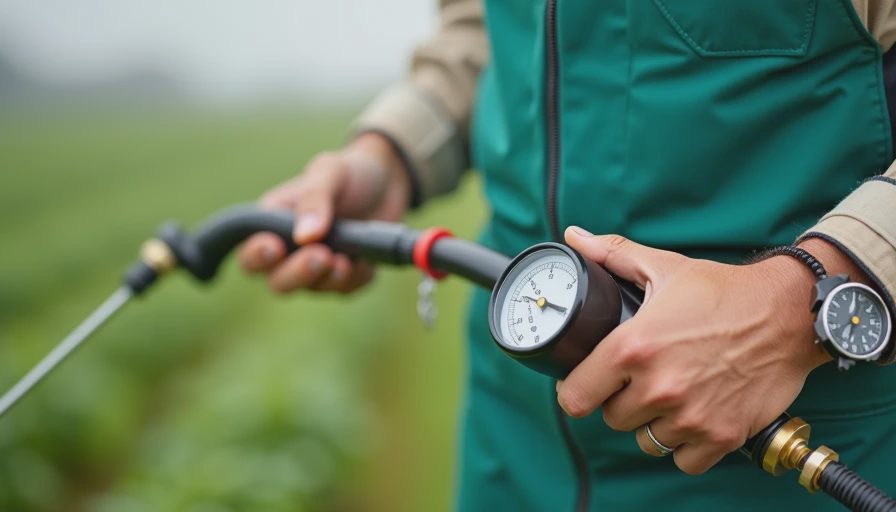
Next, set the pressure you normally use and confirm that the gauge responds smoothly. Pressure is only one part of the calculation. Your travel speed, nozzle spacing, and flow rate all affect the application rate. A tractor traveling faster applies less liquid per acre at the same nozzle output; a slow pass applies more. Measure speed over a known distance instead of trusting the tractor display, especially when working rough ground or using a compact tractor.
For a simple field check, measure the time required to travel a marked distance at your normal engine speed and gear. Then collect nozzle output at working pressure and use the sprayer manufacturer’s chart to calculate gallons per acre. Do not copy a setting from a neighbor’s machine unless the nozzle spacing, speed, pressure, and product plan match. Two sprayers that look alike can deliver very different results.
Shop Trick: Mark the correct pressure range and travel gear on a small tag near the tractor controls. Operators often change a setting to handle a hill and forget to return it. A visible reminder protects consistency without relying on memory during a long, hot day.
Pump, Boom, and Nozzle Checks
The pump deserves attention before every busy season. Check the oil level if it is an oil-bath pump, inspect the belt or drive coupling, and look for leaks around the shaft seal. For diaphragm pumps, examine the diaphragms and valves for cracking or chemical damage according to the service manual. A pump that pulses, loses prime, or cannot hold pressure needs diagnosis before it goes back into the field.
Check strainers and filters often. A plugged suction strainer can starve the pump, while a blocked line strainer can create a pressure drop at the boom. Remove screens carefully and wash them with clean water. Replace damaged mesh or flattened gaskets. On a boom sprayer, make sure sections open and close correctly, and confirm that end caps do not leak when the system is pressurized with clean water.
Nozzle height matters because the spray pattern must overlap as designed. A bent boom can leave strips untreated even when every nozzle is new. Walk behind the machine during a water test and watch for streaks, drips, or one nozzle spraying sideways. Keep people and animals away from the test area, and do not use chemical solution for this inspection.
Seasonal Storage and Troubleshooting
At the end of the season, drain the tank and flush the system according to the chemical label and equipment manual. Some manufacturers recommend an approved antifreeze or winterizing fluid for freeze protection. Do not assume automotive antifreeze is suitable; it can damage components or create disposal problems. Remove nozzles and strainers, clean them, and store them where dust and freezing moisture cannot damage them.
If coverage is poor, start with the basics. Confirm the tank mix and agitation, check the filter, inspect nozzle condition, verify pressure, and measure speed. If the pump sounds normal but pressure fluctuates, inspect air leaks on the suction side and look for a restricted intake. If only one boom section behaves badly, focus on that section’s valve, hose, filter, and nozzle bodies instead of rebuilding the whole system.
Take the job to a pro when a pump requires internal rebuilding, a boom frame is badly bent, electrical controls fail, or chemical exposure has damaged your skin or eyes. A qualified agricultural-equipment technician can test flow and pressure with proper equipment. If you are not sure, take it to a pro. No shame in that.
A Practical Service Schedule
Before each use, inspect hoses, fittings, tank straps, nozzles, filters, the pressure gauge, and the boom. Run clean water through the system and confirm an even pattern. Every few operating hours, check for loose hardware and recheck nozzle output if the machine has worked abrasive water or muddy ground. At the end of the season, perform a full flush, clean the strainers, service the pump as directed, and store the unit protected from weather.
Keep replacement nozzles, gaskets, a spare pressure gauge, hose clamps, and the correct filter screens on hand. A basic repair kit often costs less than a wasted load of chemical and saves a trip into town. Choose replacements by the manufacturer’s specifications, not just by appearance. Nozzle materials and spray patterns are designed for different pressures and applications.
Consistent sprayer calibration and maintenance is good ranch economics. It protects product, reduces rework, and keeps a reliable tractor attachment ready when the weeds are growing fastest. My grandfather taught me this trick — still works 40 years later: measure first, repair second, and never rush a machine that handles chemicals. That habit keeps the cattle, the ground, the equipment, and the wallet in better shape.