A guy brought in his truck last week with a trailer hitch so crusted that the safety chains barely moved. That same slow damage happens to tractors, discs, hay tools, trailers, and UTVs sitting behind a barn. Good rust prevention farm equipment habits do not require a fancy climate-controlled shed, but they do require consistency. Water, fertilizer dust, manure, road salt, and humid air all attack exposed steel. Catch corrosion early, and you can usually handle it with cleaning, a wire brush, and the right coating. Ignore it for two seasons, and you could be pricing replacement brackets, hydraulic lines, or an entire implement frame.
Why Farm Equipment Rusts So Quickly
Farm machines live in a harsher environment than most passenger vehicles. A tractor may spend the morning pushing wet soil, the afternoon spreading fertilizer, and the evening parked with mud packed around its axles. Moisture stays trapped under that material, while fertilizer residue can speed corrosion on bare steel and fasteners. Coastal air, Gulf humidity, and winter road treatment create additional trouble, but even dry Texas country has enough overnight condensation to start rust in a chipped paint edge.
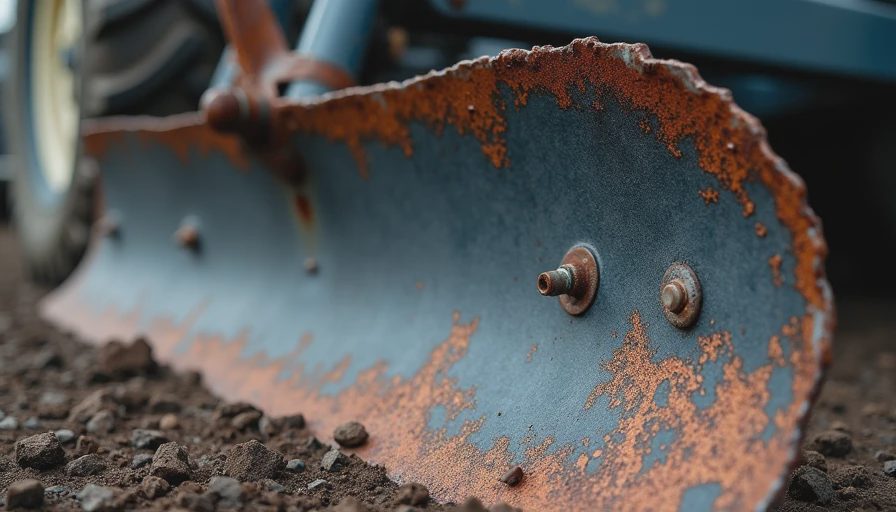
The first places I inspect are lower frame rails, wheel rims, loader arms, three-point hitch components, mower decks, battery trays, and the underside of fenders. Look closely at seams and folded metal. Surface rust looks orange and rough. Scaling rust lifts paint and creates flakes. Deep pitting, swollen seams, or a perforated frame is no longer a simple cleanup job. A structural repair should go to a qualified welder or agricultural equipment technician.
Shop Trick: My grandfather taught me this trick — still works 40 years later. After washing a machine, drive it slowly for a few minutes and operate the brakes, steering, and hydraulic functions in a safe open area. That shakes water out of hidden pockets and helps dry moving parts before storage.
A Cleaning Routine That Actually Works
Start with a dry scrape. Use a plastic scraper or stiff nylon brush to remove packed soil, grass, and manure before adding water. For greasy areas, apply a farm-safe degreaser according to its label, keep runoff away from drains and waterways, and rinse thoroughly. A pressure washer is useful, but do not aim it directly at electrical connectors, alternator bearings, axle seals, radiator fins, or hydraulic cylinder rod seals. High pressure can force grit and water where normal weather never would.
Give the equipment time to dry. Blow water from crevices with low-pressure compressed air while wearing eye protection, or park the machine in direct sun with the hood and access panels open. Do not crawl beneath a raised attachment. Lower implements to the ground, shut down the engine, remove the key, and block or support anything that could fall before cleaning underneath.
For rust prevention farm equipment maintenance, cleaning should happen after especially dirty jobs rather than only at the end of the season. A quick rinse after fertilizer application can save hours of grinding later. Avoid washing a hot engine or exhaust system; rapid temperature changes can damage components and create a burn hazard.
Choosing Coatings, Oils, and Rust Treatments
Once the metal is clean and dry, choose protection based on the machine and the area. A lanolin-based coating such as Fluid Film works well on exposed hardware, battery trays, hitch pins, and seasonal equipment because it creeps into seams and remains somewhat soft. Products such as Boeshield T-9 leave a waxy film that suits dry storage and smaller metal parts. An aerosol corrosion inhibitor can cover awkward brackets, but keep sprays away from belts, brake friction surfaces, clutches, tires, and operator foot controls.
For painted panels and frames, remove loose scale with a wire wheel or abrasive pad, wipe away dust, and use a compatible rust-converting or epoxy primer before topcoating. Follow the product instructions for cure time. Painting over damp rust traps moisture and often makes the repair look good for a month before the bubbles return. Do not mix coatings casually; some oil-based products prevent later paint from bonding.
My own approach is simple: use a film coating on working joints and hardware, and use primer plus paint on cleaned, stable steel. Grease zerks and pivot points with the manufacturer-specified grease, but remember that grease is not a substitute for paint on a broad frame surface.
Storage Makes the Biggest Difference
A roof over the machine is valuable, even if the sides are open. Park on a firm, well-drained surface instead of bare soil, which releases moisture overnight. Clean mud from tires and attachments, lower implements, release hydraulic pressure as directed by the manual, and cover the seat and controls with a breathable cover. Avoid wrapping a damp tractor tightly in plastic. That creates a greenhouse around the metal.
Before storage, inspect drain holes in fenders, toolboxes, and body panels. Clear leaves and chaff from the engine bay because dry debris creates both corrosion and fire risk. Disconnecting a battery or using a proper maintenance charger can protect the electrical system, but follow the battery manufacturer's instructions and keep charging equipment ventilated.
For rust prevention farm equipment, seasonal preparation should include a written walk-around. Photograph damaged areas, list missing caps or plugs, and order inexpensive parts before spring work begins. A $12 hitch pin or $25 replacement shield is far cheaper than discovering the missing part after a breakdown during hay season.
A Practical Inspection Schedule
Check frequently used tractors and UTVs every few weeks during wet or dusty seasons. Spend ten minutes looking for fresh orange marks, flaking paint, loose fasteners, and oily areas that collect grit. At each engine-oil service, inspect battery terminals, ground straps, fuel-tank straps, hydraulic fittings, and the underside of the machine. Rust around a hydraulic fitting deserves immediate attention because corrosion can weaken tubing and make a future leak more difficult to repair.
At the end of the season, wash, dry, lubricate, and coat equipment before parking it. In spring, remove covers, inspect for rodents, verify that controls move freely, and test safety switches before starting field work. Never bypass a seat switch, PTO shield, neutral-start switch, or other safety device to get a machine running. If a control is seized, a frame is cracked, or a hydraulic line is badly pitted, take this to a pro. No shame in that; a pressurized hydraulic failure can inject fluid through skin.
Common Mistakes That Cost Real Money
The biggest mistake is treating visible rust as the whole problem. Rust often starts behind a bracket, under a bolt head, or inside a boxed section. Another mistake is using motor oil as a universal protectant. It can drip, attract dust, damage some rubber components, and contaminate soil. Use a product designed for corrosion protection and keep it away from brakes and belts.
Do not rely on a tarp touching the machine. Wind movement rubs paint away, while trapped condensation keeps steel wet. Do not pressure-wash grease out of sealed bearings or electrical connectors. Finally, do not grind aggressively on thin sheet metal. A flap disc can remove more good steel than expected. Small repairs should preserve the original thickness and shape.
The best rust prevention farm equipment plan is boring in the best way: clean the dirt, dry the machine, repair chips, coat exposed metal, and store equipment off wet ground. That routine protects the investment and keeps a ranch machine ready when you need it. If you want a second set of eyes before buying coatings or tackling a rusted structural part, bring photos to a trusted agricultural repair shop. A little shop wisdom now is cheaper than a breakdown when the cattle, hay, or next storm will not wait.