A guy brought in his truck last week after a small fire in his farm shed damaged wiring, tools, and the hood of his pickup. The fire started with a careless storage arrangement, not a dramatic equipment failure. That is why chemical storage farm workshop planning deserves the same attention as brake work or diesel maintenance. On a ranch, one outbuilding often holds fuel, oil, fertilizer, herbicide, batteries, welding gear, and spare parts. Keeping those materials organized protects your family, equipment, neighbors, and potentially your insurance claim.
I have seen too many sheds where a five-gallon fuel can sits beside a battery charger and a box of oily rags. That is not a storage system; it is a problem waiting for heat, a spark, or a tipped container. My grandfather taught me this trick — still works 40 years later: give every hazardous product a designated home before you need to use it.
Start with a Separate, Labeled Storage Area
The best chemical storage farm workshop arrangement begins with separation. Do not store pesticides, fuel, propane cylinders, fertilizers, and automotive fluids in one crowded cabinet. Follow each product label and its Safety Data Sheet, commonly called an SDS, for storage temperature, ventilation, incompatibilities, and spill response. Keep original containers closed and readable. Never pour chemicals into old drink bottles, unmarked jars, or containers that could be mistaken for water.
Choose a cool, dry, well-ventilated location away from direct sun, ignition sources, livestock areas, wells, drains, and household living spaces. A locked steel cabinet or purpose-built agricultural storage cabinet is often a better choice than a wooden shelf. Put a clear sign on the door, keep children and visitors out, and maintain a current inventory. Write down the product name, quantity, purchase date, and disposal notes. That list helps during an emergency and gives your insurance agent useful documentation.
Shop Trick: Put the most frequently used products between waist and shoulder height, but keep heavy containers low enough that they cannot fall onto your feet. Never store liquids above eye level. A leaking jug can turn a routine job into a chemical exposure before you can step away.
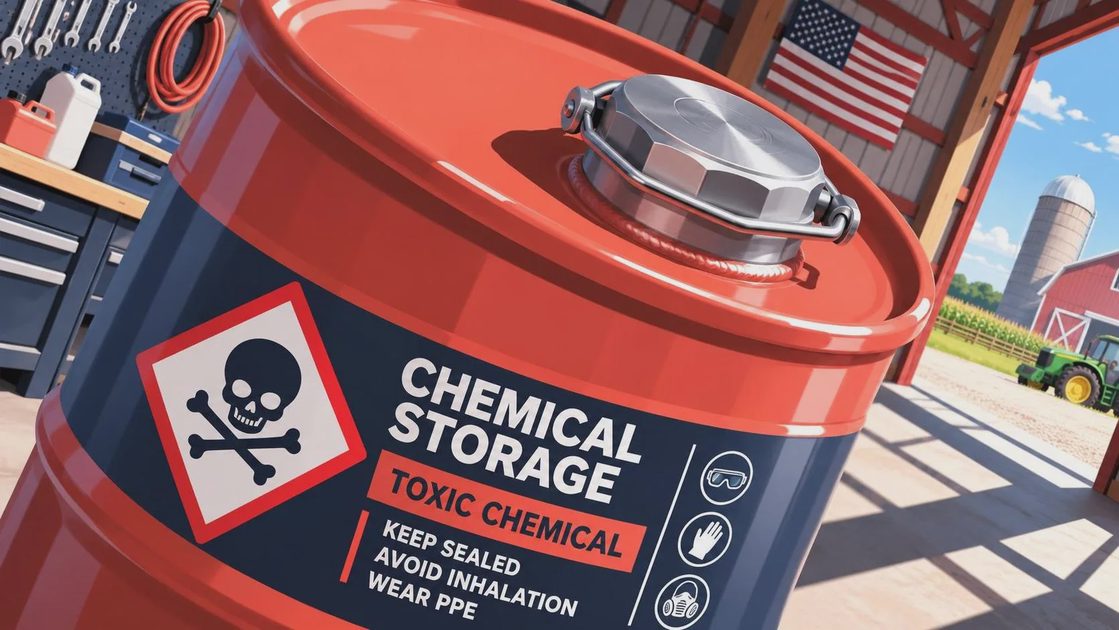
Keep Fuel, Batteries, and Ignition Sources Apart
Fuel storage needs special discipline because gasoline vapors can travel along a floor and reach a distant ignition source. Use only approved fuel containers suited to the product, keep caps tight, and store them away from welders, grinders, space heaters, electrical panels, and running engines. Do not refuel a hot tractor or UTV inside the workshop. Move the machine outdoors, shut it down, and give hot components time to cool.
Diesel, gasoline, used oil, and solvents should not share an unmarked catch pan or funnel. Label containers clearly and keep used oil in a sound, closed container for proper recycling. Oily rags belong in a listed oily-waste container with a self-closing lid, not in a cardboard box beside the compressor. Spontaneously heated rags are a real shop hazard, especially after linseed oil, stain, or solvent work.
Batteries deserve their own attention. Charge them in a ventilated area, protect terminals from accidental contact, and keep chargers and extension cords in good condition. A cracked battery, swollen case, strong odor, or hot charger calls for stopping work and taking the issue to a pro. Do not improvise with damaged wiring.
Build Spill and Fire Protection Into the Layout
A good chemical storage farm workshop setup assumes that something will eventually leak. Place compatible liquid containers inside a secondary containment tray or berm that can hold a spill without sending it toward a drain. Keep absorbent pads, granular absorbent, heavy-duty bags, gloves, goggles, and a shovel nearby. Store cleanup supplies outside the chemical cabinet so you are not reaching through fumes to retrieve them.
A fire extinguisher should be accessible from the exit, not buried behind fuel cans. Many rural workshops need an extinguisher rated for ordinary combustibles and flammable liquids, while electrical equipment requires an appropriate rating as well. Read the label, check the pressure indicator, and have the unit serviced according to its instructions. An extinguisher is for a small, developing fire with a clear escape route. If smoke is heavy, flames are spreading, or you are unsure, leave immediately and call 911.
Never use water on a gasoline, oil, or electrical fire. It can spread burning liquid or create a shock hazard. Keep aisles clear, mark the shutoffs for power and fuel, and make sure everyone who uses the building knows two ways out.
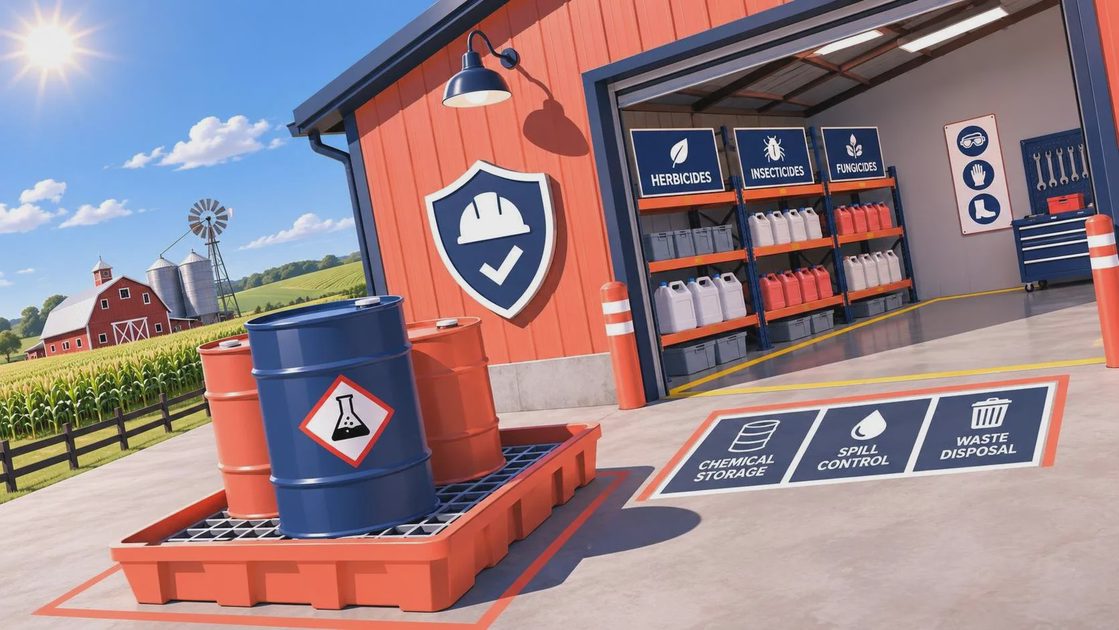
Inspect the Workshop on a Simple Schedule
Chemical storage farm workshop safety improves when inspections become routine instead of a once-a-year cleanup. On the first Saturday of each month, walk the shed with a flashlight and a written checklist. Look for bulging containers, rust around caps, faded labels, wet spots, chemical odors, damaged shelving, pest damage, and blocked ventilation. Confirm that extinguishers, spill materials, and first-aid supplies remain accessible.
Check whether products are still needed. Old chemicals create clutter and disposal problems, and combining leftovers can be dangerous. Do not pour unwanted product onto soil, into a septic system, or down a drain. Contact your county extension office, local household hazardous-waste program, or the product manufacturer for disposal guidance. If a container is badly damaged or leaking, do not transport it casually in a truck cab. Keep people away and call the fire department or a hazardous-materials professional for direction.
Take photos of the storage area after each major improvement. Keep receipts for cabinets, extinguishers, containment trays, and repairs with your property records. Those details can help demonstrate reasonable care when discussing coverage with an insurer, although a policy does not replace safe storage or guarantee payment for every loss.
Protect Your Equipment and Your Insurance Position
A tidy shed reduces more than fire risk. Fertilizer dust can corrode tools, pesticide residue can damage seats and rubber parts, and a leaking solvent can ruin tires or wiring. Store tractors and UTVs far enough from chemical cabinets that a spill cannot reach them. Cover sensitive equipment only after it is cool and dry, and avoid trapping fumes beneath a tarp.
Review your property and farm coverage before adding a new fuel tank, pesticide quantity, or detached workshop. Homeowners policies, farm policies, and commercial shop policies can treat outbuildings, business tools, stored chemicals, and equipment differently. Ask direct questions about fire, pollution, spill cleanup, detached structures, and liability. Keep an inventory with serial numbers and photos of expensive items such as a Miller welder, Milwaukee tool set, or compact tractor.
My grandfather taught me this trick — still works 40 years later: if a setup would be difficult to explain to a firefighter, improve it before the next workday. Chemical storage farm workshop planning is not about buying the most expensive cabinet. It is about separation, labels, ventilation, containment, inspections, and a clear escape plan. If you are not sure whether a product can be stored safely, take this to a pro. No shame in that.
A Practical Five-Minute Closing Checklist
Before locking up, confirm that fuel caps and chemical lids are tight, chargers are unplugged when appropriate, oily rags are in the proper container, and no hot work is still producing sparks. Sweep dust without creating a cloud, close the storage cabinet, and check that the exit is unobstructed. Make sure the phone, fire extinguisher, emergency contacts, and SDS files are easy to find.
The strongest chemical storage farm workshop is one that still makes sense when you are tired, the weather is turning, and a tractor has stopped in the middle of a job. Build the safe choice into the layout, then maintain it every month. That is how a working ranch shop stays useful without becoming the most dangerous building on the property.