A tractor bolt is a lot like a fence post: it needs the right holding power, not just all the force you can give it. For torque wrench farm equipment jobs, start with the manufacturer's torque specification, then choose a wrench whose rated range covers that number comfortably. A half-inch-drive click wrench handles many common tractor and implement fasteners, but small components and heavy wheel hardware can call for different tools.
For a practical first purchase, look at the TEKTON half-inch-drive click wrench line if you want a straightforward mechanical tool. GearWrench offers click and electronic torque wrenches for owners who want more choices in readout and range. For a working shop that needs professional service options, Snap-on is worth considering, though the higher price may be hard to justify for occasional use. Check the actual range and accuracy specifications of the individual wrench before buying; drive size alone won't tell you what it can handle.
Choose a range before you choose a drive
The best torque wrench farm equipment owners can buy is one that matches the fasteners they actually service. Pull out the manuals for your tractor, mower, and attachments. Write down a few torque values, including the units, before shopping. Compare those numbers with the wrench's rated operating range, not just the biggest number printed on the box.
A 3/8-inch-drive wrench is handy for lighter fasteners and confined areas. A half-inch-drive wrench is a useful starting point for many larger bolts and some wheels. A 3/4-inch-drive tool may be needed for high-torque hardware, but it is heavier, more expensive, and not a substitute for checking the specification.
One wrench rarely covers everything well. A setting close to either end of a tool's range may not be ideal, and some manufacturers specify accuracy only over part of that range. Read the tool's instructions. If a large axle or wheel fastener exceeds your wrench's capacity, don't add a pipe to the handle. Get the proper equipment or take the job to a pro.
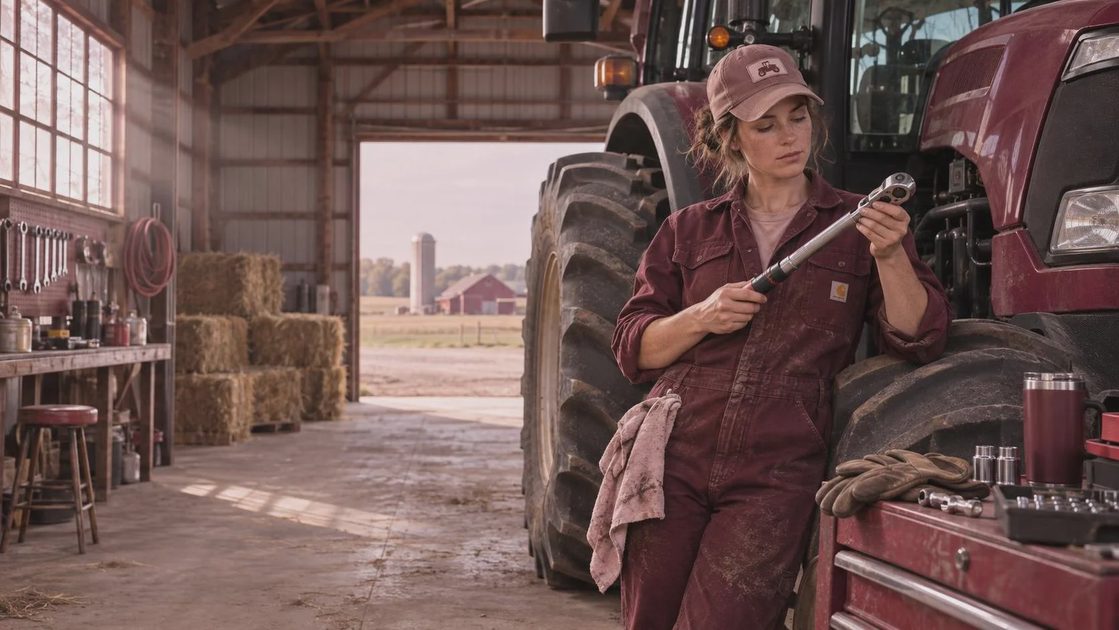
Find the right number for the fastener
A good torque wrench farm equipment setup begins with a reliable spec. Look in the service or operator's manual for the exact machine and fastener. Wheel bolts, blade bolts, engine fasteners, and loader mounting bolts can have very different requirements, even on the same tractor. An implement may have its own manual and its own tightening instructions.
Don't borrow a torque value from a similar-looking bolt on another machine. Bolt diameter and grade matter, but so do thread condition, joint design, and whether the manufacturer calls for lubricant or threadlocker. A generic torque chart is not a replacement for a component-specific instruction.
Pay attention to units. Foot-pounds and newton-meters are not interchangeable numbers. Inch-pounds are smaller still: 12 inch-pounds equals 1 foot-pound. Set the wrench in the unit shown in the manual, or make a careful conversion before you begin.
Some procedures also call for tightening in stages, following a sequence, or turning the fastener through an additional angle after an initial torque. A click wrench alone doesn't measure that angle. Follow the full procedure, and take critical engine or axle work to a qualified technician if the instructions or equipment are beyond your comfort level.
Prepare the joint and tighten safely
Park on firm, level ground, shut off the engine, remove the key, and secure the machine against movement. Lower attachments to the ground and relieve stored pressure as directed in the manual before working around hydraulics. Never rely on a jack or a raised loader to hold equipment up while you work underneath; use properly rated supports and follow the manufacturer's lifting instructions.
Inspect the fastener and threads before reaching for the wrench. Damaged threads, stretched bolts, packed dirt, or heavy rust can prevent the joint from clamping properly even when the wrench clicks. Replace questionable hardware with the grade and type specified by the manufacturer. Don't oil a bolt simply because it looks dry; lubrication changes the relationship between applied torque and clamping force.
Shop Trick: Before final tightening, mark the fasteners with a paint pen after you've completed the specified sequence. The marks make it easier to see which ones have been addressed when a wheel or implement has a whole circle of similar bolts. They are a visual aid, not proof that a bolt is correctly torqued or will stay tight.
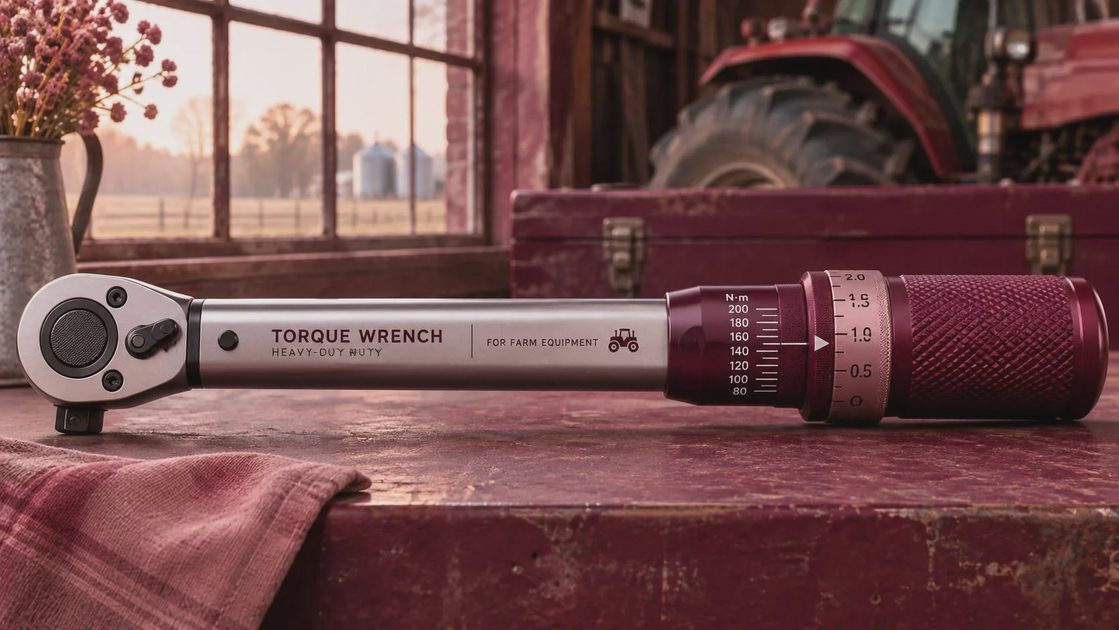
Bring the fastener down with an ordinary ratchet first, then finish with the torque wrench. Pull smoothly on the grip, keeping your hand where the tool maker specifies. With a click-type wrench, stop at the first click; don't keep pulling to make it click again. If you're working with multiple bolts, use the sequence and stages in the manual rather than tightening one all the way while its neighbors are loose.
A torque wrench farm equipment owner uses on wheels deserves particular care. Follow the machine maker's instructions for supporting the wheel, tightening the hardware, and rechecking it after service. Tractor wheels can be extremely heavy, especially when ballasted. If moving or supporting one safely is beyond your equipment or experience, call a tire or equipment service.
Keep the wrench dependable
A torque wrench is a measuring instrument, not a breaker bar. Use another tool to loosen stubborn fasteners. Avoid dropping the wrench, and don't rely on a reading if it has been damaged or overloaded. A deep socket or extension on the square drive generally doesn't change the torque setting when used straight, but a crowfoot or other attachment that changes the effective lever length can. Follow the wrench manufacturer's instructions for adapters.
For click-type tools, follow the storage instructions for that model; many are stored at their lowest marked setting, not below it. Wipe off dirt and moisture, keep the wrench in its case, and have its calibration checked or serviced according to the maker's guidance and your shop's needs. A heavily used or dropped tool warrants attention sooner.
The goal isn't to own the biggest wrench in the county. It's to put the right clamp load on the right joint, without guessing. If the specification is missing, the hardware looks damaged, or the job calls for equipment you don't have, stop and ask a dealer or qualified mechanic. If you're not sure, take it to a pro. No shame in that.