A tractor can hide trouble the way tall grass hides a loose fence wire: you know something is wrong, but getting a good look takes some doing. An inspection camera farm equipment owners can feed through an existing opening helps spot loose hardware, packed debris, or visible damage before they start taking covers off. It won't replace a pressure test or a mechanic's judgment, but it can tell you where to look next.
For occasional checks on a small place, look at the DEPSTECH inspection camera line if a phone-connected scope fits your budget and you don't mind using an app. The Milwaukee M12 M-SPECTOR line is worth a look for a shop already invested in M12 batteries and wanting a dedicated display. For frequent diagnostic work, the RIDGID micro CA line offers professional-oriented options. Compare the probe diameter, cable length, and what's included in the particular kit before buying; those details vary by model.
Where a camera earns its keep
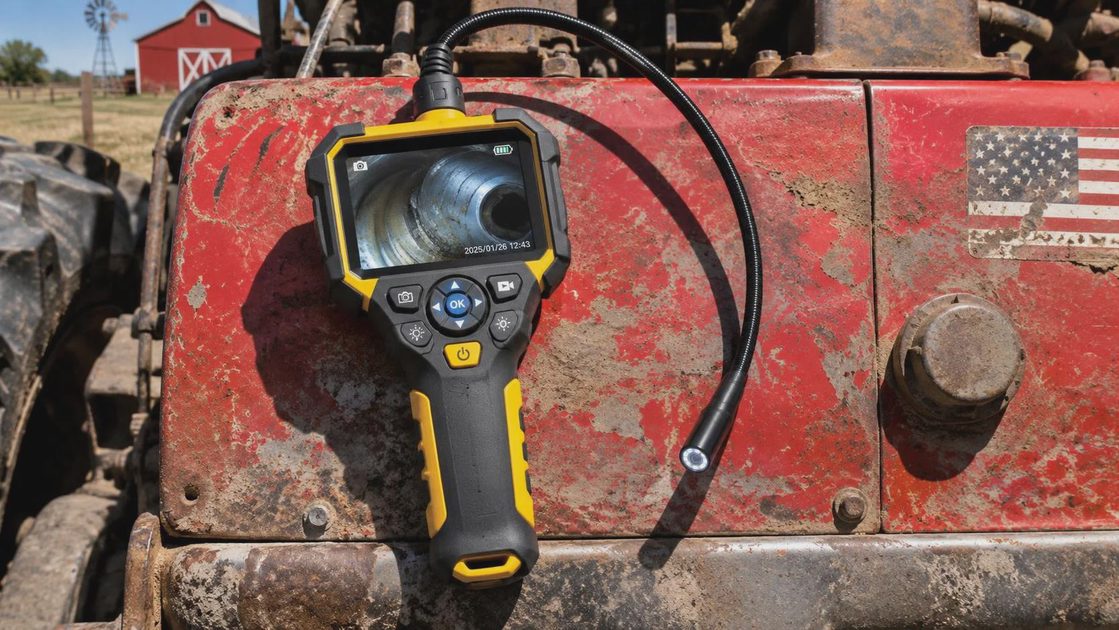
The best use for inspection camera farm equipment work is a spot you can reach safely through an existing opening but can't see with a flashlight and mirror. On a tractor, that might mean looking behind a stationary belt guard after it's been removed, checking a radiator area for packed chaff, or examining an accessible cavity for a missing bolt.
On a baler or mower, a camera can help you look for buildup or damage behind a cover without pulling apart an entire assembly. On a UTV, it can help trace a wire or look behind bodywork. You'll still need to remove the appropriate panel when the opening is too tight; forcing a probe around a sharp edge is an expensive way to save five minutes.
A picture also helps you decide what not to disturb. If you can see that the suspected debris is only on the outside of a housing, cleaning that area may be the next step. If you see broken metal inside, stop and find out where it came from before running the machine again.
Pick the probe for the opening
Before shopping for inspection camera farm equipment jobs, measure the smallest opening you expect to use. Compare it with the camera head's stated diameter, allowing room for the head to pass without scraping. An accessory such as a side-view mirror may make the working end wider, so measure with the attachment fitted.
Cable stiffness matters as much as length. A semi-rigid cable can hold a gentle bend while you guide it past an obstruction; a very flexible one may droop where you need it to point. Neither is a substitute for an articulating tip when the target sits around a tight corner. Articulating scopes can be useful in cramped engine spaces, but they generally cost more and deserve careful handling.
Choose a cable long enough to reach the target with a little room to work, not simply the longest one on the shelf. Extra cable can be awkward around machinery. Built-in lighting and a way to adjust brightness are useful in dark housings, where a shiny surface can wash out the image. Check the advertised focus range too: a camera that looks sharp across a room may not focus on a part an inch from its lens.
A phone-connected scope saves you from carrying another screen, but it depends on a compatible phone and, often, an app. A dedicated screen is handy when you want to keep a dusty phone in your pocket. Check connection requirements and return terms before ordering, especially if the listing doesn't identify your phone or operating system.
Set the machine up safely
Before using an inspection camera farm equipment owners should shut the engine off, remove the key, and wait for all moving parts to stop. Lower attachments to the ground, disengage the PTO, and follow the operator's manual for securing the machine. If someone else might start it, keep the key under your control and make sure they know you're working on it.
Let hot components cool. Never put a probe near an operating belt, fan, shaft, or PTO to get a better view. Don't work beneath a raised loader or implement unless it is supported according to the manufacturer's instructions; hydraulic pressure alone is not a safe support. Release stored pressure as directed before opening a hydraulic component, and don't search for a leak with your hand.
A camera head advertised as water-resistant is not automatically suitable for diesel fuel, hydraulic oil, coolant, or a hot engine. Check the manufacturer's fluid compatibility and temperature limits for the entire portion you'll insert. Keep the display and connectors away from fluids unless they are specifically rated for that exposure. Never probe an energized electrical component.
Get a useful picture, then decide what it means
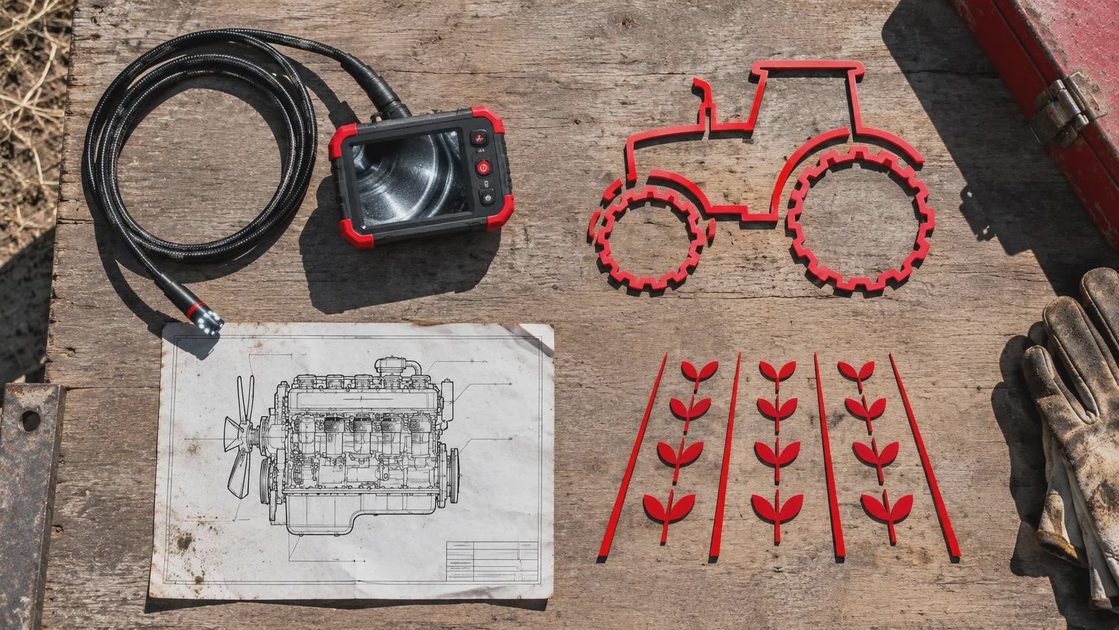
Shop Trick: My grandfather taught me this trick — still works 40 years later. Mark your starting position before you put a tool into a hard-to-see space. A small piece of tape on the cable outside the opening gives you a reference for depth. Photograph the opening as well as the image on the screen, so you can find the same location again.
Wipe dirt from around the opening first, then clean the lens with a soft cloth. Feed the probe slowly and watch for snag points. Rotate the cable gradually to orient the picture; it's easy to mistake a curved casting or a shadow for a crack when you don't know which way is up. Save a still image or short video if your device allows it.
Treat what you see as a clue. A shiny streak could be wear, residue, or reflected light. A dark line might be a crack, a seam, or a shadow. Change the light level and viewing angle before making a call. If the probe binds, don't yank it. Back it out gently; if it won't release, stop before the head or attachment breaks off inside.
For internal engine damage, hydraulic faults, or metal fragments you can't identify, take the images to a qualified technician along with the machine's symptoms. If you're not sure, take it to a pro. No shame in that. A clear picture may save diagnostic time, but it doesn't make an unsafe teardown worth the risk.