A guy brought in his truck last week and told me his Caterpillar loader had been sitting for three days because one stubborn hydraulic fitting would not budge. That is how downtime grows on a ranch or jobsite: one small repair turns into lost hours, a rental machine, and a bill nobody planned for. The right specialised tooling caterpillar fleets require can prevent that kind of delay while protecting technicians and expensive components.
I have worked around cars, tractors, UTVs, and heavy equipment since I was old enough to sweep my grandfather's shop floor. Caterpillar machines are built tough, but tough does not mean every repair should be attacked with a larger hammer. Correct pullers, service adapters, hydraulic test equipment, and lifting tools make the work more controlled. They also help a mechanic diagnose the real problem instead of replacing parts by guesswork.
Why specialised tooling matters on Caterpillar equipment
Caterpillar loaders, excavators, dozers, and skid steers use components that can be too large, too tight, or too precisely fitted for ordinary automotive tools. A standard socket set is useful for covers and guards, but it will not safely remove a pressed bearing, verify hydraulic pressure, or support a heavy final drive. Specialised tooling caterpillar fleets rely on is designed around those jobs.
The savings come from more than speed. A proper puller reduces the chance of damaging a shaft. A test gauge can identify a weak pump before it destroys another component. The correct lifting fixture keeps a technician from balancing a heavy part on a jack that was never meant for the load. A tool costing $300 to $1,500 can prevent a damaged housing, a bent fastener, or several hours of avoidable labor.
Start by recording the machine's model, serial number, engine arrangement, and common failure points. A 950 loader and a 299D skid steer do not share every service requirement. Keep the operation and maintenance manual close, then match each tool to the procedure rather than buying whatever looks impressive in a catalog.
Core tools worth keeping in the shop
For a small fleet, I would first budget for a quality hydraulic pressure test kit, a digital multimeter, heavy-duty torque wrenches, adapter fittings, and a sturdy selection of pullers. Include hose caps and plugs because open hydraulic lines invite dirt, and contamination can cost more than the original repair. A low-cost infrared thermometer is also useful for comparing bearing, hub, and hydraulic temperatures during diagnosis.
For undercarriage work, measuring tools matter. Track sag, roller wear, sprocket condition, and bushing dimensions should be documented before parts are ordered. Caterpillar offers specialized service tools, while suppliers such as OTC and Matco carry general heavy-equipment pullers, gauges, and electrical equipment. Dealer tools can be expensive, but renting a factory tool for one job is often smarter than forcing a universal tool into service.
My grandfather taught me this trick — still works 40 years later. Before putting a tool on a seized fastener, clean the area, mark the position, and take a photograph. You will know whether the part moved, and you will have a record if the repair gets interrupted. That little habit has saved our shop from many arguments and many repeat repairs.
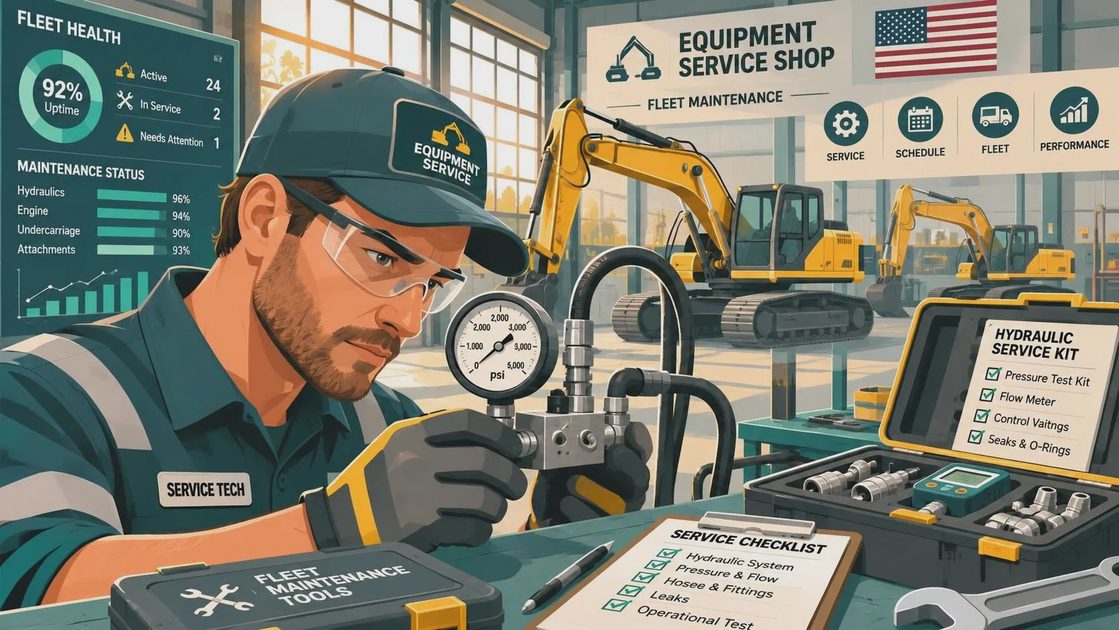
Never improvise with a chain, jack, or homemade lifting bracket when a component weighs hundreds of pounds. Use rated stands, block the machine, lower attachments to the ground, and release stored hydraulic pressure according to the service procedure. Diesel engines can start unexpectedly, so isolate the battery and follow the manufacturer's lockout steps. Wear eye protection, gloves suited to the task, and safety shoes. If you are not sure, take this to a pro. No shame in that.
Buying versus renting specialized equipment
The best specialised tooling caterpillar fleets need is not always the tool a shop should own. A fleet that repairs equipment weekly can justify a dedicated bearing puller, hydraulic bench tester, or track service kit. A ranch with one excavator may get better value by renting those tools from a heavy-equipment dealer or tool house.
Make the decision with a simple comparison. Add the purchase price, storage needs, inspection time, and replacement parts. Then compare that total with two or three rental charges plus pickup and return time. If a tool costs $2,000 and a rental is $250 per repair, ownership begins to make sense after repeated use. If the job appears once every five years, renting usually wins.
Ask about calibration when buying gauges and torque equipment. A tool can look perfect and still give a bad reading. Keep calibration records in the machine file, especially when a pressure specification determines whether a pump, valve, or relief circuit is healthy. Good records also help the next technician avoid repeating the same tests.
A practical workflow for fleet repairs
Before touching the machine, write down the complaint in plain language: weak lift, slow travel, overheating, hard starting, or abnormal noise. Confirm the symptom under safe conditions. Clean the repair area, identify the correct procedure, and gather every adapter before disassembly. Stopping halfway because one fitting is missing is how dirt enters a system and parts end up scattered across the shop.
Next, test before replacing. Check electrical power and grounds on electronic machines. Measure fluid level and condition. Verify pressure and temperature with tools rated for the system. When removing a component, label hoses and connectors with tape, then cap exposed lines. Photographing each stage is especially helpful for a mixed fleet where several models may be repaired in the same bay.
After installation, torque fasteners to specification, refill with the correct fluid, and inspect for leaks at low pressure first. Run the machine through its required functions without standing near moving arms, tracks, or attachments. Record the final readings and the parts installed. That record turns the next diagnosis from a mystery into a short conversation.
Keeping the tooling ready for the next job
Specialised tooling caterpillar fleets depend on should be treated like equipment, not disposable shop clutter. Wipe hydraulic adapters after use, lightly protect steel pullers from rust, and store gauges where temperature swings will not damage them. Inspect chains, hooks, threads, and ram bodies before every heavy pull. A cracked fitting or stretched link is a warning, not an invitation to try one more job.
Create a tool cabinet for Caterpillar service equipment and label drawers by function: hydraulic testing, electrical diagnosis, undercarriage, lifting, and engine service. Keep an inventory sheet with tool numbers, calibration dates, and rental contacts. A mechanic who can find the correct adapter in five minutes will work more safely than one digging through an unmarked bucket while a machine sits disabled.
Shop Trick: after a repair, return the tool to its place before road-testing the machine. That sounds simple, but it prevents missing equipment, misplaced adapters, and the hurried cleanup that causes injuries. At our San Antonio shop, the same rule applies whether we are servicing my grandfather's 1965 GMC or a ranch skid steer.
The payoff from specialised tooling caterpillar fleets use every season is measured in fewer broken parts, shorter diagnosis times, and more predictable maintenance bills. Buy the tools that match your workload, rent the rare ones, and never trade safety for speed. If a repair involves high pressure, suspended weight, internal transmissions, or a procedure you cannot verify, take it to a qualified heavy-equipment professional. Your machine, your wallet, and everyone in the bay will be better for it.